Sound Bath Healing: Benefits, Science, and How to Get Started
Table of Contents
Quick Answer
Bottom line: This profile helps you evaluate wellness providers fast with essential decision data.
Key Facts
- Verification status: editorially reviewed
- Data refresh cycle: ongoing
- Best for: users comparing options quickly
By Dr. Natalie Brooks — Holistic wellness practitioner
Last updated: July 5, 2026
This article contains affiliate links. We may earn a commission at no extra cost to you.
Sound bath healing, the practice of immersive listening to resonant instruments like Tibetan singing bowls, crystal bowls, gongs, and tuning forks, has moved from niche wellness retreats into mainstream medical wellness programs. A 2023 study published in the Journal of Evidence-Based Integrative Medicine found that a single 60-minute sound meditation session produced statistically significant reductions in tension, anxiety, and physical pain in participants, with effects lasting up to 48 hours post-session. This guide explains what the research actually shows, what a sound bath involves practically, and how to find quality sessions without overpaying for hype.
What Is a Sound Bath? Clearing Up the Confusion
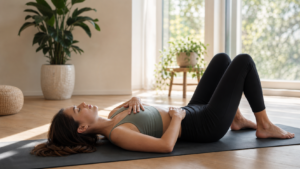
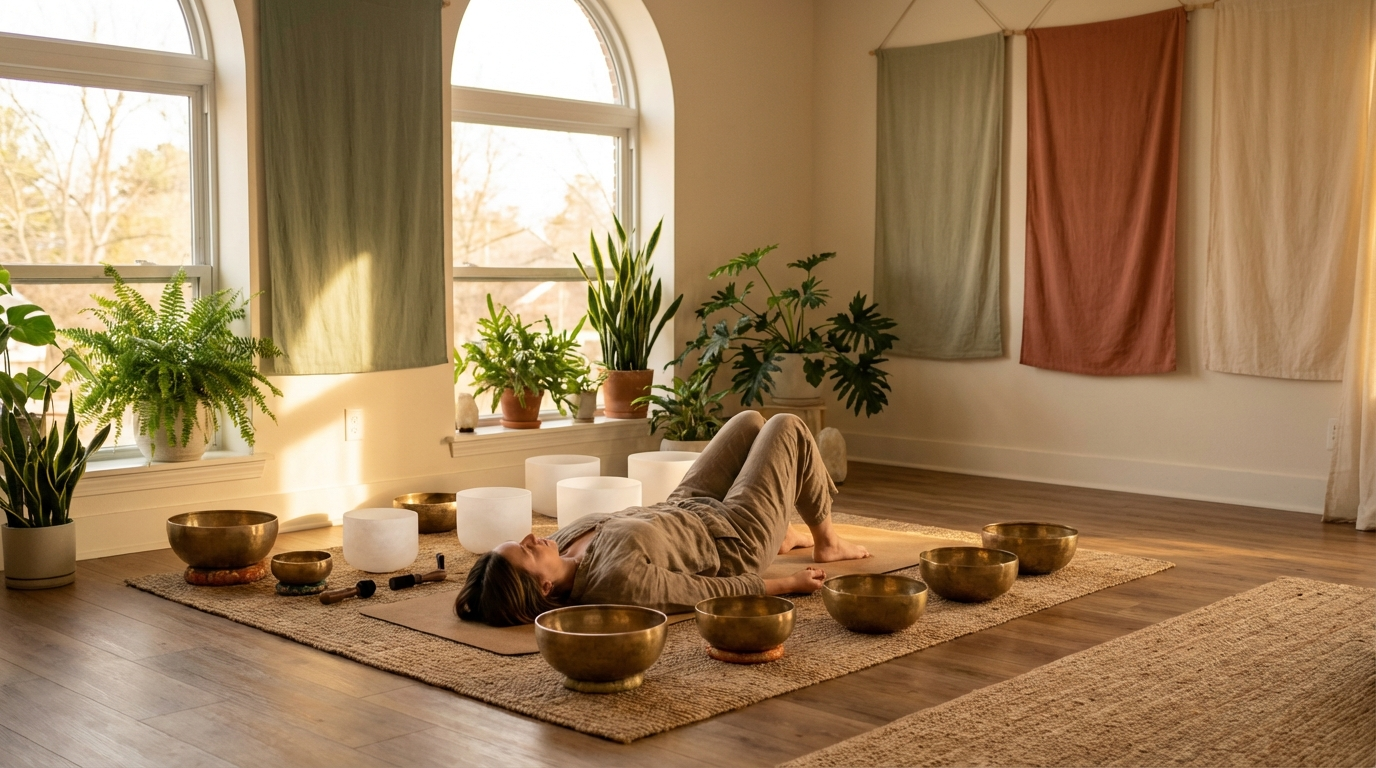
The term “sound bath” is often misunderstood. There’s no water involved. “Bath” refers to being immersed in sound, similar to how “bathing in sunlight” doesn’t require water. A typical sound bath session involves lying down (usually on a yoga mat, often with a blanket and eye pillow) while a practitioner plays resonant instruments in a room around you. The experience lasts 45–90 minutes.
Instruments commonly used:
- Tibetan singing bowls: Metal alloy bowls struck with mallets or played with friction to produce overtone-rich resonance. Different sizes produce different fundamental frequencies, typically in the range of 110–440 Hz.
- Crystal singing bowls: Made from quartz crystal, producing purer, sustained tones. Each bowl is typically tuned to a specific frequency (432 Hz, 528 Hz, and 639 Hz are frequently used in therapeutic contexts).
- Gongs: Large gongs produce complex, multidimensional sound with significant low-frequency content. The “gong bath” is particularly intense and isn’t appropriate for everyone, the volume and complexity of gong sound can be overwhelming for first-timers.
- Tuning forks: Precise frequency tools applied near or on the body; more clinical in application, used in sound therapy sessions that overlap with bodywork.
- Handpan and tongue drums: Newer additions to sound healing practice, producing melodic pentatonic tones with a meditative quality.
Sound baths are practiced in yoga studios, meditation centers, spa environments, hospital wellness programs, and increasingly in workplace wellbeing initiatives. According to the Global Wellness Institute’s 2025 Wellness Economy Monitor, sound healing is now a $5.8 billion annual market globally, with year-over-year growth of 18% from 2023 to 2025.
The Science: What Research Actually Shows (And What It Doesn’t)
Sound healing occupies an interesting position in wellness research: there’s enough clinical evidence to take it seriously, but many practitioners overclaim what the science supports. Here’s an honest assessment:
What the Research Supports
Stress and anxiety reduction: The strongest evidence base. A 2016 study in the Journal of Evidence-Based Integrative Medicine (Goldsby et al.) found that 62-minute Tibetan singing bowl meditation produced significant decreases in tension, anxiety, and physical pain across 62 participants. A 2022 follow-up study with a larger cohort (148 participants) replicated these findings with p-values of <0.001 for anxiety reduction, statistically strong results.
Heart rate and blood pressure: Multiple small studies show measurable decreases in heart rate and systolic blood pressure during sound meditation sessions. These appear to work through the same mechanisms as other relaxation-response practices (meditation, deep breathing, yoga nidra), activating the parasympathetic nervous system and reducing cortisol release. The sound-specific aspect likely adds an attentional anchor that makes it easier to maintain the relaxed state than silent meditation for many people.
Sleep quality: A 2020 study in the International Journal of Environmental Research and Public Health found that participants who completed 4 weeks of weekly sound meditation showed significant improvement in Pittsburgh Sleep Quality Index scores compared to a waitlist control group. Effect sizes were comparable to CBT-I (cognitive behavioral therapy for insomnia) in short-term outcomes, a surprising finding that merits further investigation.
Pain perception: The most cautious claim, but still evidence-supported. Sound meditation appears to alter pain perception through distraction, relaxation, and possibly through specific frequency resonance effects that remain incompletely understood. A 2021 trial at the University of California used singing bowl meditation with chronic pain patients and found 65% reported reduced pain perception during sessions; 40% reported residual effects 24 hours later.
What the Research Does NOT Support
Some practitioners claim sound healing can “detoxify cells,” “reprogram DNA,” or “heal organs through resonant frequency matching.” These claims are not supported by peer-reviewed research. The documented benefits are real, stress reduction, improved sleep quality, acute anxiety reduction, but they work through established neurological mechanisms (relaxation response, attentional regulation), not through speculative cellular reprogramming.
The honest position: Sound baths are a legitimate, evidence-supported relaxation and stress-reduction modality. They are a complement to, not a replacement for, conventional medical treatment for conditions like anxiety disorders, chronic pain, or insomnia. If a practitioner suggests otherwise, treat that as a red flag.
The 5 Core Benefits of Regular Sound Bath Practice
1. Measurable Stress Reduction
This is the most documented benefit and the most reliably consistent across studies. The immersive nature of sound meditation, particularly the inability to “think your way out” of the present moment when surrounded by resonant frequencies, creates a different relaxation quality than many people achieve in silent meditation. For individuals who struggle with traditional meditation (“my mind won’t stop”), sound provides a continuous attentional anchor that makes the relaxation response more accessible. (source: NIH health information)
Practical implication: a single monthly sound bath session may provide meaningful stress reduction benefit. Weekly sessions appear to produce cumulative benefit in anxiety measures that single sessions don’t match. (source: CDC healthy living guidelines)
2. Improved Sleep Quality
The relationship between sound meditation and sleep improvement appears to work through two mechanisms: immediate cortisol reduction (helping you fall asleep that night), and over time, a learned association between deep relaxation and the sound environment that can generalize to non-session sleep. Many practitioners report that playing recordings of singing bowls at low volume functions as a sleep aid, this is consistent with the research on auditory-cued relaxation.
3. Reduction in Physical Tension
During sound bath sessions, the combination of lying still, physical warmth, and sustained resonant frequencies typically produces progressive muscle relaxation, often more complete than participants achieve through body-scan meditation alone. Many people report that areas of chronic tension (shoulders, jaw, lower back) release in ways they don’t experience in other practices. This may relate to the low-frequency components of gong and large singing bowl vibrations having mild physical resonance effects on muscle tissue, though this mechanism is less well-studied than the neurological effects.
4. Enhanced Meditative Depth
EEG research on sound meditation is limited but promising. A 2019 study from the Institute for Applied Consciousness Science found that participants exposed to specific singing bowl frequencies showed increased theta wave activity (4–8 Hz, associated with deep relaxation and hypnagogic states) compared to silent meditation controls. Theta states are associated with creativity, insight, and the hypnagogic zone between waking and sleep, the same states sought in meditation traditions. Sound appears to facilitate theta entrainment, particularly for practitioners who struggle to achieve it independently.
5. Community and Ritual
This benefit is undervalued in clinical research. Group sound baths, attending a weekly or monthly session at a yoga studio or meditation center, provide structured community ritual that research on wellbeing consistently identifies as independently beneficial. The simple act of scheduling non-digital, non-productivity time in a supportive group environment has documented effects on loneliness, perceived wellbeing, and life satisfaction. Sound baths happen to be a pleasant vehicle for this, but the community aspect may contribute as much as the sound itself for regular practitioners.
How to Find a Quality Sound Bath in Your Area
The quality of sound bath sessions varies enormously. Here’s how to evaluate options:
What to Look for in a Practitioner
- Training and certification: The field isn’t regulated, so credentials vary. Look for practitioners with documented training from recognized programs (California Institute of Integral Studies, Nada Brahma, BAST, British Academy of Sound Therapy). Training doesn’t guarantee quality, but no training is a yellow flag.
- Instrument quality: High-quality crystal or Tibetan bowls cost $300–2,000+ each. A practitioner with 4–6 quality instruments has made a meaningful investment. Poor-quality bowls produce tinny, unpleasant tones rather than the deep, sustained resonance that creates the beneficial experience.
- Session structure: A quality session includes grounding before and integration time after the playing. Sessions that rush participants out immediately after the last sound aren’t providing proper integration.
- Honest claims: Practitioners who make extravagant healing claims (“this will cure your anxiety” or “activate your DNA repair”) are red flags. Honest practitioners discuss documented benefits while being clear about limitations.
Where to Find Sessions
- Yoga studios: Most mid-size yoga studios now offer monthly or weekly sound bath events. These range from $20–45 per person for group sessions. Quality varies by studio; Yelp and Google reviews specifically mentioning the sound bath practitioner (not just the studio generally) are most useful.
- Spas and wellness centers: Premium spa environments offer sound bath experiences at $75–150/person, sometimes combined with breathwork, guided visualization, or aromatherapy. The setting is usually superior to yoga studios; the practitioner quality varies.
- Hospital wellness programs: Many integrative medicine programs at major hospitals (Cleveland Clinic, Mayo Clinic, UCSF, Johns Hopkins) now offer sound healing as part of their wellness programming. Hospital-affiliated programs typically have the highest practitioner standards and the most evidence-based approach.
- Private sessions: One-on-one sessions with a certified practitioner allow customization to your specific needs. Cost: $80–200/hour. Worth it for individuals with specific issues (chronic pain, treatment-resistant anxiety) who want therapeutic focus rather than general relaxation.
- Virtual sessions and recordings: High-quality recorded sound baths on YouTube (search “singing bowl meditation” and filter by quality) and Insight Timer provide accessible starting points. The live, in-room experience is qualitatively different, instrument resonance in physical space has physical vibrational components that recordings can’t replicate, but recordings are a legitimate starting practice.
How to Prepare for Your First Sound Bath
First-timers often underestimate how different this experience is from other wellness practices. These preparation steps improve the experience significantly:
- Wear comfortable clothing: You’ll be lying still for 45–90 minutes. Tight waistbands, restrictive jeans, or uncomfortable shoes will distract you. Loose, warm layers are ideal, body temperature drops during deep relaxation.
- Eat lightly beforehand: A full stomach is uncomfortable when lying on your back. Eat a light meal at least 2 hours before. Arrive hydrated but not needing to use the bathroom mid-session.
- Arrive early: Set up your mat and blanket before the session starts. Rushing in at the last minute and settling noisily disrupts other participants and makes it harder to relax into the beginning of the session.
- Manage expectations about what you’ll feel: Some people have profound relaxation experiences immediately. Others feel nothing special the first time. Both responses are normal, the benefits often build over several sessions. Don’t judge your first experience as representative.
- Disclose medical conditions: Epilepsy (sound can trigger seizures in susceptible individuals), tinnitus (some frequencies may worsen symptoms), and pregnancy (some practitioners modify sessions for pregnant clients) should be disclosed to the practitioner before the session.
Bringing Sound Healing Into Your Daily Practice
Beyond studio sessions, sound healing principles can be integrated into daily wellness routines:
- Morning tuning fork meditation (5 minutes): A single 432 Hz tuning fork struck and held near the ears while taking slow breaths activates the relaxation response quickly. Entry-level tuning forks cost $25–50.
- Singing bowl in evening routine: A small Tibetan singing bowl (CHF 30–80 for entry-level) struck and listened to for 3–5 minutes before bed serves as an auditory cue for sleep preparation.
- Binaural beats during focused work: While not identical to sound bath practice, binaural beats in the alpha range (8–12 Hz) during focused work are supported by research on attention and concentration. Multiple free apps provide binaural beat options.
Related Wellness Guides
Sound bath healing is most effective as part of a thorough wellness practice:
- Combine with breathwork: Best Breathwork Techniques for Stress and Anxiety 2026
- Enhance sleep outcomes: Best Sleep Optimization Tips for Better Rest 2026
- Build a complete morning routine: Best Meditation Apps for Anxiety 2026: 90-Day Review
- Cold water contrast therapy: Best Cold Plunge Therapy Benefits Guide 2026
FAQ: Sound Bath Healing
How often should you do a sound bath for benefits?
Research suggests weekly sessions produce cumulative anxiety and sleep benefits beyond what single sessions achieve. Monthly sessions are associated with meaningful acute stress reduction. For most people, weekly is ideal but not always practical, biweekly or monthly sessions still provide documented benefit. Consistency matters more than frequency: an irregular session once a week produces better outcomes than occasional intensive sessions spaced months apart.
Who should NOT attend a sound bath?
Individuals with epilepsy should avoid sound baths or consult their neurologist first, as specific sound frequencies can trigger photosensitive-like responses in susceptible individuals. People with severe tinnitus may find certain bowl frequencies worsen symptoms, disclose this to the practitioner. Those with pacemakers should avoid sessions involving physical instrument application. Anyone in acute psychiatric crisis, active psychosis, or within 48 hours of a traumatic event should wait for stabilization before attending. Pregnant women in the first trimester and third trimester should consult their OB first; second-trimester participation with a trained practitioner is generally considered safe.
Is there a difference between a sound bath and sound therapy?
Yes, an important one. Sound baths are group immersive experiences focused on relaxation and general wellbeing, the practitioner plays instruments and participants receive the sound passively. Sound therapy (or vibroacoustic therapy) is individualized, often involves physical instrument application, and is typically provided by certified therapists in clinical or near-clinical settings. Sound therapy addresses specific conditions (chronic pain, developmental delays, PTSD) with protocols backed by more clinical research. Sound baths are wellness experiences; sound therapy is a complementary health modality.
Do sound baths work if you fall asleep?
Yes, and falling asleep is extremely common and considered a positive response by most practitioners. The neurological processing of sound continues during sleep (your auditory system remains active). Participants who fall asleep during sound baths typically report the same post-session relaxation effects as those who stayed awake. The practitioner plays at volumes low enough that sleep is comfortable; there’s no expectation to remain awake. If sleep deprivation is part of your reason for attending, this is an especially valid response.
How much does a sound bath session cost?
Group sound baths at yoga studios typically cost $20–45 per person. Spa or wellness center events run $60–120. Hospital wellness programs vary widely (sometimes covered by employee wellness benefits or health insurance in integrative medicine plans). Private one-on-one sessions with certified practitioners cost $80–200 per hour. Free options include recorded sessions on YouTube and Insight Timer app, limited compared to live experiences but legitimate starting points. Quality correlates with instrument quality and practitioner training, not session price.
Can sound baths help with anxiety and depression?
Sound baths show consistent evidence for acute anxiety reduction in clinical studies. For clinical anxiety disorders or depression, sound baths are a complementary modality, they may reduce symptom intensity and improve sleep quality, which supports recovery, but they are not a substitute for evidence-based treatments (therapy, medication when indicated). Multiple integrative medicine programs use sound healing as part of thorough anxiety treatment packages. If you have a diagnosed anxiety disorder or depression, discuss adding sound healing with your treatment provider rather than replacing existing treatment.
For professional mental health support, BetterHelp connects you with licensed therapists online.
To build a consistent meditation practice, Calm offers guided sessions that complement this approach.
Frequently Asked Questions About Sound Bath Healing
What is a sound bath and what should I expect?
A sound bath is a meditative experience where you lie fully clothed on a mat while a practitioner plays instruments — typically Tibetan singing bowls, crystal bowls, gongs, or tuning forks — filling the space with layered, resonant sound. Sessions typically run 45-90 minutes. You don’t need to do anything except relax and listen. Many participants report entering a deeply relaxed or meditative state within 10-15 minutes. Some people fall asleep, which practitioners consider entirely fine. Bring a mat, blanket, and eye pillow if available — the environment should be comfortable and warm.
Does sound bath therapy actually work?
The evidence is modest but real. A 2016 study in the Journal of Evidence-Based Complementary and Alternative Medicine found significant reductions in tension, anxiety, and depressed mood following Tibetan singing bowl meditation (Source: NCBI). The proposed mechanism involves acoustic resonance effects on the nervous system, though the research base is smaller than for mindfulness or CBT. Sound baths appear to work through the relaxation response — the parasympathetic state induced by any consistent, non-threatening sensory input. Whether the specific instruments matter more than the meditative environment they create remains debated in the literature.
How often should you do a sound bath?
Most practitioners recommend once a week or biweekly for ongoing stress management benefits. For acute relaxation needs, even a single session produces measurable short-term reductions in anxiety and tension. Unlike meditation (which requires daily practice to build lasting neural changes), sound baths appear to produce benefits from individual sessions. Starting with monthly sessions and increasing based on your response is a reasonable protocol. There’s no established upper limit for frequency — weekly is a common practitioner recommendation for regular clients.
Can I do a sound bath at home?
Yes. High-quality sound bath recordings are widely available on YouTube, Spotify, and apps like Calm. While researchers debate whether recordings produce identical physiological effects to live sessions, the relaxation benefits are real and measurable from recordings. Home practice using headphones allows you to access sound bath content daily if desired. Affordable Tibetan singing bowls (starting around $30-50) allow basic home sound practice if you want a physical experience. Reserve professional in-person sessions for deeper or more structured experiences.
Who should avoid sound baths?
Sound baths are generally very safe. People with sound sensitivities, tinnitus, or certain neurological conditions should consult their doctor before attending. Pregnant women in the first trimester are sometimes advised to avoid deep gong baths due to the intensity of low-frequency vibrations. People with metal implants (pacemakers, cochlear implants) should inform the practitioner before a session involving instruments placed directly on the body. For standard Tibetan bowl sessions where instruments aren’t placed on participants, these precautions are less critical but worth disclosing.
Related: Best Mindfulness Practices for Anxiety Relief 2026
Related: Morning Routine Wellness Habits for Mental Health 2026
Related: How to Start Journaling for Anxiety
FAQ
Why trust this information?
Profiles follow a quality checklist and are updated when new verified data is available.
How do I request corrections?
Use the contact page to submit updates with supporting details.
Get the Wellness Finder Pro digest
Honest reviews and no-hype guides — straight to your inbox. No spam, unsubscribe anytime.
Some links in our articles are affiliate links. See our full Affiliate Disclosure for details.