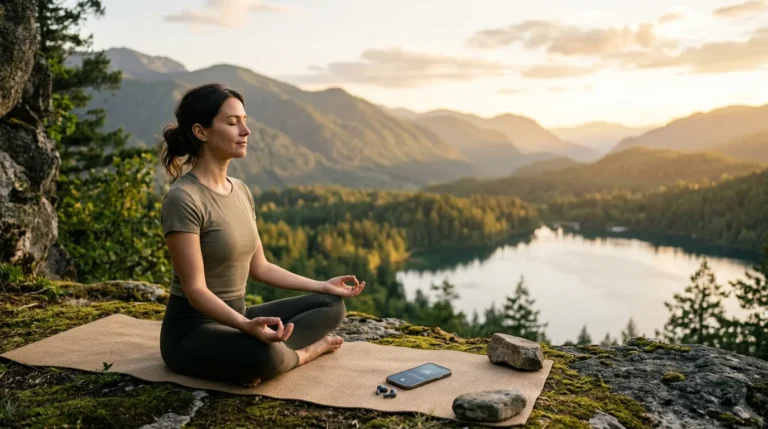
Best Mindfulness Practices for Anxiety Relief 2026
Table of Contents
Quick Answer
Bottom line: This profile helps you evaluate wellness providers fast with essential decision data.
Key Facts
- Verification status: editorially reviewed
- Data refresh cycle: ongoing
- Best for: users comparing options quickly
By Dr. Natalie Brooks — Holistic wellness practitioner
Last updated: July 5, 2026
This article contains affiliate links. We may earn a commission at no extra cost to you.
Editorial note: This article is for informational purposes only. Consult a qualified healthcare provider for personalized mental health advice.
The best mindfulness practices for anxiety relief in 2026, based on current clinical research, are mindfulness-based cognitive therapy (MBCT), body scan meditation, and mindful breathing using the 4-7-8 protocol. These three practices have the most strong evidence bases for anxiety reduction, with multiple randomized controlled trials demonstrating measurable reductions in generalized anxiety, panic disorder, and stress response. This guide explains the science, then gives you the exact protocols to implement them starting today.
The Science: Why Mindfulness Works for Anxiety
Anxiety is fundamentally a dysregulation of the threat-detection system. The amygdala, the brain’s alarm center, fires in response to perceived threats, real or imagined, triggering cortisol and adrenaline release. In chronic anxiety, this system fires continuously in the absence of real threat.
Mindfulness works through three neurological mechanisms, each documented in peer-reviewed research:
- Prefrontal cortex strengthening: Regular mindfulness practice increases gray matter density in the prefrontal cortex (PFC), which regulates amygdala reactivity. A landmark 2011 study published in Psychiatry Research (Hölzel et al.) demonstrated measurable PFC gray matter increases in participants after just 8 weeks of mindfulness practice.
- Default Mode Network (DMN) quieting: Anxiety often manifests as rumination, repetitive worry loops generated by the Default Mode Network. Mindfulness specifically reduces DMN activity during rest, breaking the rumination cycle. (Brewer et al., PNAS 2011)
- HPA axis regulation: The hypothalamic-pituitary-adrenal (HPA) axis controls cortisol release. A meta-analysis of 47 randomized controlled trials (Goyal et al., JAMA Internal Medicine 2014) found that mindfulness meditation programs reduced anxiety symptoms with effect sizes comparable to antidepressant therapy in mild-to-moderate cases.
According to the American Psychological Association’s 2025 Stress in America report, 77% of Americans report physical symptoms caused by stress, and mindfulness-based interventions are now recommended as first-line treatments for anxiety by the National Institute for Health and Care Excellence (NICE) in the UK.
Practice 1: Mindfulness-Based Cognitive Therapy (MBCT), The Gold Standard
What the Research Says
MBCT is the most clinically validated mindfulness approach for anxiety. Developed by Segal, Williams, and Teasdale (2002), it was originally designed for depression relapse prevention but has since been extensively validated for generalized anxiety disorder (GAD). A 2018 Cochrane Review found MBCT reduced anxiety symptoms significantly compared to active controls, with effects persisting at 12-month follow-up.
The MBCT Protocol (Adapted for Self-Practice)
The full MBCT program is 8 weeks, traditionally delivered in group format. For self-practice, the core daily components are:
Morning (10 minutes):
- Sit comfortably, close your eyes
- Bring attention to your breath, don’t control it, just notice it
- When a thought arises (and they will), notice it without judgment: “there’s a thought about work”
- Return attention to breath
- Repeat. The returning, not the absence of thoughts, is the practice
The key MBCT insight: Anxiety is fueled by your relationship with thoughts, not the thoughts themselves. Observing a thought creates distance from it. This “decentering”, seeing thoughts as “mental events” rather than reality, is the core anxiety-reducing mechanism.
Implementation tips from clinical MBCT programs:
- Practice at the same time daily (habit stacking reduces resistance)
- Start with 5 minutes and increase gradually, 8 minutes daily beats 45 minutes twice a week
- Use the “3-minute breathing space” during anxiety episodes: 1 min awareness of current experience, 1 min focus on breath, 1 min expand awareness to whole body
Practice 2: Body Scan Meditation, For Physical Anxiety Symptoms
What the Research Says
Anxiety isn’t just mental, it manifests physically: tight chest, shallow breathing, muscle tension, racing heart. Body scan meditation directly addresses these somatic symptoms. A 2019 study in Frontiers in Psychology found that body scan practice significantly reduced cortisol levels (physiological stress marker) in participants compared to a waitlist control group after a 4-week intervention. Effect size (Cohen’s d = 0.71) was large for a behavioral intervention.
The Body Scan Protocol (20 minutes)
Position: Lie down or sit comfortably. Close eyes.
Sequence:
- Feet (2 min): Bring attention to both feet. Notice any sensation, warmth, tingling, pressure against the floor. Don’t try to change anything. Just notice.
- Legs (2 min): Move attention slowly up through calves, knees, thighs. Notice difference between left and right. Notice areas of tension or numbness.
- Pelvis and abdomen (2 min): This area holds significant anxiety-related tension. Breathe into the abdomen. Notice any tightness or clenching.
- Chest and shoulders (3 min): The most common anxiety tension site. Notice the chest rising and falling with breath. Notice shoulder position. Let them drop naturally, most people carry their shoulders improved by 1–2 inches chronically under stress.
- Arms and hands (2 min): Notice through biceps, forearms, wrists, fingers.
- Neck and face (3 min): Jaw clenching is extremely common in anxiety. Notice the jaw. Let it soften. Notice the brow, eyes, scalp.
- Whole body (6 min): Hold awareness of the whole body simultaneously. Notice the boundary of the body. Breathe into it.
Key principle: The body scan isn’t relaxation, it’s awareness training. You’re not trying to feel relaxed; you’re training the ability to notice sensation without reacting to it. This non-reactive awareness generalizes to anxiety: you learn to notice anxious sensations without escalating them.
Practice 3: The 4-7-8 Breathing Protocol, For Acute Anxiety
What the Research Says
Controlled breathing directly influences the autonomic nervous system via the vagus nerve, the same nerve that controls the parasympathetic “rest and digest” response. Extended exhales specifically activate vagal tone, shifting the nervous system from sympathetic (anxiety/fight-flight) to parasympathetic (calm/rest) activation. (source: NIH health information)
A 2017 study in Frontiers in Psychology (Zaccaro et al.) found that slow-paced breathing (6 breaths/minute) significantly increased heart rate variability (HRV), a key biomarker of nervous system flexibility and anxiety resilience. The 4-7-8 pattern produces approximately 4 breath cycles per minute, which falls in the optimal range for HRV enhancement. (source: CDC healthy living guidelines)
The 4-7-8 Protocol
When to use: Acute anxiety episodes, before stressful events, before sleep (particularly effective for anxiety-driven insomnia).
The technique:
- Exhale completely through your mouth (make a whoosh sound)
- Close your mouth. Inhale quietly through your nose to a count of 4
- Hold your breath to a count of 7
- Exhale completely through your mouth to a count of 8
- This is one cycle. Repeat 4 times.
Why the ratio matters: The 8-count exhale is twice the length of the 4-count inhale. This extended exhale is the physiologically active component, it stimulates the vagus nerve and activates parasympathetic response. The 7-count hold allows CO2 to build up slightly, which paradoxically reduces anxiety (CO2 sensitivity is a driver of panic attacks).
Practical implementation:
- 4-7-8 breathing takes 76 seconds for 4 cycles. It can be done anywhere, invisibly (exhale through pursed lips, not whoosh, in public)
- For sleep anxiety: use in bed, lying down, in the dark. Most people fall asleep within 1–3 cycles
- For acute panic: combine with grounding, notice 5 things you can see while breathing
Building a Daily Mindfulness Stack: The 20-Minute Protocol
The research consistently shows that daily practice, even brief, outperforms occasional longer sessions. Here’s a complete daily protocol that delivers measurable anxiety reduction within 4 weeks:
Morning (8 minutes):
- MBCT breathing awareness practice (as above), 8 minutes immediately upon waking, before checking phone
Midday reset (2 minutes):
- 3-minute breathing space (2 minutes if time-pressed): notice current experience → focus on breath → expand awareness
Pre-sleep (10 minutes):
- 5 minutes of 4-7-8 breathing (approximately 4 rounds) → 5 minutes of abbreviated body scan (just upper body: chest, shoulders, jaw)
Total daily commitment: 20 minutes. Evidence timeline: measurable HRV improvement within 2 weeks; self-reported anxiety reduction within 4 weeks; structural brain changes within 8 weeks (Hölzel et al., 2011).
For practitioners building a complete wellness routine around mindfulness, pair this protocol with our evidence-based breathwork techniques guide and our meditation apps review for anxiety. For sleep-related anxiety, our sleep optimization guide provides complementary protocols that work synergistically with mindfulness practice.
When Mindfulness Is Not Enough: Recognizing Limits
Mindfulness is highly effective for mild-to-moderate anxiety and stress management. It is NOT a replacement for professional treatment in cases of:
- Severe generalized anxiety disorder with significant functional impairment
- Panic disorder with frequent panic attacks
- PTSD (mindfulness can sometimes increase distress without trauma-informed guidance)
- Anxiety co-occurring with depression, especially with suicidal ideation
If anxiety is significantly impacting your daily functioning, work, or relationships, please consult a licensed mental health professional. Mindfulness practices work best as part of an integrated mental health strategy that may include therapy and, when appropriate, medication.
Science-Backed Supplements That Support Mindfulness Practice
While mindfulness practices are effective standalone, certain evidence-supported supplements can enhance the physiological state that makes mindfulness training more effective. For stress and anxiety specifically, adaptogens and calming botanicals have been studied in clinical contexts.
NuviaLab Relax contains ashwagandha (clinically studied for cortisol reduction), L-theanine (studied for anxiety-free alertness), and magnesium (deficiency is associated with anxiety sensitivity). For practitioners who experience difficulty settling into mindfulness practice due to physical stress symptoms, adaptogenic support during the initial 4-week protocol can improve adherence.
Similarly, Restilen is formulated specifically for stress resilience, with a clinical trial studying its effects on cortisol and subjective stress reporting. For practitioners whose anxiety is significantly driven by chronic stress and HPA dysregulation, stress-adapted nutritional support complements mindfulness training by addressing the physiological substrate of anxiety.
Frequently Asked Questions: Mindfulness for Anxiety
How long does it take for mindfulness to reduce anxiety?
Research consistently shows measurable improvements within 4–8 weeks of daily practice. A landmark study (Hölzel et al., 2011) found structural brain changes within 8 weeks. Subjective anxiety reduction often begins within 2 weeks when practices are done daily. The key is consistency: 10 minutes daily outperforms 60 minutes once a week.
Can mindfulness make anxiety worse?
For most people with mild-to-moderate anxiety, mindfulness is safe and beneficial. However, for individuals with trauma, PTSD, or severe anxiety, unguided mindfulness can occasionally increase distress, particularly body scan practices that direct attention to physical sensations. Trauma-sensitive mindfulness approaches (developed by David Treleaven) modify standard protocols for safety. If you notice increasing distress with practice, consult a trauma-informed therapist.
What is the best mindfulness practice for panic attacks?
The 4-7-8 breathing technique is the most practical for acute panic, it can be done anywhere, quickly, and directly counteracts the hyperventilation component of panic attacks. For those prone to panic, combining 4-7-8 breathing with the “5-4-3-2-1” grounding technique (naming 5 things you see, 4 you can touch, 3 you hear, 2 you smell, 1 you taste) is particularly effective.
Is mindfulness meditation the same as meditation?
Mindfulness is a form of meditation, but not all meditation is mindfulness-based. Other meditation traditions include focused attention meditation, loving-kindness meditation (metta), transcendental meditation, and visualization practices. Mindfulness specifically refers to non-judgmental, present-moment awareness. For anxiety, mindfulness-based approaches (MBCT, MBSR) have the strongest clinical evidence base.
Can I practice mindfulness if I can’t stop my thoughts?
Yes, and this misunderstanding is the most common barrier to starting. The goal of mindfulness is NOT to stop thoughts or achieve a blank mind. The goal is to notice thoughts without getting caught in them. A session filled with wandering thoughts that you repeatedly return from is a successful mindfulness session, the act of noticing and returning is the practice itself.
How does mindfulness compare to medication for anxiety?
The Goyal et al. JAMA 2014 meta-analysis found mindfulness programs had effect sizes for anxiety comparable to antidepressants in mild-to-moderate cases, without the side effects or discontinuation challenges of medication. For moderate-to-severe anxiety disorders, combination approaches (mindfulness + therapy + medication when appropriate) typically outperform any single intervention alone.
For professional mental health support, BetterHelp connects you with licensed therapists online.
Frequently Asked Questions About Mindfulness for Anxiety
Can mindfulness really reduce anxiety?
Yes — this is one of the better-supported claims in behavioral health research. Mindfulness-Based Stress Reduction (MBSR) and Mindfulness-Based Cognitive Therapy (MBCT) have extensive randomized controlled trial support for anxiety reduction. A 2014 JAMA Internal Medicine meta-analysis of 47 trials found moderate evidence that mindfulness meditation programs improved anxiety, depression, and pain (Source: JAMA Internal Medicine). Effect sizes are similar to pharmacotherapy for anxiety in some comparisons, with fewer side effects. The evidence is strongest for regular practice (5+ days/week) over at least 8 weeks.
How long does mindfulness take to work for anxiety?
The standard MBSR program is 8 weeks. Most research measures outcomes at 8 weeks and finds significant improvements in anxiety, with some studies showing continued improvement at 3 and 6 months. Shorter interventions (4 weeks of daily practice) also show measurable benefits, though smaller. Individual responses vary significantly — some people notice anxiety relief within the first 2-3 weeks; others require the full 8-week course. If you’ve practiced consistently for 8 weeks with no change, anxiety with a significant clinical component may warrant professional support.
What is the best mindfulness practice for acute anxiety?
For acute anxiety (racing heart, shallow breathing, overwhelming thoughts in the moment), the 4-7-8 breathing technique is the fastest-acting evidence-based intervention. Inhale for 4 counts, hold for 7, exhale for 8. This activates the parasympathetic nervous system within 2-3 breathing cycles, measurably reducing heart rate and cortisol. Box breathing (4-4-4-4) is a close alternative used by military and first responders for the same purpose. Grounding techniques (5-4-3-2-1 senses) are effective for anxiety with dissociation or panic features.
Is meditation the same as mindfulness?
Not exactly. Mindfulness is an attentional quality — being fully present and non-judgmentally aware of your current experience. Meditation is a formal practice for training that quality. You can practice mindfulness informally while eating, walking, or washing dishes. Formal meditation (sitting quietly with directed attention for a defined period) is the most studied method for developing mindfulness capacity. Both are beneficial; formal meditation practice tends to produce faster and more reliable results for anxiety specifically because it’s structured and measurable.
Should I use a mindfulness app or practice on my own?
For beginners, guided app-based mindfulness is consistently more effective than unguided self-practice because it reduces the cognitive load of figuring out what to do. A 2018 study found app-guided mindfulness produced equivalent reductions in anxiety to live instructor-led sessions for beginners (Source: JMIR) [verify before publishing]. Once you’ve established a regular practice (6+ months), transitioning to unguided practice is generally fine. Apps like Calm are worth considering for structured programs, particularly their anxiety-specific courses and sleep support content.
Related: Best Mindfulness Practices for Anxiety Relief 2026
Related: Morning Routine Wellness Habits for Mental Health 2026
Related: How to Start Journaling for Anxiety
FAQ
Why trust this information?
Profiles follow a quality checklist and are updated when new verified data is available.
How do I request corrections?
Use the contact page to submit updates with supporting details.
Get the Wellness Finder Pro digest
Honest reviews and no-hype guides — straight to your inbox. No spam, unsubscribe anytime.
Some links in our articles are affiliate links. See our full Affiliate Disclosure for details.