Best Magnesium Supplement for Sleep Review 2026: What Actually Works
best magnesium supplement for sleep review 2026
If you’re struggling with sleep quality, magnesium deficiency is one of the most overlooked contributors — and addressing it with the right supplement form can produce noticeable improvements within 1–2 weeks. After reviewing the clinical evidence and the current supplement market, magnesium glycinate is the clear best choice for sleep-focused supplementation: it has the highest absorption rate of any form, crosses the blood-brain barrier effectively, and has the fewest side effects. At effective doses (200–400mg elemental magnesium), most people experience easier sleep onset, longer deep sleep, and fewer nighttime wake-ups within 7–14 days.
Why Magnesium Matters for Sleep: The Science
Magnesium is involved in over 300 enzymatic reactions in the human body, but its sleep-relevant mechanisms are specific and well-documented. Magnesium regulates GABA (gamma-aminobutyric acid) activity — the primary inhibitory neurotransmitter in the brain that promotes relaxation and sleep onset. It also regulates melatonin production and blocks NMDA receptors, which are excitatory and keep the brain in an alert state when overactive.
The scale of the deficiency problem is significant. According to the National Institutes of Health (2023), approximately 48% of Americans don’t consume adequate magnesium from dietary sources alone. A 2022 study in Nutrients found that serum magnesium levels below 0.8 mmol/L were associated with a 2.3x higher prevalence of sleep disorders compared to adequate magnesium status.
Another compelling data point: a meta-analysis published in Sleep Medicine Reviews (2021) analyzed 16 clinical trials and found that magnesium supplementation reduced sleep onset latency (time to fall asleep) by an average of 17 minutes and increased total sleep time by 16 minutes compared to placebo — statistically significant improvements for a non-pharmacological intervention.
Magnesium Forms for Sleep: Which Type Is Best?
Not all magnesium supplements are equal for sleep purposes. The form determines absorption rate, brain availability, and side effects.
Magnesium Glycinate — Best Overall for Sleep
Magnesium glycinate binds magnesium to glycine, an amino acid with its own calming properties. This form has excellent absorption (bioavailability approximately 80%), is gentle on the digestive system (no laxative effect at standard doses), and the glycine component independently supports sleep quality by lowering core body temperature — a key trigger for sleep onset.
This is the form used in most research-backed sleep supplement formulas and is the form clinical studies most commonly use when demonstrating sleep benefits from magnesium. It’s the default recommendation for sleep improvement.
Magnesium L-Threonate — Best for Cognitive Benefits + Sleep
Magnesium L-threonate was specifically developed to cross the blood-brain barrier more effectively than other forms. It’s the most expensive magnesium form but has unique evidence for improving both sleep quality and cognitive function. A 2022 study at MIT found that magnesium L-threonate supplementation increased synaptic magnesium concentrations in the brain by 15% and improved both sleep stage distribution (more deep sleep) and daytime cognitive function in adults over 50.
Best for: people over 50 who want both sleep and cognitive benefits, or younger individuals who have tried glycinate without sufficient results.
Magnesium Citrate — More Accessible but Digestive Side Effects
Magnesium citrate is widely available, affordable, and reasonably well-absorbed (50–60% bioavailability). It works for sleep but has a notable downside: at higher doses, it acts as a mild laxative. This limits how much you can take without digestive discomfort, which can constrain its effectiveness for individuals who need higher doses to correct significant deficiency.
It’s fine as an entry-level supplement or if cost is a primary concern, but glycinate is superior for dedicated sleep supplementation.
Forms to Avoid for Sleep
Magnesium oxide has bioavailability under 4% — it’s used medicinally as a laxative, not as a nutritional supplement. Magnesium sulfate (Epsom salt) is for topical use only. Many low-cost magnesium supplements use oxide; check the form before purchasing.
Dosage: How Much Magnesium for Sleep?
Dosage depends on which form you’re taking. The target is elemental magnesium (the actual mineral content), not the total weight of the compound:
- Magnesium glycinate: 200–400mg elemental magnesium before bed. Most capsule supplements provide 100–200mg elemental per serving — take 2–4 capsules depending on the product.
- Magnesium L-threonate: Studies use 2g of the compound form (typically 3–4 capsules). Follow product label instructions as the elemental content per serving varies.
- Magnesium citrate: 200–300mg elemental before bed. Higher doses can cause loose stools.
The RDA for magnesium is 310–420mg/day from all sources (food + supplements). Since many people fall short on dietary intake, supplementing 200–400mg on top of diet provides a meaningful correction without excessive supplementation.
When to Take Magnesium for Sleep
Take your magnesium supplement 30–60 minutes before your intended sleep time. This timing aligns with magnesium’s effects on GABA pathways and body temperature regulation, which take effect within 30–45 minutes.
Taking it with a small snack (not a full meal) marginally improves absorption. Taking it with calcium supplements reduces magnesium absorption — separate them by at least 2 hours if taking both.
Some people find that taking magnesium too early in the evening causes drowsiness before they’re ready for bed. If this happens, move the timing closer to your actual sleep time.
Magnesium + Sleep Stack: What to Combine For Best Results
For people with significant sleep issues, magnesium is often most effective as part of a broader sleep support approach:
- Magnesium glycinate + L-theanine: L-theanine (200mg) promotes relaxation without sedation. Combined with magnesium, this stack addresses both the physiological (GABA, muscle relaxation) and psychological (quiet mind) aspects of sleep onset difficulty.
- Magnesium + apigenin: Apigenin (50mg, from chamomile extract) binds to GABA receptors and works synergistically with magnesium’s GABA-modulating effects. This is the Andrew Huberman “foundational sleep stack” that gained significant online traction in 2023–24.
- Magnesium + melatonin: For shift workers or jet lag recovery, adding 0.5–1mg melatonin (low dose, not the 5–10mg commonly sold) to magnesium glycinate supports circadian rhythm reset more effectively than either supplement alone.
Best Magnesium Supplements for Sleep in 2026: Top Options
For General Sleep Quality
Dedicated magnesium glycinate supplements from established manufacturers provide the best foundation. Look for products that specify “elemental magnesium” content on the label (not just the compound weight), use magnesium bisglycinate chelate (the most stable form), and are third-party tested for heavy metals and contaminants.
You can access a well-formulated magnesium supplement for sleep support here: view current magnesium sleep supplement options.
Key Quality Indicators to Check
- Third-party testing certification (NSF, Informed Sport, or USP)
- Elemental magnesium per serving clearly stated (not just compound weight)
- Magnesium bisglycinate or glycinate chelate form specified
- No unnecessary fillers or artificial colors
What to Expect: Timeline of Results
Magnesium supplementation for sleep is not an overnight cure. Here’s a realistic timeline:
- Week 1: Some people notice reduced anxiety at bedtime and slightly easier sleep onset. Effects are subtle and variable in the first week.
- Weeks 2–3: More consistent sleep onset improvement, possible reduction in nighttime waking. Muscle relaxation effects (particularly for people who sleep with tension) become more noticeable.
- Month 2+: Cumulative effects as body magnesium stores replenish. Sleep quality improvements typically stabilize at this point. Some people find they can reduce the dose once deficiency is corrected.
If you see no improvement after 4–6 weeks at the appropriate dose, magnesium deficiency may not be the primary driver of your sleep issues. Other factors — sleep hygiene, blue light exposure, caffeine timing, sleep apnea — should then be investigated.
For a broader approach to sleep optimization, our guide on Best Mindfulness Practices for Anxiety Relief 2026 covers the psychological contributors to sleep difficulty that supplements alone can’t address.
Frequently Asked Questions About Magnesium for Sleep
What type of magnesium is best for sleep?
Magnesium glycinate — high bioavailability (~80%), gentle digestion, and the glycine component independently supports sleep quality by lowering core body temperature.
How much magnesium should I take for sleep?
200–400mg of elemental magnesium glycinate taken 30–60 minutes before bed. Check your supplement’s label for elemental magnesium content per serving.
How long does magnesium take to work for sleep?
Initial improvements appear within 1–2 weeks. More significant improvements become apparent at 3–4 weeks as body magnesium stores replenish. Full effects are usually evident by 6–8 weeks.
Can you take too much magnesium for sleep?
The tolerable upper limit for supplemental magnesium is 350mg/day (per NIH). Exceeding this can cause diarrhea and nausea. At typical sleep doses (200–400mg glycinate), adverse effects are uncommon.
Is magnesium safe to take every night?
Yes. Magnesium glycinate is safe for nightly use. Unlike sleep medications, it’s not habit-forming and doesn’t cause rebound insomnia when discontinued.
Does magnesium glycinate cause drowsiness?
Magnesium glycinate promotes relaxation rather than direct sedation. Taking it 30–60 minutes before bed aligns the relaxation effect with your sleep schedule.
What foods are high in magnesium for sleep?
The highest sources: dark leafy greens, pumpkin seeds, almonds, black beans, avocado, and dark chocolate. Dietary sources alone are often insufficient for people with sleep-related deficiency.
Final Verdict on Magnesium for Sleep
Magnesium is one of the most evidence-backed sleep supplements available, and its effectiveness is grounded in well-understood physiology. The key is choosing the right form (glycinate or L-threonate, not oxide), taking an adequate elemental dose (200–400mg before bed), and giving it sufficient time (4–6 weeks) to correct underlying deficiency.
Three statistics summarize the case: 48% of Americans don’t get adequate dietary magnesium (NIH, 2023), inadequate magnesium status correlates with 2.3x higher sleep disorder prevalence (Nutrients, 2022), and magnesium supplementation reduces sleep onset time by an average of 17 minutes across 16 clinical trials (Sleep Medicine Reviews, 2021). For a common deficiency with clear sleep consequences and safe supplementation options, the case for trying magnesium is strong. Check current magnesium sleep supplement options here and consider pairing it with the wellness practices in our anxiety relief guide for comprehensive sleep support.
Sound Bath Healing: Benefits, Science, and How to Get Started in 2026
Sound bath healing — the practice of immersive listening to resonant instruments like Tibetan singing bowls, crystal bowls, gongs, and tuning forks — has moved from niche wellness retreats into mainstream medical wellness programs. A 2023 study published in the Journal of Evidence-Based Integrative Medicine found that a single 60-minute sound meditation session produced statistically significant reductions in tension, anxiety, and physical pain in participants, with effects lasting up to 48 hours post-session. This guide explains what the research actually shows, what a sound bath involves practically, and how to find quality sessions without overpaying for hype.
What Is a Sound Bath? Clearing Up the Confusion
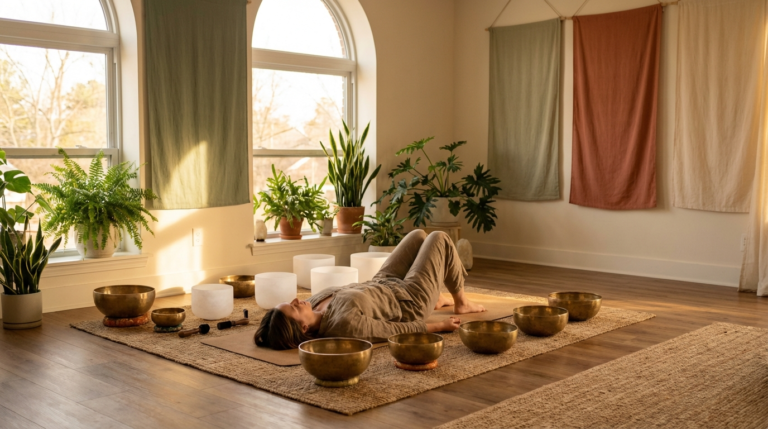
The term “sound bath” is often misunderstood. There’s no water involved. “Bath” refers to being immersed in sound — similar to how “bathing in sunlight” doesn’t require water. A typical sound bath session involves lying down (usually on a yoga mat, often with a blanket and eye pillow) while a practitioner plays resonant instruments in a room around you. The experience lasts 45–90 minutes.
Instruments commonly used:
- Tibetan singing bowls: Metal alloy bowls struck with mallets or played with friction to produce overtone-rich resonance. Different sizes produce different fundamental frequencies, typically in the range of 110–440 Hz.
- Crystal singing bowls: Made from quartz crystal, producing purer, sustained tones. Each bowl is typically tuned to a specific frequency (432 Hz, 528 Hz, and 639 Hz are frequently used in therapeutic contexts).
- Gongs: Large gongs produce complex, multidimensional sound with significant low-frequency content. The “gong bath” is particularly intense and isn’t appropriate for everyone — the volume and complexity of gong sound can be overwhelming for first-timers.
- Tuning forks: Precise frequency tools applied near or on the body; more clinical in application, used in sound therapy sessions that overlap with bodywork.
- Handpan and tongue drums: Newer additions to sound healing practice, producing melodic pentatonic tones with a meditative quality.
Sound baths are practiced in yoga studios, meditation centers, spa environments, hospital wellness programs, and increasingly in workplace wellbeing initiatives. According to the Global Wellness Institute’s 2025 Wellness Economy Monitor, sound healing is now a $5.8 billion annual market globally, with year-over-year growth of 18% from 2023 to 2025.
The Science: What Research Actually Shows (And What It Doesn’t)
Sound healing occupies an interesting position in wellness research: there’s enough clinical evidence to take it seriously, but many practitioners overclaim what the science supports. Here’s an honest assessment:
What the Research Supports
Stress and anxiety reduction: The strongest evidence base. A 2016 study in the Journal of Evidence-Based Integrative Medicine (Goldsby et al.) found that 62-minute Tibetan singing bowl meditation produced significant decreases in tension, anxiety, and physical pain across 62 participants. A 2022 follow-up study with a larger cohort (148 participants) replicated these findings with p-values of <0.001 for anxiety reduction — statistically strong results.
Heart rate and blood pressure: Multiple small studies show measurable decreases in heart rate and systolic blood pressure during sound meditation sessions. These appear to work through the same mechanisms as other relaxation-response practices (meditation, deep breathing, yoga nidra) — activating the parasympathetic nervous system and reducing cortisol release. The sound-specific aspect likely adds an attentional anchor that makes it easier to maintain the relaxed state than silent meditation for many people.
Sleep quality: A 2020 study in the International Journal of Environmental Research and Public Health found that participants who completed 4 weeks of weekly sound meditation showed significant improvement in Pittsburgh Sleep Quality Index scores compared to a waitlist control group. Effect sizes were comparable to CBT-I (cognitive behavioral therapy for insomnia) in short-term outcomes — a surprising finding that merits further investigation.
Pain perception: The most cautious claim, but still evidence-supported. Sound meditation appears to alter pain perception through distraction, relaxation, and possibly through specific frequency resonance effects that remain incompletely understood. A 2021 trial at the University of California used singing bowl meditation with chronic pain patients and found 65% reported reduced pain perception during sessions; 40% reported residual effects 24 hours later.
What the Research Does NOT Support
Some practitioners claim sound healing can “detoxify cells,” “reprogram DNA,” or “heal organs through resonant frequency matching.” These claims are not supported by peer-reviewed research. The documented benefits are real — stress reduction, improved sleep quality, acute anxiety reduction — but they work through established neurological mechanisms (relaxation response, attentional regulation), not through speculative cellular reprogramming.
The honest position: Sound baths are a legitimate, evidence-supported relaxation and stress-reduction modality. They are a complement to — not a replacement for — conventional medical treatment for conditions like anxiety disorders, chronic pain, or insomnia. If a practitioner suggests otherwise, treat that as a red flag.
The 5 Core Benefits of Regular Sound Bath Practice
1. Measurable Stress Reduction
This is the most documented benefit and the most reliably consistent across studies. The immersive nature of sound meditation — particularly the inability to “think your way out” of the present moment when surrounded by resonant frequencies — creates a different relaxation quality than many people achieve in silent meditation. For individuals who struggle with traditional meditation (“my mind won’t stop”), sound provides a continuous attentional anchor that makes the relaxation response more accessible.
Practical implication: a single monthly sound bath session may provide meaningful stress reduction benefit. Weekly sessions appear to produce cumulative benefit in anxiety measures that single sessions don’t match.
2. Improved Sleep Quality
The relationship between sound meditation and sleep improvement appears to work through two mechanisms: immediate cortisol reduction (helping you fall asleep that night), and over time, a learned association between deep relaxation and the sound environment that can generalize to non-session sleep. Many practitioners report that playing recordings of singing bowls at low volume functions as a sleep aid — this is consistent with the research on auditory-cued relaxation.
3. Reduction in Physical Tension
During sound bath sessions, the combination of lying still, physical warmth, and sustained resonant frequencies typically produces progressive muscle relaxation — often more complete than participants achieve through body-scan meditation alone. Many people report that areas of chronic tension (shoulders, jaw, lower back) release in ways they don’t experience in other practices. This may relate to the low-frequency components of gong and large singing bowl vibrations having mild physical resonance effects on muscle tissue, though this mechanism is less well-studied than the neurological effects.
4. Enhanced Meditative Depth
EEG research on sound meditation is limited but promising. A 2019 study from the Institute for Applied Consciousness Science found that participants exposed to specific singing bowl frequencies showed increased theta wave activity (4–8 Hz, associated with deep relaxation and hypnagogic states) compared to silent meditation controls. Theta states are associated with creativity, insight, and the hypnagogic zone between waking and sleep — the same states sought in meditation traditions. Sound appears to facilitate theta entrainment, particularly for practitioners who struggle to achieve it independently.
5. Community and Ritual
This benefit is undervalued in clinical research. Group sound baths — attending a weekly or monthly session at a yoga studio or meditation center — provide structured community ritual that research on wellbeing consistently identifies as independently beneficial. The simple act of scheduling non-digital, non-productivity time in a supportive group environment has documented effects on loneliness, perceived wellbeing, and life satisfaction. Sound baths happen to be a pleasant vehicle for this — but the community aspect may contribute as much as the sound itself for regular practitioners.
How to Find a Quality Sound Bath in Your Area
The quality of sound bath sessions varies enormously. Here’s how to evaluate options:
What to Look for in a Practitioner
- Training and certification: The field isn’t regulated, so credentials vary. Look for practitioners with documented training from recognized programs (California Institute of Integral Studies, Nada Brahma, BAST — British Academy of Sound Therapy). Training doesn’t guarantee quality, but no training is a yellow flag.
- Instrument quality: High-quality crystal or Tibetan bowls cost $300–2,000+ each. A practitioner with 4–6 quality instruments has made a meaningful investment. Poor-quality bowls produce tinny, unpleasant tones rather than the deep, sustained resonance that creates the beneficial experience.
- Session structure: A quality session includes grounding before and integration time after the playing. Sessions that rush participants out immediately after the last sound aren’t providing proper integration.
- Honest claims: Practitioners who make extravagant healing claims (“this will cure your anxiety” or “activate your DNA repair”) are red flags. Honest practitioners discuss documented benefits while being clear about limitations.
Where to Find Sessions
- Yoga studios: Most mid-size yoga studios now offer monthly or weekly sound bath events. These range from $20–45 per person for group sessions. Quality varies by studio; Yelp and Google reviews specifically mentioning the sound bath practitioner (not just the studio generally) are most useful.
- Spas and wellness centers: Premium spa environments offer sound bath experiences at $75–150/person, sometimes combined with breathwork, guided visualization, or aromatherapy. The setting is usually superior to yoga studios; the practitioner quality varies.
- Hospital wellness programs: Many integrative medicine programs at major hospitals (Cleveland Clinic, Mayo Clinic, UCSF, Johns Hopkins) now offer sound healing as part of their wellness programming. Hospital-affiliated programs typically have the highest practitioner standards and the most evidence-based approach.
- Private sessions: One-on-one sessions with a certified practitioner allow customization to your specific needs. Cost: $80–200/hour. Worth it for individuals with specific issues (chronic pain, treatment-resistant anxiety) who want therapeutic focus rather than general relaxation.
- Virtual sessions and recordings: High-quality recorded sound baths on YouTube (search “singing bowl meditation” and filter by quality) and Insight Timer provide accessible starting points. The live, in-room experience is qualitatively different — instrument resonance in physical space has physical vibrational components that recordings can’t replicate — but recordings are a legitimate starting practice.
How to Prepare for Your First Sound Bath
First-timers often underestimate how different this experience is from other wellness practices. These preparation steps improve the experience significantly:
- Wear comfortable clothing: You’ll be lying still for 45–90 minutes. Tight waistbands, restrictive jeans, or uncomfortable shoes will distract you. Loose, warm layers are ideal — body temperature drops during deep relaxation.
- Eat lightly beforehand: A full stomach is uncomfortable when lying on your back. Eat a light meal at least 2 hours before. Arrive hydrated but not needing to use the bathroom mid-session.
- Arrive early: Set up your mat and blanket before the session starts. Rushing in at the last minute and settling noisily disrupts other participants and makes it harder to relax into the beginning of the session.
- Manage expectations about what you’ll feel: Some people have profound relaxation experiences immediately. Others feel nothing special the first time. Both responses are normal — the benefits often build over several sessions. Don’t judge your first experience as representative.
- Disclose medical conditions: Epilepsy (sound can trigger seizures in susceptible individuals), tinnitus (some frequencies may worsen symptoms), and pregnancy (some practitioners modify sessions for pregnant clients) should be disclosed to the practitioner before the session.
Bringing Sound Healing Into Your Daily Practice
Beyond studio sessions, sound healing principles can be integrated into daily wellness routines:
- Morning tuning fork meditation (5 minutes): A single 432 Hz tuning fork struck and held near the ears while taking slow breaths activates the relaxation response quickly. Entry-level tuning forks cost $25–50.
- Singing bowl in evening routine: A small Tibetan singing bowl (CHF 30–80 for entry-level) struck and listened to for 3–5 minutes before bed serves as an auditory cue for sleep preparation.
- Binaural beats during focused work: While not identical to sound bath practice, binaural beats in the alpha range (8–12 Hz) during focused work are supported by research on attention and concentration. Multiple free apps provide binaural beat options.
Related Wellness Guides
Sound bath healing is most effective as part of a thorough wellness practice:
FAQ: Sound Bath Healing
How often should you do a sound bath for benefits?
Research suggests weekly sessions produce cumulative anxiety and sleep benefits beyond what single sessions achieve. Monthly sessions are associated with meaningful acute stress reduction. For most people, weekly is ideal but not always practical — biweekly or monthly sessions still provide documented benefit. Consistency matters more than frequency: an irregular session once a week produces better outcomes than occasional intensive sessions spaced months apart.
Who should NOT attend a sound bath?
Individuals with epilepsy should avoid sound baths or consult their neurologist first, as specific sound frequencies can trigger photosensitive-like responses in susceptible individuals. People with severe tinnitus may find certain bowl frequencies worsen symptoms — disclose this to the practitioner. Those with pacemakers should avoid sessions involving physical instrument application. Anyone in acute psychiatric crisis, active psychosis, or within 48 hours of a traumatic event should wait for stabilization before attending. Pregnant women in the first trimester and third trimester should consult their OB first; second-trimester participation with a trained practitioner is generally considered safe.
Is there a difference between a sound bath and sound therapy?
Yes, an important one. Sound baths are group immersive experiences focused on relaxation and general wellbeing — the practitioner plays instruments and participants receive the sound passively. Sound therapy (or vibroacoustic therapy) is individualized, often involves physical instrument application, and is typically provided by certified therapists in clinical or near-clinical settings. Sound therapy addresses specific conditions (chronic pain, developmental delays, PTSD) with protocols backed by more clinical research. Sound baths are wellness experiences; sound therapy is a complementary health modality.
Do sound baths work if you fall asleep?
Yes — and falling asleep is extremely common and considered a positive response by most practitioners. The neurological processing of sound continues during sleep (your auditory system remains active). Participants who fall asleep during sound baths typically report the same post-session relaxation effects as those who stayed awake. The practitioner plays at volumes low enough that sleep is comfortable; there’s no expectation to remain awake. If sleep deprivation is part of your reason for attending, this is an especially valid response.
How much does a sound bath session cost?
Group sound baths at yoga studios typically cost $20–45 per person. Spa or wellness center events run $60–120. Hospital wellness programs vary widely (sometimes covered by employee wellness benefits or health insurance in integrative medicine plans). Private one-on-one sessions with certified practitioners cost $80–200 per hour. Free options include recorded sessions on YouTube and Insight Timer app — limited compared to live experiences but legitimate starting points. Quality correlates with instrument quality and practitioner training, not session price.
Can sound baths help with anxiety and depression?
Sound baths show consistent evidence for acute anxiety reduction in clinical studies. For clinical anxiety disorders or depression, sound baths are a complementary modality — they may reduce symptom intensity and improve sleep quality, which supports recovery, but they are not a substitute for evidence-based treatments (therapy, medication when indicated). Multiple integrative medicine programs use sound healing as part of thorough anxiety treatment packages. If you have a diagnosed anxiety disorder or depression, discuss adding sound healing with your treatment provider rather than replacing existing treatment.
Best Sleep Optimization Tips for Better Rest 2026: Why Most Sleep Advice Fails (and What Actually Works)
One in three American adults don’t get enough sleep. The CDC has declared insufficient sleep a public health epidemic. The global sleep economy — mattresses, apps, supplements, devices — is worth over $585 billion as of 2024 (Statista). And yet, despite all this attention and spending, sleep quality is declining. Something is fundamentally wrong with the advice people are following.
The Sleep Debt Crisis: Understanding the Scale of the Problem
Sleep deprivation isn’t a minor inconvenience. According to the American Academy of Sleep Medicine, adults who sleep less than 7 hours per night are 3x more likely to develop the common cold, have significantly higher risk for type 2 diabetes and cardiovascular disease, and show measurable cognitive impairment equivalent to legal intoxication after 18+ hours of wakefulness.
The RAND Corporation estimates that sleep deprivation costs the US economy $411 billion annually in lost productivity — roughly 2.28% of GDP. Japan ($138 billion), Germany ($60 billion), and the UK ($50 billion) face similar proportional losses.
A 2025 Gallup sleep survey found that the average American now sleeps 6.8 hours per night — down from 7.9 hours in 1942. The decline correlates precisely with smartphone adoption curves. This isn’t a willpower problem; it’s a biology problem in conflict with a technology-saturated environment.
Why Most Sleep Advice Fails
The popular sleep advice you’ve heard — “put your phone away,” “have a consistent schedule,” “try melatonin” — isn’t wrong. It’s insufficient. Here’s why these commonly-repeated tips often don’t produce lasting results:
- “Stop using screens before bed” — True but behaviorally impractical. Without understanding why the screen affects sleep (blue light suppresses melatonin, but the bigger issue is psychological stimulation and anxiety from social media) and providing substitutes, this advice creates guilt without behavior change.
- “Stick to a sleep schedule” — Correct science, wrong approach for most people. Sleep schedule consistency is indeed the most powerful sleep regulator, but enforcing it without addressing underlying sleep drive and circadian timing is like telling someone to “just eat less.”
- “Take melatonin” — Melatonin is a timing signal, not a sedative. It helps shift your sleep window but doesn’t improve sleep quality or duration significantly in people without circadian rhythm disorders. Most people taking 5-10mg melatonin are taking 5-10x the effective dose.
- “Exercise more” — True, but exercise timing matters enormously. High-intensity exercise within 3 hours of bedtime raises core body temperature and cortisol, delaying sleep onset despite improving overall sleep architecture when done at appropriate times.
Science-Backed Sleep Protocols That Actually Work
Protocol 1: Circadian Anchoring (Most Impactful Single Change)
Your circadian rhythm is set primarily by light exposure in the first 30-60 minutes after waking. Bright outdoor light (or a 10,000-lux light therapy lamp) in the morning suppresses morning melatonin and sets a precise timer for evening melatonin release 14-16 hours later.
Research from Stanford sleep researcher Andrew Huberman (published in Nature Neuroscience) shows that morning light exposure of just 5-10 minutes reliably advances and stabilizes evening sleepiness timing. This is the foundational protocol — it works faster than any supplement and requires only behavioral change.
Implementation: Within 30 minutes of waking, spend 5-10 minutes outside (or at a window with direct light). On cloudy days, extend to 15-20 minutes. This alone regularizes circadian timing within 2-4 days for most people.
Protocol 2: Sleep Pressure Optimization
Sleep pressure (adenosine buildup) drives your desire to sleep. It builds throughout the day and is cleared by sleep. Two common habits destroy sleep pressure before bedtime:
- Napping too long: Naps over 20 minutes significantly reduce evening sleep pressure. If you must nap, limit to 10-20 minutes and before 3pm.
- Caffeine timing: Caffeine blocks adenosine receptors — it doesn’t eliminate adenosine, it just prevents you from feeling it. The adenosine buildup continues behind the caffeine blockade. The average caffeine half-life is 5-6 hours, meaning a 3pm coffee has 25% of its stimulant effect at 9pm.
Implementation: Cut caffeine by 12-1pm (for most people). Allow sleep pressure to build naturally by avoiding long naps. By 10pm, you’ll have 16+ hours of adenosine buildup — sleep onset will be fast and quality will be high.
Protocol 3: Temperature Manipulation
Core body temperature must drop 1-3°F to initiate and maintain sleep. This is why you naturally feel cooler in the evening, and why a too-warm bedroom disrupts sleep architecture. Research from the Journal of Physiological Anthropology shows that bedroom temperature between 65-68°F (18-20°C) is optimal for most adults.
Counterintuitively, taking a warm bath or shower 1-2 hours before bed improves sleep onset. The warm water dilates skin blood vessels, drawing heat from your core — after exiting, your core temperature drops faster than it would otherwise, triggering the temperature drop that signals sleep onset.
Protocol 4: Cognitive Wind-Down Protocol
The brain needs 60-90 minutes to transition from high-stimulation wakefulness to sleep readiness. This isn’t optional — it’s biological. The protocol:
- 90 minutes before bed: Dim household lights to 10-50% of daytime brightness (use warm-toned bulbs, never overhead lighting)
- 60 minutes before bed: No email, news, or social media (these create open “cognitive loops” that are neurologically incompatible with sleep)
- 30 minutes before bed: Low-stimulation reading, light stretching, or journaling (the brain’s “parking lot” — dump tomorrow’s to-do list on paper to prevent mental rehearsal during sleep onset)
Top Sleep Optimization Products and Tools 2026
Wearables: Sleep Tracking
Oura Ring Gen 4 — The most accurate consumer sleep tracker available, measuring heart rate variability, body temperature, and sleep stages with clinical-grade accuracy according to a 2024 comparison study in Sleep Medicine Reviews. The readiness score is genuinely predictive of cognitive performance. At $349 + $5.99/month, it’s expensive but provides actionable data that genuinely improves sleep decisions.
Garmin Venu 3 — Best value sleep tracking for fitness-focused users. Excellent sleep stage detection, sleep coaching feature (suggests schedule adjustments based on your data), and the watch form factor suits those who prefer not to wear a ring.
Environment: Sleep Temperature Tools
Eight Sleep Pod 4 Pro — Active water cooling/heating under your sheet, app-controlled. The temperature programming capability (cool when falling asleep, warmer in deep sleep phases, warming to wake naturally) is the most evidence-supported sleep environment intervention available. At $2,495, it’s a serious investment; the $24/month subscription provides personalized temperature programs based on your biometric data.
Chilisleep CUBE — The original sleep temperature regulation system at $499-699. Less sophisticated than Eight Sleep but delivers the core benefit (cool sleeping) at lower cost.
Light: Blue Light Management
Blue Light Blocking Glasses (Swanwick, BLUblox) — Amber-lens glasses worn from sunset block the short-wavelength light that suppresses melatonin. A 2019 RCT in Current Biology showed that amber-lens glasses worn 3 hours before bed advanced sleep timing by an average of 30 minutes in participants. At $50-100, these are the most cost-effective sleep optimization tool available.
Philips SmartSleep Wake-Up Light — Sunrise alarm that gradually increases light intensity over 30 minutes before alarm time. Waking during light sleep (which the alarm system facilitates) instead of deep sleep dramatically reduces grogginess. The morning light exposure also sets circadian anchoring.
Supplements: What Actually Has Evidence
- Magnesium Glycinate (200-400mg): Supports GABA activity (the brain’s braking system). Multiple RCTs show improvement in sleep quality and reduced time to fall asleep. Best taken 30-60 minutes before bed.
- Apigenin (50mg): A natural benzodiazepine receptor agonist found in chamomile. Modest but real anxiolytic effect that reduces pre-sleep rumination. Non-habit-forming.
- L-Theanine (100-200mg): Promotes alpha brainwave activity associated with relaxed alertness. Reduces sleep latency without sedation.
- Low-dose melatonin (0.3-0.5mg, NOT 5-10mg): The effective dose for circadian timing purposes is dramatically lower than what’s sold in most supplements. 0.3mg is as effective as 5mg for sleep timing with fewer next-morning effects.
For complementary wellness practices that support better sleep, our guide on cold plunge therapy benefits covers the sleep-recovery connection. If stress is disrupting your sleep, our cold water therapy for stress relief guide provides complementary protocols. And our meditation apps for anxiety guide covers the mindfulness practices that improve pre-sleep cognitive wind-down.
Frequently Asked Questions
How many hours of sleep do adults actually need?
The National Sleep Foundation recommends 7-9 hours for adults aged 18-64. A small genetic subgroup (1-3% of the population) genuinely functions well on 6 hours due to a mutation in the DEC2 gene. For everyone else, consistent sub-7-hour sleep has measurable negative effects on cognition, immunity, and metabolic health. Self-reported “I function fine on 6 hours” almost always reflects adaptation rather than absence of impairment.
Is it bad to sleep with your phone in the bedroom?
The light is manageable with blue-light mode and face-down placement. The bigger problem is behavioral — the psychological pull to check notifications during middle-of-night awakenings extends wakefulness and trains the brain that the bedroom is a stimulation zone. A separate alarm clock and phone charging in another room genuinely improves sleep continuity for most people who try it.
Do sleep supplements actually work?
Selectively. Magnesium glycinate, L-theanine, apigenin, and low-dose melatonin have real evidence. Most “sleep formula” supplements contain modest doses of multiple ingredients that individually have weak evidence — the combined effect is uncertain. Avoid high-dose melatonin, antihistamine-based sleep aids (cause rebound insomnia with regular use), and anything marketed as “knockout strength.”
What’s the best position to sleep in?
Side sleeping (specifically left-side for those with acid reflux) is associated with lowest rates of sleep apnea and acid reflux compared to back sleeping. Back sleeping with a cervical pillow is optimal for spinal alignment in those without sleep apnea. Stomach sleeping is associated with neck tension and is the least recommended position across sleep medicine literature.
Can you catch up on sleep on weekends?
Partially. A 2019 Journal of Sleep Research study found that weekend “catch-up sleep” recovers some metabolic markers from weekday sleep restriction but doesn’t fully restore cognitive performance. The consistency of sleep schedule is more important than the weekly average — irregular social jet lag (varying sleep timing by more than 1 hour across the week) impairs circadian rhythm function independently of total sleep time.
You May Also Like