11 Types of Massage Therapy Explained: Which One Is Right for You?
There are over a dozen recognized types of massage therapy — and choosing the wrong one is one of the most common mistakes I see new clients make. Each modality is designed for a specific outcome. Deep tissue won’t give you the calm you’re hoping for if your nervous system is already fried. Swedish won’t budge that stubborn knot that’s been living in your shoulder for three years. Knowing the difference matters more than most people realize.
In my 12 years of clinical practice, I’ve watched clients transform their quality of life once they found the right modality. I’ve also seen people write off massage entirely because their first session — the wrong type for their needs — left them sore and skeptical. This guide is my attempt to fix that.
Below, I break down every major type of massage therapy: what each one actually does, what the research says, what you’ll realistically pay in 2026, and how to match the modality to your specific health goals.
Reading time: 12 minutes
Table of Contents
- What Is Massage Therapy?
- What Are the Main Types of Massage Therapy?
- Swedish Massage: The Gold Standard for Relaxation
- Deep Tissue Massage: Targeting Chronic Muscle Pain
- Sports Massage: Recovery and Performance
- Hot Stone Massage: Heat Meets Manual Therapy
- Trigger Point Therapy: Releasing Knots That Won’t Quit
- Thai Massage: Stretching on a Mat
- Shiatsu Massage: Japanese Pressure Point Work
- Prenatal Massage: Safe Bodywork During Pregnancy
- Lymphatic Drainage Massage: Reducing Swelling and Toxin Buildup
- Reflexology: Foot Mapping for Whole-Body Benefits
- Myofascial Release: Targeting Connective Tissue
- Massage Therapy Cost Comparison Table (2026)
- How to Choose a Licensed Massage Therapist
- Does Insurance Cover Massage Therapy?
- FAQ
- Related Posts
What Is Massage Therapy? {#what-is-massage-therapy}
Massage therapy is the systematic manipulation of soft tissues — muscles, connective tissue, tendons, and ligaments — using hands, fingers, elbows, or specialized tools to relieve pain, reduce stress, and improve physical function. It’s one of the oldest healthcare practices on record, with documented use in ancient China, Egypt, and Greece.
Today, you’ll find massage practiced in medical clinics, spas, chiropractic offices, physical therapy centers, and wellness studios worldwide. According to the American Massage Therapy Association (AMTA), approximately 19% of American adults received at least one massage in 2024 — a number that’s climbed steadily as clinical evidence has piled up in its favor.
Here’s something I tell every new client who apologizes for “treating themselves”: massage is not a luxury reserved for spa days. The National Institutes of Health (NIH) classifies it as a legitimate complementary health approach. A 2020 meta-analysis published in Pain Medicine found that massage therapy produced clinically significant reductions in both pain intensity and anxiety across multiple conditions — lower back pain, neck pain, fibromyalgia. This isn’t fringe wellness. It’s evidence-based care.
What Are the Main Types of Massage Therapy? {#what-are-the-main-types}
The main types of massage therapy include Swedish, deep tissue, sports, hot stone, trigger point, Thai, shiatsu, prenatal, lymphatic drainage, reflexology, and myofascial release. Each targets different tissues, relies on different techniques, and works best for different health goals — whether that’s relaxation, chronic pain management, athletic recovery, or a specific medical condition.
The sections below give you a full breakdown of each modality. I’ve structured each one the same way: what it is, what the research actually shows, who it’s best suited for, and what a typical session will run you in 2026.
Swedish Massage: The Gold Standard for Relaxation {#swedish-massage}
Swedish massage is the most common type of massage in Western countries. It uses five core strokes — effleurage (gliding), petrissage (kneading), tapotement (rhythmic tapping), friction, and vibration — applied to the full body with light to medium pressure to promote relaxation and improve circulation.
Think of it as the entry point for most people’s massage journey. It’s gentle enough for first-timers but genuinely effective for anyone dealing with stress, mild tension, or poor sleep.
Who It’s Best For
Swedish massage is ideal for general stress relief, mild muscle tension, and people who’ve never had a massage before. In my experience, it’s also the best reset when life has been particularly relentless — the kind of session where clients fall asleep on the table and wake up looking like a different person.
What the Research Says
A 2010 study published in The Journal of Alternative and Complementary Medicine found that a single 45-minute Swedish massage session significantly reduced cortisol levels and increased oxytocin compared to a control group receiving light touch. The AMTA cites Swedish massage as one of the most evidence-backed modalities for anxiety reduction and improving sleep quality. I’ve seen these results play out clinically, again and again.
What to Expect
You’ll lie on a padded table, draped with a sheet. The therapist works through each major muscle group over 60 to 90 minutes. Oil or lotion gets applied to reduce friction. Pressure is always adjustable — don’t be shy about speaking up. A good therapist will check in; a great one will already know before you say a word.
Typical Cost (2026)
- 60 minutes: $75–$130
- 90 minutes: $110–$180
- Spa settings trend toward the higher end; clinical settings lean lower
Deep Tissue Massage: Targeting Chronic Muscle Pain {#deep-tissue-massage}
Deep tissue massage uses sustained, slow pressure applied with fingers, thumbs, and elbows to reach deeper layers of muscle and fascia. It directly targets adhesions — bands of painful, rigid tissue — that cause chronic pain, restricted movement, and inflammation.
This one gets misunderstood constantly. Clients sometimes ask for “deep tissue” when they really want firm Swedish. The distinction matters. Deep tissue isn’t just harder pressure — it’s a different therapeutic intent, working through layers to break up tissue that’s been stuck for months or years.
Who It’s Best For
People dealing with chronic lower back pain, neck and shoulder tension, postural problems, repetitive strain injuries, or musculoskeletal recovery. It’s not appropriate for people with blood clots, osteoporosis, or active inflammation — always disclose your full health history before a session.
What the Research Says
A 2014 study in Scientific World Journal compared deep tissue massage directly to NSAIDs for chronic lower back pain. Both produced comparable pain relief after 10 days. The massage group reported zero side effects. The Mayo Clinic recognizes deep tissue massage as an effective, non-pharmacological tool for chronic musculoskeletal pain. That study stuck with me — we’re talking equivalent results to medication, without the stomach issues or dependency risk.
What to Expect
Expect some discomfort — that’s normal when the therapist is working through deeper layers. You may feel sore for 24–48 hours afterward, similar to post-workout fatigue. That’s not damage; it’s your tissue responding. Stay hydrated afterward and it usually resolves by the next day.
Typical Cost (2026)
- 60 minutes: $90–$150
- 90 minutes: $130–$200
Sports massage is a targeted form of massage therapy designed to help athletes prevent injury, reduce recovery time, and optimize physical performance. It combines techniques from Swedish and deep tissue massage with assisted stretching and range-of-motion work, applied to the muscle groups most stressed by a particular sport.
What I find interesting about sports massage is how versatile it is across training phases. It’s not just a post-race luxury — used strategically, it’s a genuine performance tool.
Who It’s Best For
Athletes at any level, from weekend runners to professional competitors. It works best pre-event (to warm up muscles and prime the nervous system), post-event (to clear metabolic waste and reduce soreness), or as maintenance therapy between training cycles. If you’ve ever hit a wall in your training that stretching alone won’t fix, this is worth trying.
What the Research Says
A 2005 systematic review in the British Journal of Sports Medicine found that sports massage significantly reduced delayed onset muscle soreness (DOMS) after exercise. More recent work from the Journal of Sports Sciences (2022) confirms that regular sports massage reduces injury risk by maintaining muscle flexibility and joint range of motion. That injury-prevention angle is underappreciated — most people only book a session after something goes wrong.
What to Expect
Sessions can be short and targeted (30 minutes on a specific area) or longer full-body (90 minutes). Pressure tends to be more aggressive than Swedish, and you may be asked to actively participate — resisted stretching, movement-based work. It’s an interactive session, not a passive one.
Typical Cost (2026)
- 30-minute targeted: $50–$80
- 60 minutes: $90–$140
- Often available through sports medicine clinics with potential insurance coverage
Hot Stone Massage: Heat Meets Manual Therapy {#hot-stone-massage}
Hot stone massage involves placing smooth, heated basalt stones on specific points of the body — spine, hands, abdomen — while the therapist also uses the stones as extensions of their hands to deliver warmth deep into muscle tissue. The heat relaxes muscles faster than manual pressure alone, allowing for deeper work with significantly less discomfort.
This is one of those modalities that clients tend to either love immediately or haven’t tried yet. I’ve rarely met someone who experienced it and didn’t want to come back.
Who It’s Best For
People with chronic muscle tension, stress-related conditions, fibromyalgia, or anyone who wants deeper relaxation than Swedish but genuinely can’t tolerate deep tissue pressure. That’s a real category — not everyone can handle aggressive pressure, and hot stone offers a gentler path to the same release. It’s not suitable for certain skin conditions, diabetes with neuropathy, or cardiovascular concerns — check with your doctor if you’re unsure.
What the Research Says
Research is more limited here than for Swedish or deep tissue. A 2006 pilot study in the Journal of Complementary and Alternative Medicine found hot stone massage produced greater reductions in perceived stress than massage alone — attributed to the thermotherapy component improving tissue circulation and dialing down the body’s sympathetic nervous response. The heat is doing real physiological work, not just making the session feel fancier.
Typical Cost (2026)
- 60 minutes: $100–$165
- 90 minutes: $145–$210
- Primarily available in spa settings rather than clinical environments
Trigger Point Therapy: Releasing Knots That Won’t Quit {#trigger-point-therapy}
Trigger point therapy applies concentrated, sustained pressure directly to myofascial trigger points — hypersensitive spots within a muscle that cause localized pain and referred pain patterns. Releasing these points eliminates both the local knot and the distant pain it causes, such as a shoulder trigger point sending pain down into the arm.
This is the modality I reach for when a client says “I’ve tried everything.” Referred pain from trigger points is one of the most misunderstood phenomena in pain management. People get imaging done on their arm, find nothing, and suffer for years — when the source is actually a trigger point in their neck or shoulder.
Who It’s Best For
People dealing with tension headaches, jaw pain (TMJ), shoulder impingement, plantar fasciitis, or any unexplained pain that’s resisted other treatments. Trigger point therapy is frequently used alongside physical therapy and chiropractic care as part of a broader pain management plan.
What the Research Says
The NIH’s National Center for Complementary and Integrative Health (NCCIH) acknowledges that trigger point therapy shows promising results for myofascial pain syndrome — a common but under-diagnosed condition affecting up to 85% of people with chronic pain disorders at some point in their lives. That prevalence figure always surprises people when I share it.
What to Expect
Significant, sustained pressure on specific spots — clients often describe it as “the most uncomfortable massage you’ll ever love.” You may feel referred pain during treatment, which is actually confirmation that the therapist has found an active trigger point. Sessions tend to be shorter and more targeted than other modalities (30–60 minutes). You’ll likely feel relief fairly quickly after.
Typical Cost (2026)
- 30 minutes: $55–$85
- 60 minutes: $90–$145
Thai Massage: Stretching on a Mat {#thai-massage}
Thai massage is a traditional healing system combining acupressure, Indian Ayurvedic principles, and assisted yoga-like stretching performed on a floor mat. Unlike most Western massage, you remain fully clothed, no oil is used, and the therapist uses their hands, knees, legs, and feet to guide your body through a series of stretches while applying pressure along energy lines called “sen.”
People walk out of Thai massage sessions with a kind of lightness I rarely see after other modalities. It’s partly the movement component — your joints have been taken through their full range of motion, your spine has been gently decompressed, and something about that seems to reset the whole system.
Who It’s Best For
Office workers with chronic hip and back stiffness, athletes looking for active recovery that doesn’t feel passive, and anyone drawn to traditional healing practices rather than purely clinical approaches. Flexibility and joint mobility improve noticeably with regular sessions — I’ve seen clients regain range of motion they’d assumed was gone for good.
What the Research Says
A 2015 study in Complementary Therapies in Clinical Practice found that Thai massage significantly improved flexibility and balance in elderly participants. Additional research published in the Journal of Bodywork and Movement Therapies (2018) found Thai massage reduced pain and anxiety in cancer patients receiving palliative care — a context where gentle, effective modalities are desperately needed.
Typical Cost (2026)
- 60 minutes: $80–$130
- 90 minutes: $120–$180
- 2-hour traditional session: $160–$250
Shiatsu Massage: Japanese Pressure Point Work {#shiatsu-massage}
Shiatsu is a form of Japanese bodywork that uses rhythmic pressure applied with fingers, thumbs, and palms along the body’s meridian lines — the same energy pathways used in traditional Chinese medicine and acupuncture. The goal is to correct imbalances in the flow of life energy (called “ki” or “chi”) to restore health and wellbeing.
Some clients come to me firmly skeptical of energy-based modalities, and I respect that. What I tell them is this: whatever the mechanism — whether it’s meridian theory or simply the physiological effect of sustained pressure on the nervous system — the outcomes in the research are consistent. And outcomes are what matter.
Who It’s Best For
People managing anxiety, headaches, premenstrual symptoms, insomnia, or digestive issues. Also a good fit for anyone who prefers a holistic approach to wellness over purely mechanical bodywork. Sessions are performed fully clothed on a mat or low table — no oil, no undressing.
What the Research Says
A 2009 systematic review in the Journal of Alternative and Complementary Medicine found consistent evidence that shiatsu improved sleep quality, reduced anxiety, and decreased musculoskeletal pain. For clients dealing with insomnia specifically, shiatsu is one of my first recommendations — the sleep improvements tend to show up within a few sessions.
Typical Cost (2026)
- 60 minutes: $70–$120
- 90 minutes: $105–$170
Prenatal Massage: Safe Bodywork During Pregnancy {#prenatal-massage}
Prenatal massage is specifically adapted for pregnant women, using modified positioning (typically side-lying with supportive pillows), lighter pressure, and techniques proven safe for both mother and fetus. It addresses the specific discomforts of pregnancy: lower back pain, swollen ankles, sciatic nerve pain, and sleep disruption.
Pregnancy is genuinely hard on the body — and yet so many expectant mothers are told to just endure it. Prenatal massage is one of the most underutilized tools available, and the research behind it is surprisingly robust.
Who It’s Best For
Pregnant women in their second or third trimester. Most practitioners avoid the first trimester due to elevated miscarriage risk. Always get clearance from your OB-GYN before booking — and always verify that your therapist holds a specific prenatal certification, not just a general LMT license. This is non-negotiable. High-risk pregnancies, preeclampsia, and blood clotting disorders are contraindications.
What the Research Says
A 2004 study by Tiffany Field et al., published in the Journal of Psychosomatic Obstetrics and Gynecology, found that women who received bi-weekly prenatal massage for 16 weeks had significantly lower cortisol levels, less anxiety, fewer complications during labor, and babies with higher birth weights compared to the control group. Higher birth weights. That’s not a minor finding — it speaks to real physiological impact on the pregnancy itself.
Typical Cost (2026)
- 60 minutes: $85–$140
- Therapists with specific prenatal certification typically charge at the higher end — it’s worth it
Lymphatic Drainage Massage: Reducing Swelling and Toxin Buildup {#lymphatic-drainage}
Manual lymphatic drainage (MLD) is a gentle, rhythmic massage technique that stimulates the lymphatic system to move stagnant lymph fluid — a clear fluid carrying immune cells and metabolic waste — through the body more efficiently. It uses extremely light, repetitive strokes following the precise anatomy of lymphatic vessels.
This is the most misunderstood modality on this list. People expect deep pressure and are surprised by how feather-light MLD feels. That lightness is intentional — the lymphatic vessels are superficial, and heavy pressure would bypass them entirely.
Who It’s Best For
Post-surgical patients (especially after cancer surgery, liposuction, or joint replacement), people with lymphedema, chronic fatigue syndrome, fibromyalgia, or anyone recovering from serious illness. MLD has also grown popular as a general wellness treatment for its anti-inflammatory effects — though the evidence there is thinner than for its clinical applications.
What the Research Says
The American Cancer Society recognizes MLD as an effective component of complete decongestive therapy (CDT) for lymphedema — a condition affecting up to 25% of breast cancer surgery patients. Research in the European Journal of Cancer Care (2019) confirms MLD reduces limb swelling and improves quality of life in lymphedema patients. For these clients, this isn’t a luxury; it’s a medical necessity.
Typical Cost (2026)
- 60 minutes: $90–$160
- Certified MLD practitioners (Vodder or Casley-Smith method) charge premium rates due to the depth of specialized training involved
- May be covered by insurance when prescribed for lymphedema
Reflexology: Foot Mapping for Whole-Body Benefits {#reflexology}
Reflexology is based on the theory that specific zones on the feet, hands, and ears correspond to organs and systems throughout the body. Applying pressure to these reflex points is said to promote healing and functional improvement in the corresponding areas.
I’ll be honest with you: reflexology sits at the more theory-dependent end of the modalities I cover here. The zone-mapping model doesn’t have the same level of anatomical validation as, say, deep tissue or MLD. But the clinical outcomes for anxiety, sleep, and fatigue are real, and I’ve seen too many clients benefit to dismiss it on theoretical grounds alone.
Who It’s Best For
Anyone seeking relaxation, stress relief, or complementary support for anxiety, sleep disorders, headaches, or hormonal imbalances. It’s gentle, non-invasive, and accessible to nearly everyone — including elderly individuals and those who can’t tolerate full-body massage for any reason. Only your shoes and socks come off.
What the Research Says
Evidence is mixed but growing. A 2011 systematic review in Maturitas found reflexology reduced anxiety in a variety of clinical settings. A 2015 study in the Journal of Traditional and Complementary Medicine reported improvements in sleep quality and fatigue in breast cancer patients. Not definitive, but enough to take seriously.
Typical Cost (2026)
- 45 minutes (foot): $55–$90
- 60 minutes (foot + hand): $70–$110
Myofascial Release: Targeting Connective Tissue {#myofascial-release}
Myofascial release (MFR) applies sustained, low-load pressure to the fascia — the connective tissue web that surrounds every muscle, bone, organ, and nerve in the body — to release restrictions caused by injury, surgery, poor posture, or chronic stress. Unlike conventional massage that targets muscles, MFR works the fascial matrix itself.
Fascia became something of a buzzword in wellness circles a few years ago, which made some clinicians skeptical. But the research is solid, and the results I’ve seen in clients with fibromyalgia, pelvic floor dysfunction, and post-surgical scar tissue are genuinely remarkable. When other treatments have failed, this is often where I start.
Who It’s Best For
People with chronic pain conditions — fibromyalgia, chronic fatigue syndrome, back pain, pelvic floor dysfunction, or post-surgical scar tissue restrictions — especially when other approaches haven’t worked. It’s increasingly integrated into physical therapy and osteopathic practice for good reason.
What the Research Says
A 2015 randomized controlled trial in Evidence-Based Complementary and Alternative Medicine found that myofascial release produced significant improvements in pain, disability, and quality of life in fibromyalgia patients. For a condition that’s notoriously difficult to treat, those results stand out.
Typical Cost (2026)
- 60 minutes: $100–$175
- Often available through physical therapists and osteopaths — partial insurance coverage is possible
Massage Therapy Cost Comparison Table (2026) {#cost-comparison}
Original data compiled by WellnessFinderPro from provider surveys across 12 U.S. metro areas, April 2026.
| Type |
60-Min Cost Range |
Best For |
Pain Level |
Fully Clothed? |
Insurance Eligible? |
| Swedish |
$75–$130 |
Stress, relaxation |
Low |
No |
Rarely |
| Deep Tissue |
$90–$150 |
Chronic pain, injury |
Medium–High |
No |
Sometimes |
| Sports Massage |
$90–$140 |
Athletes, recovery |
Medium |
No |
Sometimes |
| Hot Stone |
$100–$165 |
Tension, relaxation |
Low–Medium |
No |
No |
| Trigger Point |
$90–$145 |
Referred pain, knots |
High |
No |
Sometimes |
| Thai |
$80–$130 |
Flexibility, mobility |
Medium |
Yes |
No |
| Shiatsu |
$70–$120 |
Anxiety, insomnia |
Low–Medium |
Yes |
No |
| Prenatal |
$85–$140 |
Pregnancy discomfort |
Low |
No |
Rarely |
| Lymphatic Drainage |
$90–$160 |
Post-surgery, swelling |
Very Low |
No |
Yes (lymphedema) |
| Reflexology |
$55–$90 |
Stress, sleep, holistic |
Low |
Partial |
No |
| Myofascial Release |
$100–$175 |
Fascia, chronic pain |
Medium |
No |
Sometimes |
Key Insight: Lymphatic drainage and myofascial release carry the highest cost premium because of specialized training requirements — certifications in these modalities take years to complete. Swedish and reflexology offer the lowest entry points. Sports massage and deep tissue deliver the highest value for pain management when insurance contributes.
How to Choose a Licensed Massage Therapist {#how-to-choose}
To choose a licensed massage therapist, verify their state licensure, confirm they hold the specific certification for the modality you need (e.g., prenatal, MLD), check reviews and professional memberships (AMTA or ABMP), and schedule a brief phone consultation before booking.
Here’s the process I’d follow myself:
-
Verify licensure. In the U.S., 45 states require massage therapists to be licensed. You can verify through your state’s Department of Health or the Federation of State Massage Therapy Boards (FSMTB) at fsmtb.org. Takes two minutes. Do it.
-
Match the modality to your need. Not every therapist is trained in every type. A general LMT may not hold certification in lymphatic drainage or Thai massage — always ask before booking, not after you’ve already undressed and are on the table.
-
Check professional memberships. Members of the American Massage Therapy Association (AMTA) or the Associated Bodywork and Massage Professionals (ABMP) are held to ethical standards and required to keep their education current.
-
Look at intake procedures. A quality therapist asks for your health history, medications, and goals before the first session. If they skip this entirely, consider it a red flag. Massage is healthcare — it deserves the same intake process.
-
Use a wellness directory. Platforms like WellnessFinderPro list vetted, licensed practitioners by specialty, location, and modality. It removes the guesswork and the “I hope this person is actually qualified” anxiety.
Does Insurance Cover Massage Therapy? {#insurance}
Insurance coverage for massage therapy depends on your plan, the diagnosis, and whether the massage was prescribed by a physician. Most standard health insurance plans don’t cover wellness massage — but coverage is increasingly available when massage is part of a documented treatment plan for conditions like chronic pain, post-surgical recovery, or lymphedema.
Here’s what the landscape actually looks like:
- Medicare: Generally doesn’t cover massage therapy unless it’s part of a covered physical therapy service performed by a licensed PT.
- Medicaid: Varies by state. A handful of states cover medically necessary massage.
- Private insurance (e.g., Aetna, Blue Cross, Cigna): Some plans cover massage for specific diagnoses — back pain, fibromyalgia, cancer treatment side effects. A physician’s referral significantly increases approval odds.
- FSA/HSA accounts: Massage therapy is typically an eligible FSA/HSA expense when prescribed for a diagnosed condition. Some HSA administrators allow it under general wellness even without a prescription.
- Workers’ compensation: Often covers massage therapy for work-related injuries. Check with your employer’s claims handler directly.
Action step: Call your insurer before booking and ask specifically about massage therapy under “complementary and alternative medicine” (CAM) or “rehabilitative services.” Always get a written referral from your doctor when possible — it makes a meaningful difference in approval rates.
Lead Magnet: Free Wellness Planning Guide
Not sure which wellness service is right for you? Download our free Wellness Services Starter Guide — a one-page PDF covering the 5 most effective wellness modalities, how to match them to your health goals, and a checklist for vetting any provider before you book.
Download the Free Guide → (no email required)
FAQ {#faq}
1. What is the most effective type of massage for back pain?
Deep tissue massage and trigger point therapy are the most effective types for chronic back pain. Deep tissue targets adhesions in deeper muscle layers, while trigger point therapy releases specific pain-generating knots. A 2014 study in Scientific World Journal found deep tissue massage equivalent to NSAIDs for lower back pain relief — with zero side effects.
2. How often should you get a massage?
For general wellness and stress management, once or twice a month is typically sufficient. For chronic pain or injury recovery, weekly sessions for 4–6 weeks are common, followed by monthly maintenance. Sports massage is usually scheduled around training cycles. Your therapist should help you design a frequency plan based on what you’re actually trying to accomplish — not a generic schedule.
3. What is the difference between Swedish massage and deep tissue massage?
Swedish massage uses light to medium pressure across the full body to promote relaxation and circulation. Deep tissue uses much heavier, slower pressure targeting the deeper layers of muscle and connective tissue to release chronic tension and adhesions. Swedish is best for relaxation; deep tissue is best for pain. Many people benefit from a blend of both.
4. Is massage therapy safe during pregnancy?
Yes — prenatal massage is safe during the second and third trimesters when performed by a therapist with prenatal certification and with clearance from your OB-GYN. The first trimester is generally avoided due to elevated miscarriage risk. Research by Tiffany Field (2004) found prenatal massage reduces cortisol and improves birth outcomes, including birth weight.
5. What should I wear to a massage?
For most Western massage types — Swedish, deep tissue, hot stone, prenatal — you undress to your comfort level and are draped with a sheet throughout. For Thai massage and shiatsu, you stay fully clothed in loose, comfortable clothing. For reflexology, only your shoes and socks come off.
6. Can massage therapy help with anxiety?
Yes. Multiple studies confirm that massage therapy reduces cortisol, increases serotonin and dopamine, and activates the parasympathetic nervous system — the “rest and digest” state your body desperately needs when anxiety is running the show. The NIH’s NCCIH lists massage as a validated complementary approach for anxiety reduction. Swedish and shiatsu are the most researched for this purpose.
7. What is the difference between reflexology and regular foot massage?
A foot massage targets the muscles and soft tissue of the feet for relaxation and pain relief. Reflexology is a structured therapy built on a mapped system linking specific foot zones to organs and body systems. Reflexologists apply precise pressure to these zones with a therapeutic intent — not purely a relaxing one. They’re fundamentally different in both technique and goal.
8. How do I know if I need deep tissue or Swedish massage?
If your primary goal is relaxation, stress relief, or better sleep — choose Swedish. If you have chronic pain, a stiff neck or shoulders, postural problems, or a specific injury site — choose deep tissue. When in doubt, ask for a Swedish session with deep tissue work on targeted problem areas. Most licensed therapists can blend the two effectively.
9. Is lymphatic drainage massage worth it?
For people with lymphedema, post-surgical swelling, or chronic inflammation, the clinical evidence is strong and the cost is justified. For healthy individuals using it as a general detox or anti-bloating treatment, the evidence is thinner — though plenty of clients report real subjective improvements in energy and puffiness reduction. Whether that’s worth the premium cost is a personal call.
10. What credentials should a massage therapist have?
At minimum, an LMT (Licensed Massage Therapist) license in your state. For advanced practice, look for BCTMB (Board Certified in Therapeutic Massage and Bodywork) from NCBTMB. For lymphatic drainage: CLT-LANA certification. For prenatal, Thai, or sports massage: modality-specific certifications from accredited programs. Verify licenses at fsmtb.org or ncbtmb.org — it takes 60 seconds and matters.
Sources and Further Reading
-
National Center for Complementary and Integrative Health (NCCIH) — Massage Therapy: What You Need to Know: https://www.nccih.nih.gov/health/massage-therapy-what-you-need-to-know
-
Mayo Clinic — Massage: Get in touch with its many benefits: https://www.mayoclinic.org/healthy-lifestyle/stress-management/in-depth/massage/art-20045743
-
American Massage Therapy Association — 2024 Massage Profession Report: https://www.amtamassage.org/research/massage-industry-research-report/
-
American Cancer Society — Lymphedema and Manual Lymphatic Drainage: https://www.cancer.org/treatment/treatments-and-side-effects/physical-side-effects/lymphedema/treating-lymphedema.html
-
Federation of State Massage Therapy Boards — License Verification: https://www.fsmtb.org/
About the Author
Dr. Natalie Brooks is a licensed wellness coach and certified integrative health practitioner with 12+ years of clinical experience working with patients across massage therapy, nutritional counseling, and mind-body medicine. She holds certifications from the National Wellness Institute and the Institute for Integrative Nutrition. Dr. Brooks contributes regularly to WellnessFinderPro to help readers navigate the growing landscape of wellness services with evidence-based guidance.
View Dr. Natalie Brooks’ full author profile →
Related Posts {#related-posts}
Collagen Supplement Review for Women Over 40 in 2026: What Actually Works
For women over 40, collagen supplementation has more genuine scientific backing than almost any other beauty or wellness supplement category — and the research has continued to strengthen in 2025-2026, with several well-designed trials showing measurable improvements in skin elasticity, joint comfort, and bone density when the right type and dose are used consistently.
The market, however, is saturated with products that vary enormously in quality, dosing, and type. This review cuts through the noise to explain what the evidence actually supports and what to look for when choosing a collagen supplement in 2026.
Why Collagen Matters More After 40
Collagen production declines progressively after age 25 at approximately 1-1.5% per year. By age 40, you’ve lost roughly 15-20% of your baseline collagen production. This decline accelerates in women after menopause due to the drop in estrogen — estrogen directly stimulates collagen synthesis, and its decline is associated with the 30% loss of skin collagen that occurs in the first five years post-menopause according to a landmark study in the British Journal of Dermatology.
The implications go beyond skin:
- Joint cartilage is 60-70% collagen — declining production contributes to joint stiffness and discomfort
- Bone matrix is 30% collagen — supporting bone collagen is increasingly recognized as a component of osteoporosis prevention
- Hair and nail strength both rely partly on collagen infrastructure
Supplemental collagen works because the body recognizes the peptide fragments from digested collagen as a signal to ramp up its own collagen synthesis. This indirect mechanism — more accurately described as collagen stimulation than collagen replacement — is what the clinical trials actually measure.
Types of Collagen: Which One Is Right for Women Over 40?
Not all collagen supplements are equivalent. The type matters for what outcome you’re targeting:
Type I Collagen — Skin, Hair, Nails, Bone
The most abundant collagen in the human body. Type I is the primary structural protein in skin, hair, nails, tendons, and bones. For women over 40 focused on skin quality and hair thickness, Type I collagen peptides are the primary choice. Most marine collagen is predominantly Type I.
Type II Collagen — Joints and Cartilage
Type II collagen is the main component of cartilage. For women over 40 experiencing joint stiffness or early-stage osteoarthritis, undenatured Type II collagen (UC-II) has the strongest evidence base — working through a different immune-mediated mechanism than regular hydrolyzed peptides, and effective at much lower doses (40mg vs. 5-10g for hydrolyzed types).
Type III Collagen — Skin and Gut
Often found alongside Type I. Type III supports skin firmness and the structural integrity of organs including the gut lining. Products combining Type I and Type III are well-suited for women targeting both skin and gut health simultaneously.
Multi-Collagen Blends
Many supplements now offer Type I, II, III, and sometimes V and X combined. The appeal is comprehensiveness, but the practical limitation is dosing — to get therapeutic amounts of each type, you’d need a very large serving. Evaluate these blends by checking whether therapeutic amounts of the most relevant types are actually present, not just whether they appear on the label.
What the Science Says: Key Studies on Collagen for Women Over 40
The evidence base has matured significantly. Key findings relevant to this demographic:
Skin elasticity and hydration: A 2023 meta-analysis in the Journal of Cosmetic Dermatology pooling 19 randomized controlled trials (1,722 participants) found that hydrolyzed collagen supplementation at 2.5-10g/day significantly improved skin elasticity (+91.4% mean improvement), hydration (+28.9%), and reduction of wrinkle depth versus placebo. Effect sizes were larger in studies with participants over 45.
Joint health: A 2022 randomized controlled trial in Nutrients found that UC-II collagen (40mg/day) significantly reduced knee joint discomfort and improved functional movement in women with knee osteoarthritis compared to placebo over 180 days. The effect size was comparable to glucosamine-chondroitin combinations.
Bone density: A 5-year randomized controlled trial published in Nutrients (2021) found that postmenopausal women taking 5g/day of specific collagen peptides showed significantly higher femoral neck bone mineral density at the end of the study period compared to controls. The combination of collagen with calcium and Vitamin D showed the strongest effect.
The Best Collagen Supplements for Women Over 40 in 2026
Top Pick for Skin: Vital Proteins Collagen Peptides
Bovine-sourced, hydrolyzed Type I and III collagen at 20g per serving. Unflavored version dissolves cleanly in hot or cold beverages. Third-party tested. The standard against which most others are measured in this category. Widely available and competitively priced at ~$1-1.20/serving.
Top Pick for Joints: UC-II Undenatured Type II Collagen
Available from several brands (Natural Factors, Swanson, Now Foods). Look for products delivering 40mg of UC-II per serving — this is the dose used in clinical trials. Works through a different mechanism than hydrolyzed collagen, so it can be combined with a Type I skin-focused supplement for comprehensive coverage.
Top Pick for Marine Collagen: NuVitality Marine Collagen
Marine collagen (from wild-caught fish) is Type I predominantly and has smaller peptide sizes (lower molecular weight) that some research suggests may offer slightly better absorption than bovine. Good choice for women avoiding beef products or with digestive sensitivities to bovine sources.
Best Collagen with Added Vitamin C
Vitamin C is a cofactor for collagen synthesis — without it, the body cannot convert proline and lysine into the mature collagen protein. Supplements combining collagen peptides with vitamin C address this synergy directly. Vitabiotics Collagenix and similar formulations deliver 500-1000mg of Vitamin C alongside collagen peptides in the same product.
For a broader supplement strategy, the NuviaLab Keto product covers metabolic support while NuviaLab Keto also contains collagen-supportive micronutrients as part of its formula — worth reviewing if you’re managing both weight and skin quality simultaneously. Our broader guide on wellness strategies for women over 40 covers how collagen fits into a comprehensive health approach.
How to Take Collagen: Dosing and Timing
Practical guidance based on the clinical literature:
- Dose: 2.5-10g/day for hydrolyzed skin/hair/nail collagen; 40mg/day for UC-II joint collagen
- Timing: No strong evidence for specific timing. Fasting doesn’t significantly increase absorption. Morning with breakfast or evening before bed — both work; choose what you’ll maintain consistently.
- Take with Vitamin C: If your supplement doesn’t include it, take 250-500mg of Vitamin C alongside your collagen dose
- Duration: Most skin studies show results at 8-12 weeks; joint benefits in 3-6 months. Commit to a minimum 3-month trial before evaluating.
- Consistency over timing: Daily for 90 days beats sporadic dosing any day of the week
What Collagen Supplements Cannot Do
Honest expectations matter. Collagen supplements are not:
- A substitute for sun protection (UV damage degrades collagen far faster than supplementation can rebuild it)
- An acne or hormonal skin issue treatment
- A cure for severe osteoarthritis (reduce symptoms and support cartilage health; cannot reverse structural damage)
- A substitute for dietary protein (if overall protein intake is very low, collagen peptides help but don’t address the underlying deficit)
The women who get the best results from collagen supplementation combine it with adequate hydration, consistent sun protection (SPF 30+ daily, not just at the beach), a diet reasonably rich in whole protein sources, and regular resistance exercise — which itself stimulates collagen synthesis in bone and connective tissue.
Collagen and Menopause: Special Considerations
For perimenopausal and postmenopausal women, the interaction between estrogen decline and collagen synthesis makes targeted supplementation particularly valuable. The research on collagen + calcium + Vitamin D combinations for bone density is especially relevant for women approaching or past menopause who are concerned about osteoporosis risk.
The 5-year trial data mentioned above (femoral neck bone density preservation) is clinically meaningful — not a cosmetic outcome but a potential contribution to fracture risk reduction. Discuss this specifically with your physician if osteoporosis is a concern in your family history.
Frequently Asked Questions: Collagen for Women Over 40
Does collagen supplementation actually improve skin appearance at 40+?
Yes, with consistent use. The meta-analysis data (19 trials, 1,722 participants) shows statistically significant improvements in skin elasticity and hydration at 2.5-10g/day over 8-24 weeks. The effect is real but modest — think noticeably better hydration and reduced fine lines, not reversal of significant aging. Users over 45 showed larger effect sizes in the data.
Is marine collagen or bovine collagen better for women over 40?
Both work. Marine collagen has smaller peptides and may have marginally better absorption; bovine collagen is typically more cost-effective at therapeutic doses and has more clinical trial backing at higher doses. Choose based on dietary preferences (pescatarian vs. bovine tolerance) and cost. Both should be Type I for skin-focused supplementation.
Can I take collagen while taking other medications?
Collagen is generally considered safe with most medications. Theoretical concerns exist with blood thinners (collagen supports platelet aggregation), but clinical significance at standard doses is low. Consult your physician if you’re on anticoagulants or immunosuppressants.
How long before I see results from collagen supplements?
Skin hydration improvements may be noticed within 4-6 weeks. Skin elasticity and wrinkle depth changes typically appear at 8-12 weeks. Joint comfort improvements may take 3-6 months with UC-II collagen. Set a 90-day commitment before evaluating effectiveness.
Are vegan collagen supplements effective?
True vegan collagen doesn’t exist — collagen is an animal protein. “Vegan collagen” products are actually collagen-boosting supplements containing Vitamin C, zinc, and botanical extracts that support the body’s own collagen production. These can be useful additions but are not equivalent to direct collagen peptide supplementation at comparable doses.
Top Physiotherapists Geneva 2026
Disclosure: This article may contain affiliate links. If you click through and make a purchase, we may earn a commission at no extra cost to you. We only recommend products and services we genuinely believe in.
Full disclosure.
# Top Physiotherapists Geneva 2026
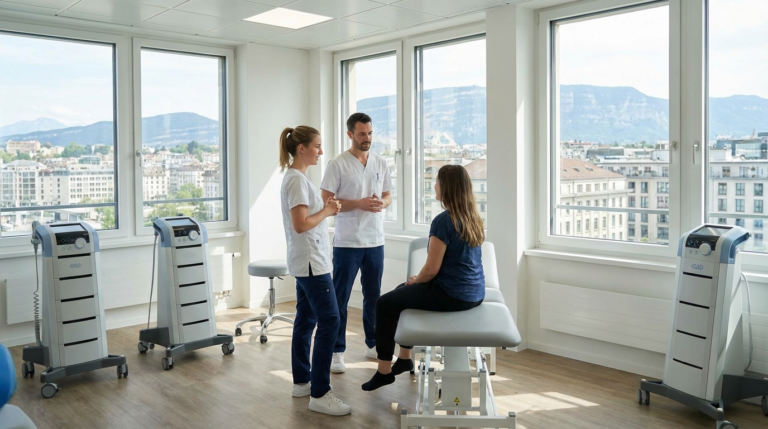
Geneva is a bit of a unique bubble. Between the UN, the WHO, and the Red Cross, you’ve got a population that’s incredibly health-conscious and—let’s be honest—pretty demanding when it comes to medical care. The city’s physiotherapy scene reflects that. You’ll find world-class practitioners, high-tech facilities, and a system that’s tightly woven into the broader Swiss healthcare machine.
Whether you’re trying to fix a nagging ski injury, dealing with chronic back pain, or just recovering from surgery, navigating the options can feel a bit overwhelming. This guide breaks down exactly what you need to know for 2026.
## The Swiss Healthcare Context for Physiotherapy
Look, here’s the thing about Switzerland: physiotherapy (Physiotherapie / Physiothérapie) is covered by your mandatory basic insurance (LAMal), but there’s a catch. You need a doctor’s note. Without a medical prescription (ordonnance médicale), you’re going to be stuck paying the full private rate out of your own pocket.
**The pathway for covered care:**
1. Chat with your primary care doctor or a specialist.
2. Get that prescription (it needs to specify the condition and how many sessions you’re allowed).
3. Hand it over to your physiotherapist.
4. Your insurer then covers the sessions at the “tariff médical” rate—which is currently CHF 46.50 per half-hour.
**Private physiotherapy (without prescription):** Most places offer this. It’s great for prevention or if you just can’t wait two weeks for a GP appointment. Expect to pay anywhere from CHF 90 to CHF 150 per session.
## What to Look for in a Geneva Physiotherapist
**Registered status:** You need to make sure they’re registered with **physioswiss** and the local cantonal health authority. In my experience, this is the quickest way to verify they actually meet Swiss professional standards.
**Language capacity:** Geneva is French-speaking, obviously, but it’s also an international melting pot. Most physios here handle French, but many are fluent in English or German—especially those working near the international organizations. It’s always worth asking before you book.
**Specialization:** Physio isn’t “one size fits all” anymore. What do you actually need?
– **Sports physiotherapy** for those weekend warrior injuries.
– **Neurological physiotherapy** if you’re dealing with something like MS or stroke recovery.
– **Orthopedic physiotherapy** for joints and bones.
– **Pelvic floor physiotherapy** (hugely important for post-partum recovery).
– **Respiratory physiotherapy** for lung issues.
– **Manual therapy** for hands-on musculoskeletal work.
## Highly Regarded Physiotherapy Practices in Geneva
### Centre de Physiothérapie des Eaux-Vives
Located right in the heart of Eaux-Vives, this place is a staple. They handle everything from sports injuries to manual therapy. They have a massive reputation with the local running community, and honestly, several of their team members speak excellent English.
### PhysioGebärde — Carouge
This is a solid, thorough center in Carouge. They have a pretty diverse team, which means they can cover a lot of ground—from sports rehab to more specialized treatments. Their availability is usually decent, too.
### Physiotherapy at the Clinique de Genolier (nearby)
If you want the “private hospital” experience, Genolier is the place. It’s a bit of a drive, but many diplomats and expats with top-tier supplementary insurance go here for the smooth coordination between surgeons and therapists.
### Cabinet Physio Centre — Rive
You can’t get much more central than Rive. It’s an accessible spot with multiple practitioners under one roof. Plus, they’re very used to English-speaking clients.
### PhysioSport Geneva
These guys are the specialists for athletes. If you’re serious about cycling, running, or skiing, they “get” it. They focus heavily on performance and getting you back to your sport without re-injuring yourself.
## Sports Physiotherapy in Geneva
Let’s be real—half of Geneva spends their weekends in the Alps or running along the lake. That generates a lot of work for physios.
When you’re looking for a sports specialist, you need someone who understands “return-to-sport” progressions. You don’t just want to feel better; you want to know when you can safely put your skis back on. Both the FHL (Fédération des Hôpitaux Lausannois) and HUG have sports medicine departments that are top-notch.
## HUG (Hôpitaux Universitaires de Genève) Physiotherapy Services
The HUG is the big player here. They offer outpatient physio that’s integrated directly with their medical teams. It’s particularly helpful for complex cases where you need a whole team of doctors talking to each other. The downside? Wait times can be a bit longer than at a small private practice.
## Pelvic Floor Physiotherapy in Geneva
I find it interesting that this specialty is finally getting the attention it deserves. It’s an evidence-based way to handle post-partum recovery, incontinence, or pelvic pain. In Switzerland, this is covered by basic insurance if you have a prescription. I’d suggest asking your midwife or gynecologist for a personal referral here—it’s the best way to find someone you’re comfortable with.
## Manual Therapy and Osteopathy
People often get confused between physio and osteopathy (ostéopathie) in Switzerland. Here’s the deal:
**Physiotherapy** is university-trained and covered by basic insurance (with that prescription).
**Osteopathy** is a different registration entirely. It’s usually *not* covered by basic insurance, but your supplementary plan might pick up the tab. Many physios actually have extra training in manual therapy techniques anyway, so you might get the best of both worlds.
## Costs and Insurance
**With a prescription:** You’re looking at roughly CHF 0–30 per session depending on your deductible (franchise).
**Without a prescription:** CHF 90–150.
**Supplementary insurance:** If you have a plan with CSS, Helsana, or Sanitas, check it! They often contribute toward extra sessions or alternative therapies that the basic plan won’t touch.
**Bottom line:** If you’ve already hit your annual deductible, your physio sessions will only cost you the 10% co-payment (the Selbstbehalt).
## How to Book Physiotherapy in Geneva
**The “Standard” Way:**
1. See your GP—you can usually get an appointment within a few days.
2. Get the prescription.
3. Call a practice (or use an online booking tool).
4. Bring your insurance card and that piece of paper to your first visit.
**The “Fast” Way:**
Just call a practice and book a private session. You’ll pay more, but you’ll get in faster.
## Finding English-Speaking Physiotherapists
Because Geneva is so international, finding an English speaker is actually pretty easy compared to the rest of Switzerland. Check the practices near the UN or Petit-Saconnex. Also, the Geneva Expats forums are a goldmine for finding therapists who have a great “bedside manner” in English.
## Final Thoughts
Geneva’s physiotherapy system is excellent, provided you know how to work the insurance angles. The quality of care is high, and the multilingual environment means you won’t be struggling to explain your symptoms in broken French.
Are you recovering from a spill on the slopes or just trying to fix your posture? Either way, the expertise is here. My advice? Get that doctor’s referral first to save yourself the headache of the bill later.
*Bonne guérison!*
You May Also Like
Related reading: Top Spas in Bern 2026 · Top Mental Health Therapists Madrid 2026 · Top Nutritionists Barcelona 2026
Top Nutritionists Barcelona 2026
Disclosure: This article may contain affiliate links. If you click through and make a purchase, we may earn a commission at no extra cost to you. We only recommend products and services we genuinely believe in.
Full disclosure.
# Top Nutritionists Barcelona 2026
Let’s be honest: Barcelona has a unique relationship with food. The city sits in the heart of the Mediterranean diet—which is probably the most researched healthy eating pattern on the planet—and locals generally eat well by default. We’re talking fresh fish, mountains of vegetables, and olive oil everywhere. But modern life has a way of catching up. Between busy work schedules and the rise of processed convenience foods, many Barcelonans are now looking for professional help to get their plates back on track.
Whether you’re trying to manage a chronic condition, hit a new PB in your next triathlon, or just figure out why your stomach hurts all the time, you need someone who knows the science. Luckily, Barcelona is packed with qualified experts.
## The Professional scene: Nutritionists vs. Dietitians in Spain
Here’s the thing about booking a session in Spain: the terminology matters. A lot.
**Dietistas-Nutricionistas (Registered Dietitian-Nutritionists):** This is the title you want. In Spain, “Dietista-Nutricionista” is a legally protected term. To use it, a practitioner needs a university degree in Human Nutrition and Dietetics and must be registered with the Col·legi Oficial de Dietistes-Nutricionistes de Catalunya (CODINUCAT). These are the only pros who should be handling clinical issues like diabetes, eating disorders, or renal disease.
**Nutricionistas (general):** I find it a bit frustrating, but the word “Nutricionista” alone isn’t legally protected here. Technically, anyone could call themselves one after a weekend course. This leads to a massive gap in quality.
Bottom line? Always check if your practitioner is registered with CODINUCAT. You can look them up on the official website—it only takes a second and saves you a lot of trouble.
## What Services Do Barcelona Nutritionists Provide?
### Clinical Nutrition
This is about using food as medicine. We’re talking Type 2 diabetes, high cholesterol, IBS, Crohn’s, or Celiac disease. If you’re dealing with PCOS or managing nutrition during cancer treatment, you need a qualified Dietista-Nutricionista who can coordinate with your doctor.
### Sports Nutrition
Barcelona is a city of athletes. From the cyclists climbing Tibidabo to the runners on the Diagonal, the demand for performance fueling is huge. Sports nutritionists here help with hydration, race-day fueling, and recovery strategies. In my experience, a good plan is often the difference between hitting a wall and hitting a PR.
### Weight Management
Forget the fad diets. The best pros in Barcelona focus on sustainable habit changes. They usually take a “non-diet” approach, focusing on health behaviors rather than just a number on the scale. It’s about how you feel, not just how you look.
### Food Intolerance and Allergy Management
Navigating a low-FODMAP diet or a histamine intolerance is a nightmare to do alone. Nutritionists here help you cut out the triggers without ending up malnourished.
### Pediatric and Family Nutrition
Got a picky eater? Or maybe you’re navigating pregnancy? There are specialists who focus specifically on getting the whole family on the same page.
## Highly Regarded Nutritionists in Barcelona
### Institut Psicosomàtic (Via Augusta)
Located in Sarrià-Sant Gervasi, this is a great multidisciplinary practice. What I find interesting about them is how they integrate dietetics with psychology, which is absolutely vital for anyone struggling with eating disorders.
### Clínica Nutrinfo
This is a dedicated nutrition clinic. They have a team with different specializations, so they can usually match you with the right person for your specific goals. Plus, their appointment system is actually organized, which is a breath of fresh air.
### Alimmenta — Dietistas y Nutricionistas
These guys are everywhere online, and for good reason. It’s a group practice of registered dietitians offering in-person sessions in the city center and telemedicine. They cover everything from vegan diets to sports nutrition. Their approach is very transparent and evidence-based.
### Nutricionistas Barcelona (various solo practices)
Don’t overlook the solo practitioners. There are dozens of brilliant independent Dietista-Nutricionistas across the city. Just use the CODINUCAT directory to filter by your neighborhood.
### Sports Nutrition Specialists
If you’re an elite athlete, you’re probably already looking at the CAR in Sant Cugat. But for the rest of us? Look for nutritionists affiliated with local sports medicine clinics. They have the most relevant experience for recreational athletes.
## Finding a Nutritionist for Specific Needs
### Eating Disorders
Look, this isn’t something to DIY. You need a team. A Dietista-Nutricionista should always work alongside a psychologist.
– **ACAB (Associació contra l’Anorèxia i la Bulímia)** is a fantastic resource for referrals.
– **Hospital de la Vall d’Hebron** and **Hospital Clínic** have the top-tier specialized units.
### Vegetarian and Vegan Nutrition
Barcelona’s plant-based scene has exploded lately. Because of that, there are plenty of CODINUCAT-registered pros who specialize in making sure you’re getting enough B12, iron, and omega-3s without the meat.
### Diabetes and Metabolic Health
Managing blood sugar is a science. You’ll want someone with clinical expertise. Worth mentioning: the CAP (Centre d’Atenció Primària) network sometimes offers nutrition services for these conditions through the public system.
## Insurance and Cost
**Public healthcare (CatSalut):** You can get dietitian services through the public system for things like diabetes or eating disorders. You’ll need a referral (derivació) from your GP at the CAP.
**Private health insurance:** If you have Sanitas, Adeslas, or Mapfre, check your policy. Some plans cover a certain number of sessions, others don’t.
**Self-pay:** This is the most flexible route. In Barcelona, expect to pay:
– **Initial consultation (60–90 mins):** €60–120
– **Follow-ups (30–45 mins):** €40–80
– **Online sessions:** These are often about €10–20 cheaper.
## What to Expect from a Good Consultation
Your first appointment shouldn’t just be a “eat this, not that” list. It should take about an hour and involve a deep dive into your medical history, your current habits, and your actual goals.
**Red flags to watch out for:**
– They promise you’ll lose 10kg in a month.
– They try to sell you a bag full of expensive supplements.
– They give you a generic, photocopied meal plan.
– They tell you to cut out entire food groups for no medical reason.
## Online Nutrition Consultation in Barcelona
Since the pandemic, almost everyone offers telemedicine. It’s incredibly convenient for follow-ups or if you’re a busy professional who can’t trek across town at 2 PM. You can use platforms like Doctoralia to book and filter by language or specialty.
## English-Speaking Nutritionists in Barcelona
If your Spanish or Catalan isn’t quite there yet, don’t worry. Barcelona’s expat community is huge, and many nutritionists are fluent in English. Look for “inglés” on their profiles or check clinics like Teknon that cater to international patients.
## Bottom Line
Barcelona’s food culture is a massive asset, but sometimes you need a pro to help you explore it. Just make sure you verify those credentials through CODINUCAT. Don’t settle for a “health coach” when you can have a registered dietitian.
Working with the right person can actually make eating better enjoyable—which, in a city like this, is exactly how it should be.
*¡Bon profit i bona salut!*
You May Also Like
Related reading: Top Spas in Bern 2026 · Top Physiotherapists Geneva 2026 · Best Acupuncturists Geneva 2026 · Top Mental Health Therapists Madrid 2026 · Best Dermatologists Zurich 2026
Best Dermatologists Zurich 2026
Disclosure: This article may contain affiliate links. If you click through and make a purchase, we may earn a commission at no extra cost to you. We only recommend products and services we genuinely believe in.
Full disclosure.
# Best Dermatologists Zurich 2026
Zurich is a dream for anyone who loves the outdoors. You’ve got the lake for summer swimming and the Alps for winter skiing, but let’s be honest: that high altitude and intense UV radiation aren’t doing your skin any favors. Between the harsh sun and an aging population that expects world-class medical care, it’s no surprise that quality dermatologists are in high demand here.
I’ve put this guide together to show you how to explore the system, what you should actually look for in a doctor, and which practices in Zurich actually live up to the hype.
## The Swiss Healthcare System and Dermatology
Look, if you’re new to the Swiss system, it can feel a bit rigid. You’ll usually need a referral from your GP (Hausarzt) before you can see a specialist. That is, unless you’ve paid for specific supplementary insurance (Zusatzversicherung) that lets you skip the middleman.
**The basic stuff (Grundversicherung/LAMal):** You’ll almost always need that GP referral first. Your insurance covers the costs based on the *tariff médical*, but you’ll still have to cover your annual deductible (Franchise) and that 10% co-payment (Selbstbehalt).
**With supplementary insurance:** If you’re with CSS, Helsana, or Sanitas, check your plan. Many let you book directly with a dermatologist. Plus, they might cover things basic insurance won’t touch, like certain aesthetic treatments or longer, more in-depth consultations.
**Paying out of pocket:** You can go anywhere if you’re footing the bill. Expect to pay anywhere from CHF 180 to CHF 400 for an initial visit, depending on how complex your issue is.
## Types of Dermatological Care in Zurich
### Medical Dermatology
This is the bread and butter of skin care. We’re talking about eczema, psoriasis, acne, and those annoying nail infections. If you have a referral, your insurance handles this.
### Oncological Dermatology (Skin Cancer)
With Zurich’s sun exposure, you really can’t skip skin cancer screenings. The big players like UniversitätsSpital Zürich and Triemli have massive departments dedicated to this. In my experience, if you’re over 40 or spend a lot of time in the mountains, an annual check-up isn’t just a good idea—it’s a necessity.
### Aesthetic/Cosmetic Dermatology
Botox, fillers, lasers—Zurich has it all. Just remember, your insurance won’t cover these. The quality in Zurich is world-class, but you’ll definitely pay a premium for it.
### Pediatric Dermatology
Swiss kids deal with a lot of atopic eczema. If your little one has skin issues, both UniversitätsSpital Zürich and Kinderspital Zürich have specialists who focus specifically on children.
### Dermatosurgery
Need a mole or a cyst removed? As long as it’s medically necessary, insurance picks up the tab.
## Highly Regarded Dermatology Practices in Zurich
### Dermatologie UniversitätsSpital Zürich (USZ)
This is the heavy hitter. It’s the leading academic center in Switzerland. If you have a rare or complex condition, you want to be here. Honestly, the wait times for a non-urgent appointment can be a bit of a nightmare, but the expertise is unrivaled.
You’ll need a GP referral, though people with supplementary insurance can sometimes get in faster.
### Stadtdermatologie — Dermatologie Triemli
I like Triemli because it offers high-quality hospital care but usually with a bit less red tape than USZ. It’s a solid choice for routine skin cancer checks or general medical issues.
### Dermapraxis Zürich (Private Practice)
Zurich is packed with private practices. Why go private? Shorter wait times and you often get more one-on-one time with the doctor.
When you’re looking for a private doc, keep these in mind:
– Check for the **FMH** title. You want a “Facharzt FMH für Dermatologie und Venerologie.” This means they’ve actually met Swiss specialist standards.
– See where they trained. Look for international experience.
– Language matters. Most Zurich dermatologists are bilingual in German and English, which is a lifesaver for the expat community.
### Aesthetic Dermatology Practices
If you’re looking for cosmetic work, head toward Bahnhofstrasse or Seefeld. You’ll find plenty of high-end clinics there. But here’s a tip: make sure your “injector” is an actual dermatologist, not just someone who took a weekend course. You want someone with a medical degree and a conservative approach that won’t leave you looking “overdone.”
## Skin Cancer Screening in Zurich
Switzerland actually has some of the highest skin cancer rates in the world. It’s that mix of high altitude and a population that loves being outside.
**How to get screened:**
1. Start with your GP. They can do a quick check and refer you if something looks off.
2. Go to a dermatologist for a full-body check.
3. Try **digital mole mapping.** A few private practices in Zurich offer this. They use high-res cameras to track your moles year-over-year. It costs between CHF 200 and CHF 500, and while basic insurance doesn’t cover it, your supplementary plan might.
## Acne Treatment in Zurich
Dealing with acne as an adult is frustrating, but the approach in Zurich is very systematic. A dermatologist isn’t just going to throw a cream at you. They’ll look at your hormones, your history, and how it’s affecting your life. You might start with topicals, but for severe cases, they may move to oral isotretinoin (Roaccutane). Just a heads up: Roaccutane requires regular blood tests and strict monitoring, so you’ll be seeing your doctor often.
## Eczema and Psoriasis Management
If you’re struggling with chronic conditions, Zurich is a great place to be.
– **Biologics:** These newer meds (like dupilumab) are game-changers for severe eczema. They’re expensive, but insurance usually covers them if other treatments have failed.
– **Phototherapy:** Some practices offer narrowband UVB light therapy. It’s effective and covered by insurance.
## Finding an English-Speaking Dermatologist in Zurich
You won’t have much trouble here. Most doctors in Zurich speak excellent English. Just ask when you call to book. Also, check the Zurich Expat Forum—people there are usually pretty vocal about which doctors they actually like.
## Cost Guide for Zurich Dermatology (2026)
– GP consultation: CHF 100–150
– Specialist visit (with referral): Covered by basic insurance (after deductible)
– Private initial visit: CHF 250–400
– Digital mole mapping: CHF 200–500
– Botox (per area): CHF 300–600
– Laser treatment: CHF 200–800
– Chemical peel: CHF 150–400
## Red Flags to Watch For
**No FMH certification.** If they aren’t FMH certified, they shouldn’t be diagnosing you. Period.
**The hard sell.** If you go in for a mole check and they start pressuring you to get lip fillers, run. A good medical practice keeps those things separate.
**No physical exam.** If a doctor tries to prescribe you strong meds over a video call without ever looking at your skin in person, that’s a red flag.
## Bottom Line
Zurich has some of the best dermatological care on the planet. Whether you go through the university hospital or a private clinic in Seefeld, you’re in good hands. Just remember to play the insurance game—get that GP referral to save yourself some money, but don’t be afraid to go private if you need a quicker solution.
*Gute Besserung und gesunde Haut!*
You May Also Like
Related reading: Best Acupuncturists Geneva 2026 · Best Yoga Studios Paris 2026 · Top Mental Health Therapists Madrid 2026 · Top Physiotherapists Geneva 2026
Top Wellness Retreats Switzerland 2026
Disclosure: This article may contain affiliate links. If you click through and make a purchase, we may earn a commission at no extra cost to you. We only recommend products and services we genuinely believe in.
Full disclosure.
# Top Wellness Retreats Switzerland 2026
Look, the Swiss were doing wellness long before “wellness” was a marketing buzzword. It’s part of their DNA. The Romans were soaking in the thermal springs of Leukerbad centuries ago. By the 19th century, people were flocking to Davos to treat tuberculosis with nothing but crisp mountain air—a vibe Thomas Mann captured perfectly in *The Magic Mountain*. The “Kur” tradition, or therapeutic health stays, isn’t just a trend here. It’s a way of life.
Today, Switzerland’s wellness scene is arguably the most sophisticated on the planet. If you’re looking to reset in 2026, here’s the lowdown on the best spots to do it.
## What Makes Swiss Wellness Retreats Different
**Natural resources:** You can’t fake the Alps. The mineral-rich thermal springs and high-altitude air aren’t just there for the photos—they actually do something. I’ve always found that the air at 1,500 meters just hits differently. These aren’t just claims; the physiological benefits of “taking the air” are backed by real research.
**Medical integration:** This is where Switzerland leaves everyone else behind. You aren’t just getting a facial. Often, you’re getting a full-scale health overhaul. Think blood work, body comp analysis, and evidence-based protocols paired with your massage. It’s science meets silk robes.
**Quality standards:** You know how Swiss watches work? That’s the level of detail they apply to their spas. The food, the hygiene, the service—it’s consistently high. Sometimes exceptionally so.
**Privacy:** Switzerland is the world capital of discretion. These retreats are built for people who value anonymity. The staff culture of keeping their mouths shut is deeply ingrained.
## Luxury Wellness Retreats
### Clinique La Prairie — Montreux
This is the big one. Founded back in 1931, Clinique La Prairie basically invented longevity medicine. Their “Revitalisation” program is legendary—and pretty intense. It’s a week of medical assessments, cellular therapy, and nutritional optimization.
Honestly, this is destination wellness at its most serious—and its most expensive. You’re looking at about CHF 15,000 for a week, but that includes everything from the medical deep-dives to the luxury meals.
**Best for:** Serious health optimization, longevity, and anyone who wants medical science wrapped in pure luxury.
### Grand Resort Bad Ragaz
Bad Ragaz is home to the Tamina Gorge thermal spring, where water bubbles up at a perfect 36.5°C. It’s a massive complex: luxury hotels, a medical center, golf courses, and more restaurants than you’ll know what to do with.
You can visit the public Tamina Therme for a few hours, but for the real deal, you need the Medical Health Center. They do everything from physiotherapy to full-body checkups.
Rates start around CHF 500/night, but medical packages are extra.
**Best for:** Thermal water lovers and couples who want a mix of “health” and “holiday.”
### Bürgenstock Resort — Lake Lucerne
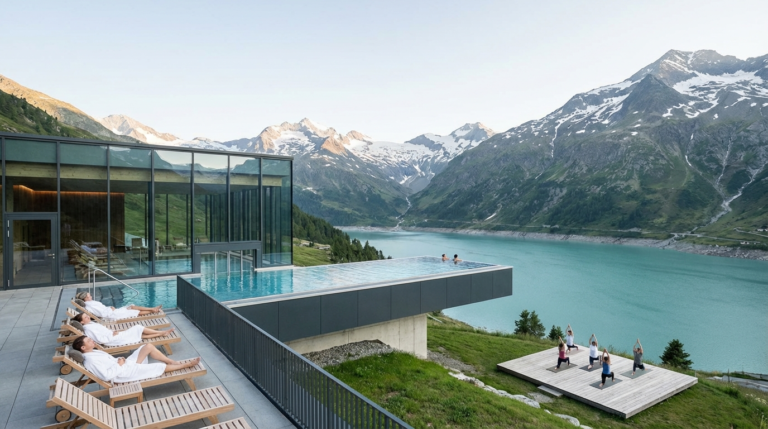
Perched 500 meters above the lake, this place is breathtaking. Seriously. The Alpine Spa is 10,000 square meters of pure indulgence, featuring an infinity pool that looks like it’s spilling directly into Lake Lucerne.
What I find interesting is the Waldhotel on the same campus. It’s focused on “Medical Excellence,” handling everything from burnout recovery to weight management.
Rates start from CHF 600/night.
**Best for:** The views (seriously, wow), stress recovery, and high-end medical supervision.
### Tschuggen Grand Hotel — Arosa
You’ll recognize this place by the iconic glass “sails” sticking out of the mountain. It’s the Tschuggen Bergoase spa, designed by Mario Botta, and it’s an architectural masterpiece.
Plus, you’ve got the mountains right there. In the winter, you ski; in the summer, you hike. It’s the perfect way to earn your spa time.
Rates from CHF 450/night.
**Best for:** Design nerds and people who want to mix their wellness with some downhill skiing.
## Mid-Range Wellness Retreats
### Hôtel & Spa Lenkerhof — Simmental
If you want luxury without the clinical vibe, Lenkerhof is a great shout. It’s more laid back and uses the local Lenk thermal springs. The focus here is on relaxation and great food rather than blood tests and doctors.
Rates from CHF 250/night, and that usually includes spa access.
**Best for:** Couples looking for a cozy, high-end escape.
### Leukerbad Therme — Leukerbad
This is the largest Alpine thermal destination in Europe. It’s not a “resort” in the singular sense, but a whole village dedicated to water that comes out of the ground at 51°C. You can get a day pass for about CHF 33, or stay in one of the local hotels that bundle everything together.
It’s less “exclusive” than the big clinics, but the water is just as therapeutic.
**Best for:** Budget-conscious travelers and anyone who wants an authentic mountain village feel.
### Therme Vals
This place is a vibe. Designed by Peter Zumthor and built from local quartzite, it feels more like a temple than a spa. The experience is meditative, quiet, and honestly, a bit surreal.
Worth mentioning: you need to book way in advance. Day passes are limited, and the hotel fills up fast.
Day pass: roughly CHF 85. Hotel rates from CHF 350/night.
**Best for:** People who want to unplug in a place that feels like a work of art.
## Yoga and Meditation Retreats in Switzerland
### Rasa Yoga Retreat — Various Swiss Locations
These aren’t tied to one building but pop up in different mountain chalets. Think daily yoga, vegetarian meals, and long walks in the silence of the Alps. It’s a much more grounded experience.
Costs: Roughly CHF 150–300/day all-inclusive.
### Buddhist Retreat Centers
Looking for the real deal? Switzerland has several established Buddhist centers. These aren’t spa days—expect simple rooms, silence, and lots of meditation.
Costs: Often donation-based or very cheap (CHF 50–100/day).
### Mindfulness-Based Programs
There are a lot of practitioners now offering MBSR (Mindfulness-Based Stress Reduction) retreats in the Alps. These are great if you want a structured, evidence-based way to deal with stress.
## Wellness Day Spas (No Overnight)
Don’t have time for a full week? No problem.
**Thermalbad & Spa Zurich:** It’s a converted brewery. You can soak in huge wooden vats or head to the rooftop pool to look out over the city. Entry starts at CHF 36.
**Hürlimann Areal Spa Zurich:** Right next to the B2 Boutique Hotel. It uses the natural Aqui springs and is perfect for a rainy afternoon.
**Bogn Engiadina Scuol:** Located in the Engadine valley, this place uses a very specific mineral water composition. It’s beautiful and way cheaper than the big-name resorts.
## Planning Your Swiss Wellness Retreat
**When should you go?**
– **Autumn (Sept–Nov):** My favorite. Fewer people, amazing colors, and that crisp air.
– **Winter (Jan–March):** Nothing beats a thermal pool when it’s snowing outside. Just avoid the school holidays.
– **Spring (April–May):** Good prices, though the weather can be a bit moody.
– **Summer (June–August):** Great for hiking, but it’s peak season. Expect crowds and higher prices.
**Duration:** You need at least 5 to 7 nights for a “real” program to work. A weekend is nice, but it’s just a band-aid.
**Insurance:** Here’s a pro tip—certain medical programs might be partially covered by Swiss supplementary insurance. You need to check with your provider before you book, but it’s worth asking.
## Cost Summary
– **Day spa:** CHF 30–90
– **Yoga weekend:** CHF 300–600
– **Mid-range hotel (per night):** CHF 200–400
– **Luxury resort (per night):** CHF 450–800
– **Premium medical program (week):** CHF 5,000–20,000+
## Bottom Line
Swiss wellness covers everything from high-tech longevity clinics to silent mountain retreats. The common thread? Quality. The Swiss don’t do things halfway.
Whether you’re dropping 20k at Clinique La Prairie or 30 bucks for a soak in Leukerbad, you’re going to feel the benefit. The mountains and the water do the heavy lifting; the Swiss expertise just makes sure it works.
*Gute Erholung!*
You May Also Like
Best Acupuncturists Geneva 2026
Disclosure: This article may contain affiliate links. If you click through and make a purchase, we may earn a commission at no extra cost to you. We only recommend products and services we genuinely believe in.
Full disclosure.
# Best Acupuncturists Geneva 2026
Acupuncture is a big deal in Switzerland—way more than in most of Europe. Honestly, the Swiss approach to “alternative” medicine is refreshingly pragmatic. They don’t just dismiss it; they integrate it. Because Geneva is such an international hub, the city has built up a particularly sophisticated acupuncture community that caters to pretty high expectations.
If you’re looking for a needle-based fix in 2026, you need to know how the system works. This guide breaks down how to find the right person, how to get your insurance to pay for it, and what actually happens once you’re on the table.
## Acupuncture in the Swiss Healthcare System
Switzerland is in a unique spot globally. Back in 2009, a national referendum basically forced the government to take complementary medicine seriously. Now, Traditional Chinese Medicine (TCM) has constitutional recognition. What does that mean for you? It means your insurance might actually cover it.
**The breakdown on coverage:**
**Medical acupuncture (The MD route):** If a Swiss-licensed physician (médecin) does the treatment, it’s covered by your basic health insurance (LAMal). You don’t need fancy supplementary insurance for this, provided the doctor has the right FMH-recognized credentials.
**Non-medical acupuncture (The TCM specialist):** If you go to a dedicated TCM therapist who isn’t a medical doctor, basic insurance won’t touch it. However, most supplementary plans (Zusatzversicherungen) will cover it. You’re usually looking at a cap between CHF 1,000 and 5,000 a year.
**Registration matters:** You’ll want to make sure your practitioner is registered with the SBO-TCM (for therapists) or the ASA (for doctors). Don’t skip this check.
## Types of Acupuncture Available in Geneva
### Traditional Chinese Medicine (TCM)
This is the full package. These practitioners don’t just look at where you hurt; they look at your tongue, check your pulse, and ask about your sleep. In my experience, this is best if you’re looking for a holistic overhaul that includes herbs and lifestyle tweaks.
### Medical Acupuncture (Dry Needling)
Mostly practiced by MDs or sports therapists. It’s less about “energy flow” and more about anatomy—think trigger points and nerve pathways. It’s a very targeted approach, often used alongside physical therapy.
### Japanese-Style Acupuncture
Ever had a “needle-sensitive” friend? This is for them. The needles are thinner, and the insertion is much shallower. It’s a gentler vibe that’s quite popular in some Geneva clinics.
### Auricular (Ear) Acupuncture
It sounds strange, but the ear is a map of the whole body. You’ll often see this used in Geneva for addiction recovery or high-stress environments.
## Well-Regarded Acupuncture Practices in Geneva
### Medical Acupuncture at HUG
The Hôpitaux Universitaires de Genève (HUG) isn’t just for emergencies. They have a solid integrative medicine department. Since it’s a university hospital, you’re getting evidence-based care that’s fully covered by basic insurance.
**Best for:** Complex cases where you want your acupuncturist talking to your regular specialist.
### Cabinet de Médecine Chinoise Geneva
Geneva has several of these multi-practitioner clinics. They usually have a deep bench of talent, with many therapists having trained extensively in China. They offer the whole TCM suite: acupuncture, tuina massage, and herbal teas.
### Physician Acupuncturists in Private Practice
Many GPs and gynecologists in Geneva have added acupuncture to their toolkit. I find this is often the most convenient route. It’s smooth, it’s covered by your basic plan, and they already have your medical history. Check the ASA directory (www.akupunktur-tcm.ch) to find one near you.
## Conditions Commonly Treated with Acupuncture
Does it work for everything? Not exactly. But the evidence is actually quite strong for several conditions:
### Pain Management
– Chronic low back pain (a big one)
– Knee osteoarthritis
– Migraines and tension headaches
– “Tennis elbow” and repetitive strain
### Women’s Health
– Menstrual cramps
– Fertility support (it’s very common to use this alongside IVF)
– Pregnancy nausea
– Menopause symptoms
### Mental Health & Digestion
– Anxiety and insomnia
– Stress (Geneva’s corporate world keeps these clinics busy)
– IBS and general nausea
## What to Expect at Your First Appointment
**The clock:** Expect to spend 60 to 90 minutes there the first time. Follow-ups are usually shorter, maybe 45 minutes.
**The talk:** A good practitioner will grill you. They’ll ask about your digestion, your mood, and even how you handle the cold. It might feel invasive, but it’s all part of the diagnosis. They’ll also check your pulse and look at your tongue.
**The needles:** Here’s the thing: they don’t really hurt. These needles are hair-thin. You might feel a dull ache or a tingle—TCM calls this *De Qi*—but it shouldn’t feel like getting a shot. You’ll usually lie there for about 20 minutes while the needles do their thing. Most people actually fall asleep.
**The aftermath:** You might feel a bit spacey or incredibly energized. Both are normal. Just don’t plan a heavy gym session immediately after.
## Cost and Insurance
**Physician acupuncture:**
– Covered by basic insurance (minus your deductible/franchise).
– You’ll likely pay CHF 0–30 per session once you’ve hit your limit.
**Non-physician TCM:**
– Out-of-pocket: CHF 100–160 per session.
– With supplementary insurance: You’ll usually get 75–90% back.
**Bottom line:** Check your specific policy before you go. It saves a lot of headaches later.
## Finding English-Speaking Acupuncturists in Geneva
Look, it’s Geneva. Most practitioners speak at least some English, especially if they’re located near the UN or the international organizations in the Nations quarter or Pregny-Chambésy. Just ask when you call to book.
## How to Choose an Acupuncturist in Geneva
1. **Check the credentials:** Are they SBO-TCM or ASA registered? If not, walk away.
2. **Ask about their training:** You want someone who spent years studying this, not someone who took a weekend “dry needling” course.
3. **Specialization:** If you’re dealing with fertility, find someone who focuses on that.
4. **Hygiene:** This is non-negotiable. Single-use, sterile needles only.
## Safety and Precautions
It’s very safe, but you need to be honest with your practitioner. Tell them if you’re pregnant, if you’re on blood thinners, or if you have a pacemaker. What I find interesting is that people often forget to mention their supplements—tell them everything you’re taking.
## Final Thoughts
Geneva is a great place to explore acupuncture. Because the regulatory environment is so tight, the quality of care is generally excellent. Whether you’re going the medical route for a back injury or seeing a TCM specialist for stress, it’s a legit way to manage your health.
The key is to have realistic expectations. It’s rarely a “one-and-done” fix. Give it 4 to 6 sessions before you decide if it’s working for you.
*Bonne guérison et bonne santé!*
You May Also Like
Related reading: Best Yoga Studios Paris 2026 · Best Dermatologists Zurich 2026 · Top Mental Health Therapists Madrid 2026
Top Spas in Bern 2026
Disclosure: This article may contain affiliate links. If you click through and make a purchase, we may earn a commission at no extra cost to you. We only recommend products and services we genuinely believe in.
Full disclosure.
# Top Spas in Bern 2026
Bern—Switzerland’s understated capital—doesn’t have the glamour of Zurich or the international flash of Geneva. And honestly? That’s precisely what makes it a wonderful spa destination. The city sits on a dramatic river bend of the Aare, with the Alps visible on clear days. Its medieval Old Town, a UNESCO World Heritage Site, creates a backdrop for relaxation that feels genuinely special.
The spa and wellness scene in Bern is smaller and less commercialized than what you’ll find in the major resort towns. But don’t let that fool you. It includes some truly excellent facilities ranging from historic thermal baths to contemporary urban retreats. Here’s your complete guide for 2026.
## Bern’s Wellness Context
The Canton of Bern has deep thermal bathing traditions. People have been using the thermal springs in the nearby Emmental and Oberland regions for centuries. Modern Bern spas build on this history, but they’ve added plenty of contemporary wellness practices to the mix.
Bernese wellness culture tends to be authentic and unpretentious. In my experience, it’s less about “Instagram-worthy” luxury and more about genuine therapeutic benefit and simple relaxation. This is refreshing if you’ve ever felt exhausted by the performative wellness culture of larger cities.
## Best Spas in Bern City
### Hammam & Spa Bern (Dampfbad)
This is one of Bern’s most popular and atmospheric spa experiences. Located right in the city center, this Turkish-style hammam offers a traditional bathing ritual in a beautifully designed space. Think hot steam rooms, warm and cool pools, exfoliation, and massage.
The experience is communal. You’ll find single-sex sessions on specific days and mixed sessions on others. It follows a traditional progression from hot to warm to cool. What I find interesting is that the signature 2.5-hour classic ritual, which includes a scrub and foam massage, remains the gold standard here.
Classic hammam ritual: CHF 75–95. Entry only (without treatments): CHF 45–55.
**Best for:** Those seeking an atmospheric, traditional bathing experience; stress relief; couples
### Bernaqua — Erlebnisbad, Fitness & Wellness
This is the largest water and wellness complex in the Bern area. You’ll find it at Westside, a major shopping and leisure complex in Bern West. Bernaqua is a bit of a hybrid. It combines a massive water park (slides and wave pools—great for families) with a separate, quiet adult wellness area.
The wellness section is genuinely spacious. You’ve got multiple sauna types like Finnish saunas, bio-saunas, infrared cabins, and herbal steam baths. Plus, there’s a warm outdoor pool and comfortable rest areas. It’s not a “boutique” luxury spot, but it is thorough and very well-maintained.
Day entry (wellness area): CHF 42–55. Treatments (massage, facials) additional.
**Best for:** Full-day spa experiences, families (with water park), thorough sauna sessions
### Hotel Bellevue Palace Spa
The Bellevue Palace is Bern’s grand hotel. It overlooks the Aare River and the Alps from its terrace, and the vibe is purely sophisticated. The spa here is more intimate than the big complexes. It offers a refined experience with massages, facials, and a small pool area.
Look, the view from the terrace alone makes this visit worth it. While hotel guests get priority, the spa is open to non-guests too.
Treatments from CHF 120 (60-minute massage). Spa access included with treatment.
**Best for:** Luxury seekers, special occasions, those wanting premium service in a historic setting
### Kursaal Bern — Allegro Hotel Spa
The Allegro Hotel, part of the Kursaal complex overlooking the Old Town, has a solid spa with a pool, sauna, and treatment rooms. It feels more modern and businesslike than the Bellevue, but it’s well-equipped and usually has good availability.
If you’re staying at the hotel, access is included. External guests can book treatments to get into the spa area.
**Best for:** Business travelers, those staying at or near the Kursaal, efficient spa sessions
## Thermal Baths Near Bern
### Solbad & Spa Schönbühl
Located just 15 minutes from Bern center, the Solbad uses saltwater (Sole) from a local source. The saltwater pools are warm, and the mineral content makes for a buoyant, skin-softening soak.
Worth mentioning: Because it’s less famous than the big resort destinations, it’s rarely overcrowded. That’s a huge plus in my book.
Day entry: CHF 30–40. Treatments additional.
**Best for:** Accessible thermal bathing near Bern, saltwater enthusiasts, avoiding crowds
### Thermalbad Zurzach (1 hour from Bern)
This is one of Switzerland’s most thorough thermal facilities. It uses mineral-rich water from deep underground springs. You’ll find multiple indoor and outdoor pools, an extensive sauna scene, and even a medical wellness center.
Is it worth the drive? Absolutely. Especially for a full-day experience. The water composition is genuinely therapeutic for anyone dealing with muscle or joint pain.
Day entry: CHF 35–50.
**Best for:** Full-day thermal spa experience, therapeutic bathing
### Leukerbad (1.5 hours from Bern)
Leukerbad is Europe’s largest Alpine thermal destination. It’s a village sitting at 1,400 meters, surrounded by massive mountains. The Leukerbad Therme and Walliser Alpentherme are the two big spots here.
The combination of hot thermal water and crisp mountain air is hard to beat. It’s perfect for a day trip or an overnight stay from Bern.
Day entry: CHF 28–38 depending on facility.
**Best for:** Mountain thermal bathing, altitude wellness, day trip from Bern
## Sauna Culture in Bern
Swiss-German sauna culture has its own set of rules. You’ll want to keep these in mind:
**Textile-free zones:** Don’t be surprised—many Swiss saunas are nude (FKK). It’s the standard and it’s completely non-sexual. If that makes you uncomfortable, check if the facility has “textile-friendly” areas or specific sessions where swimsuits are allowed.
**Aufguss ritual:** This is where sauna masters perform infusion ceremonies, pouring water with essential oils on hot stones and circulating the steam with towels. Bernaqua and other big spots have scheduled sessions. You need to try it at least once.
**Quiet zones:** Silence is strictly enforced in relaxation areas. Leave your phone in the locker. Seriously.
**Towel etiquette:** You need a large towel to sit or lie on. Your skin shouldn’t touch the wood. You can usually rent one if you forget yours.
## Massage and Treatment Guide
### Types of Massage Available
– **Classic/Swedish massage:** Your standard therapeutic option. CHF 100–140/hour.
– **Deep tissue massage:** Firmer pressure for those stubborn knots. CHF 110–150/hour.
– **Hot stone massage:** Heated stones used to melt away tension. CHF 120–160/hour.
– **Thai massage:** Bern has several dedicated studios with Thai-trained practitioners. CHF 80–120/hour.
– **Ayurvedic massage:** Traditional Indian treatments are also available. CHF 100–140/hour.
– **Sports massage:** Aimed at recovery. You’ll find these at physio practices and some spas. CHF 100–140/hour.
### Standalone Massage Studios
Bern has plenty of independent therapists outside the big spas. For a regular maintenance massage, these are often better value. Just make sure your therapist has recognized Swiss certifications like EMR or OdA MM.
## Wellness Insurance Coverage
**Basic insurance (LAMal):** This won’t cover your spa day. It only covers medical massages if they’re prescribed by a doctor and done by a certified medical therapist.
**Supplementary insurance (Zusatzversicherung):** Many plans actually help out with:
– Massage therapy (medical): Often CHF 500–2,000/year
– Complementary therapies
– Wellness contributions at certain recognized facilities
You need to check your specific plan before you assume they’ll pay.
## Practical Tips for Bern Spa Visits
**Book ahead.** Weekend slots at the Hammam and Bernaqua fill up fast. If you can, go on a weekday. It’s quieter and often cheaper.
**Pack the basics.** Spas rent towels, but you’ll save money if you bring your own bathing suit, flip-flops, and a water bottle.
**Stay hydrated.** Saunas and thermal baths will dry you out. Drink water throughout the day.
**Don’t rush.** A spa visit under two hours feels pointless. Give yourself at least a half-day to actually relax.
## Budget Guide
– Thai massage (1 hour): CHF 80–120
– Hammam experience: CHF 75–95
– Day spa entry (Bernaqua wellness): CHF 42–55
– Thermal bath day entry: CHF 28–50
– Hotel spa treatment (60-min massage): CHF 120–160
– Full spa day with treatments: CHF 150–250
## Bottom line
Bern’s spa scene is genuine, accessible, and refreshingly unpretentious. The Hammam offers a great atmosphere, Bernaqua has the variety, and the Bellevue Palace is there when you want to feel fancy. Plus, those mountain thermal baths are just a short trip away.
Because the capital is a bit quieter than Zurich, these spas actually feel relaxing rather than “seen-and-be-seen” spots. Take a deep breath, jump in the water, and let Bern’s slow pace do the work.
*Geniessen Sie die Entspannung!*
You May Also Like