How to Start Journaling for Anxiety Beginners
Updated April 4, 2026
How to Start Journaling for Anxiety Beginners
The simplest way to start journaling for anxiety is to write three sentences before bed every night: what happened today that caused anxiety, how your body felt, and one thing you’d tell yourself differently about it. That’s it for the first two weeks. The research is clear — journaling reduces anxiety symptoms when practiced consistently, and the barrier to starting is entirely about setting up a sustainable habit rather than writing perfectly. This guide covers the evidence, the specific methods that work, and how to keep going when motivation drops.
The Science Behind Journaling for Anxiety Relief
Journaling for anxiety isn’t wellness folklore — it has solid research backing. A landmark 2018 study published in JMIR Mental Health followed 70 adults with elevated anxiety levels over a 12-week journaling intervention. Participants who journaled specifically about their emotions and experiences showed a 28% reduction in anxiety symptoms compared to the control group (as measured by the Generalized Anxiety Disorder Scale, GAD-7).
The mechanism is well-understood. Psychologist James Pennebaker’s decades of expressive writing research at the University of Texas demonstrates that translating emotional experiences into words activates the prefrontal cortex — the brain’s rational processing center — which naturally dampens activity in the amygdala (the brain’s threat-response center). Journaling is, in neurological terms, a voluntary form of emotional regulation that builds the same neural pathways strengthened by cognitive behavioral therapy.
A 2024 meta-analysis in the Journal of Affective Disorders analyzing 64 studies found that written emotional expression (journaling and related practices) reduced anxiety symptoms with a moderate effect size (d=0.58) — comparable to the effect size of short-term psychotherapy for anxiety disorders. The key qualifier: consistent practice matters significantly. Occasional journaling produces minimal benefit; daily or near-daily practice produces measurable reduction in anxiety symptoms within 4–8 weeks.
Starting Simple: The Beginner’s First Week Protocol
The most common journaling mistake for anxiety beginners is overthinking the format. You don’t need a special notebook, a specific time of day, or perfectly crafted writing. Here’s the simplest possible starting protocol:
Week 1–2: Three Sentence Evening Check-In
- What caused anxiety today? (One specific situation, person, or thought)
- How did my body feel? (Tight chest, racing heart, shallow breathing — specific physical description)
- What would I tell a friend in this situation? (This activates self-compassion — a key anxiety-reduction mechanism)
That’s the entire protocol for the first two weeks. Three sentences. It takes 2–3 minutes. The purpose is habit formation, not insight development — the insight comes later once the habit is stable.
Why this works:
- Two minutes is below the resistance threshold that stops most habits before they form
- The physical body observation develops interoceptive awareness — the ability to notice anxiety earlier in its escalation, creating more time to use coping strategies
- The “tell a friend” question naturally activates more balanced thinking without requiring formal CBT training
The 5 Most Effective Journaling Methods for Anxiety
1. Expressive Writing (Pennebaker Method)
Write continuously for 15–20 minutes about the thing that’s causing you anxiety. Don’t edit, don’t worry about grammar, don’t stop moving the pen (or keyboard). The instruction is simple: write about your deepest thoughts and feelings about what’s bothering you.
This is the most-researched journaling method and produces the most consistent anxiety reduction in controlled studies. The key is specificity — write about the specific anxiety-provoking situation, not anxiety in general. Best practiced 3–4 times per week rather than daily (daily can increase rumination in some individuals).
2. Cognitive Restructuring Journal
Structure your entries in three columns: Situation → Automatic Thought → Balanced Response. This is essentially journalized CBT. When anxiety strikes:
- Column 1: What happened (the situation, factually)
- Column 2: What thought appeared automatically (often catastrophizing: “This meeting will be a disaster”)
- Column 3: A more balanced response (“I’ve handled difficult meetings before. I’m prepared. Even if it’s hard, I can manage.”)
3. Gratitude Journaling (Anxiety-Specific)
Standard gratitude journaling (write 3 things you’re grateful for) has modest but real anxiety-reduction effects. A more anxiety-specific adaptation: write one thing from today that went better than you feared it would. This directly targets the catastrophizing that drives anxiety — finding evidence against worst-case thinking.
4. Morning Pages (Julia Cameron Method)
Three pages of stream-of-consciousness writing immediately upon waking, before doing anything else (before coffee, before phone). This method, popularized in The Artist’s Way, works for anxiety by emptying the “worry queue” before the day begins rather than carrying unprocessed anxiety into each morning’s activities.
5. Worry Journal with Scheduled Worry Time
Rather than suppressing anxious thoughts throughout the day, schedule a specific 15-minute worry window (often mid-afternoon) and write down every anxious thought that has accumulated since your last session. Outside of this window, when anxious thoughts arise, note them briefly and remind yourself they’re scheduled for the next worry session. This technique — formalized in CBT as “worry postponement” — dramatically reduces the frequency and intensity of intrusive anxious thoughts across the day.
For complementary wellness practices that work alongside journaling, our article on adaptogen supplements for stress in 2026 covers the supplement side of stress and anxiety management — the evidence base for adaptogens like ashwagandha and rhodiola as complements to behavioral approaches like journaling.
Setting Up Your Journaling Practice: Practical Decisions
Paper vs. digital: Both work. Paper journaling has a slight advantage in research — the slower writing pace promotes deeper processing. Digital journaling has advantages in consistency (your phone is always with you), searchability, and privacy (password-protected apps). Best recommendation: start with what removes the most friction. If you always have your phone, start digital.
Best digital journaling apps for anxiety (2026):
- Reflectly: AI-guided journaling with mood tracking and anxiety-specific prompts. Free and paid plans.
- Daylio: Micro-journaling with mood tracking — great for beginners who find writing intimidating. Track mood + one sentence.
- Jour: Science-based journaling with structured prompts for anxiety and stress. Premium app.
- Notes app (any phone): The simplest option — zero friction, zero features, zero cost.
Best time of day:
- Morning: Best for clearing pre-day anxiety, setting intentions, and morning pages approach
- Evening: Best for processing the day’s anxiety, reflecting on coping success, and three-sentence check-in
- Scheduled mid-day: Best for worry journals and cognitive restructuring entries
Research from the University of Rochester (2022) found no significant difference in anxiety-reduction outcomes between morning and evening journaling — consistency of timing was more predictive of benefit than the time itself. Choose the time that’s most reliably available in your schedule.
What to Write When You Don’t Know What to Write: 15 Prompts for Anxiety
Staring at a blank page is anxiety-inducing, which defeats the purpose. Use these prompts when you need a starting point:
- What is my anxiety trying to protect me from right now?
- What’s the most likely outcome of the situation I’m anxious about? What’s the most realistic worst case?
- What would I say to my best friend if they were feeling exactly how I’m feeling now?
- What evidence do I have that my anxious thought is true? What evidence suggests it might not be?
- What is within my control in this situation? What isn’t?
- Describe the physical sensations of your anxiety right now, as if you’re a scientist observing them.
- What have I already gotten through that I thought I couldn’t handle?
- What would I tell myself about this in one year?
- Who do I trust to talk to about this, and what might they say?
- What would a calm, wise version of myself say to my anxious self right now?
- List three things that are going well, no matter how small.
- What is my body telling me it needs right now?
- What am I avoiding because of anxiety? What would happen if I didn’t avoid it?
- What’s one small action I could take today that would reduce this anxiety?
- Write to your anxiety as if it’s a separate character. What does it want? What does it need from you?
Common Beginner Mistakes (and How to Avoid Them)
Mistake 1: Writing only facts, not feelings.
“Today I had a stressful meeting” is a journal entry that provides no therapeutic benefit. “Today’s meeting made my chest feel tight from the moment it was announced, and I kept imagining everyone thinking I was incompetent” — this is expressive writing that activates the emotional processing mechanism. Always include physical sensations and emotional states, not just events.
Mistake 2: Expecting immediate results.
Anxiety journaling typically shows measurable effects within 4–8 weeks of consistent practice. Week 1 might feel pointless. Commit to 21 days before evaluating whether it’s helping.
Mistake 3: Writing about the same anxiety repeatedly without questioning it.
Rumination — repeatedly rehearsing the same worry — can increase anxiety rather than reduce it. The key intervention is questioning the thought, not just expressing it. After writing about the anxious thought, always add: “What’s the most realistic version of this situation?”
Mistake 4: Making it too elaborate.
Ornate bullet journals with elaborate systems and color-coded sections often get abandoned within two weeks. Complexity is the enemy of consistency. Simple always wins for habit formation.
Our article on collagen supplements for women over 40 discusses a parallel principle in supplement habits — the simplest consistent practice beats the most elaborate inconsistent one — applicable equally to journaling as to nutritional supplementation.
Frequently Asked Questions About Journaling for Anxiety
How often should I journal for anxiety?
Research supports daily or near-daily practice for best results. Even 5 minutes daily produces more benefit than 30 minutes twice a week. For beginners, daily consistency matters more than session length. Start with three sentences nightly and expand from there.
Does journaling make anxiety worse?
For most people, structured journaling reduces anxiety. However, pure rumination — repeatedly writing the same anxious thought without questioning or reframing it — can maintain or increase anxiety. Always include a “balanced response” or questioning component, not just expression of anxious thoughts.
What type of journal should I buy for anxiety?
Any notebook works — the format of the journal doesn’t affect outcomes. A cheap spiral notebook used consistently outperforms an expensive leather journal used occasionally. If you find beautiful notebooks motivating, use them. If the purchase feels like procrastination, use whatever’s available now.
Can journaling replace therapy for anxiety?
No. Journaling is an effective self-help tool and valuable adjunct to professional treatment, but it doesn’t replace therapy or medication for clinical anxiety disorders. If anxiety significantly interferes with daily functioning, work, or relationships, consult a mental health professional. Journaling can complement treatment and reduce symptom severity.
How do I keep my journal private?
Digital options: password-protected apps (Jour, Day One, Reflectly) or a note in your phone’s secure notes folder. Paper options: lock the journal, keep it in a private location, or write in a personal shorthand. Privacy concerns are valid and shouldn’t be minimized — journaling effectively requires honesty, and honesty requires confidence in privacy.
What if I miss a day (or a week) of journaling?
Resume immediately, without guilt or self-criticism about the gap. The research on habit resumption is clear: people who resume a missed habit quickly (same day or next day) achieve similar long-term outcomes to people who never miss. Framing a missed day as a failure (and quitting entirely as a result) is the single most common reason journaling habits fail to stick.
Is journaling helpful for panic attacks specifically?
Journaling is primarily preventive and reflective — it’s most useful before anxiety escalates or as a retrospective analysis tool after an anxiety episode. During an acute panic attack, grounding techniques (5-4-3-2-1 sensory awareness, box breathing, progressive muscle relaxation) are more immediately effective. Use journaling to process panic attacks after they’ve passed — tracking triggers, body sensations, and duration — which builds pattern recognition and reduces fear of future attacks over time.
Adaptogen Supplements Stress Review 2026
After six months of daily adaptogen supplementation — including standalone herbs and blended formulas — here’s what I found: adaptogens genuinely work for reducing cortisol-driven stress, but the difference between a mediocre formula and an effective one is enormous. The key variables are ingredient quality, standardization (active compound percentage), and synergistic blending. In this hands-on review, I cover what adaptogens are, which ones the science actually supports, and why the Restilen multi-adaptogen blend stood out as the most complete stress support formula I tested in 2026.
Affiliate Disclosure: This article contains affiliate links. If you purchase through our links, we may earn a commission at no extra cost to you. This does not affect our editorial independence or recommendations.
My Experience Before Starting Adaptogens
I’m a freelance consultant working 50–60 hour weeks. My stress didn’t arrive as a crisis — it crept in as a constant low-grade hum: difficulty sleeping despite exhaustion, afternoon energy crashes, a short fuse by 6pm. I’d tried meditation apps, sleep hygiene protocols, and magnesium glycinate (which helped with sleep but not the daytime cortisol load). That’s when I started researching adaptogens seriously.
That was six months ago. Here’s what happened.
What Are Adaptogens? The Science Behind the Buzz
Adaptogens are a class of herbs and mushrooms that help the body adapt to physical, chemical, and biological stressors by modulating the hypothalamic-pituitary-adrenal (HPA) axis — the central stress response system. The term was coined by Soviet pharmacologist Nikolai Lazarev in 1947, later formalized through research on Siberian soldiers’ endurance performance.
The mechanism isn’t sedation — adaptogens don’t blunt your stress response; they normalize it. When stressed, they reduce excess cortisol. When fatigued, they provide energizing support. This bidirectional action is what distinguishes them from stimulants or anxiolytics.
According to a 2023 meta-analysis published in the journal Phytomedicine, ashwagandha supplementation significantly reduced stress scores (p<0.001) across 5 randomized controlled trials involving 400 participants. The most commonly tested adaptogens with solid human trial data include: ashwagandha (Withania somnifera), Rhodiola rosea, Panax ginseng, Holy Basil (Tulsi), and Eleuthero (Siberian ginseng).
Top Adaptogens for Stress: What the Research Shows
Ashwagandha (KSM-66 or Sensoril Extract)
The most studied adaptogen for stress and cortisol reduction. A 2019 double-blind RCT in Medicine found that KSM-66 ashwagandha (300mg twice daily) reduced serum cortisol by 27.9% compared to placebo after 60 days. That’s clinically meaningful — not a marginal statistical effect.
Key detail: extract standardization matters enormously. KSM-66 and Sensoril are the two patented extracts with clinical backing. Generic “ashwagandha root powder” has highly variable withanolide content (the active compounds) and may have 5–10% of the efficacy of standardized extracts.
Rhodiola Rosea (3% Rosavins, 1% Salidroside)
Best for stress-related mental fatigue and burnout. Rhodiola works faster than ashwagandha (effects noticed within 1–2 weeks vs. 4–6 weeks for ashwagandha) and is particularly effective for cognitive performance under stress. The standard studied dose is 200–400mg of extract standardized to 3% rosavins.
Holy Basil (Tulsi)
Less studied than ashwagandha but with emerging evidence for cortisol modulation and anti-anxiety effects via COX-2 inhibition. Tulsi is also an adaptogenic tonic with additional benefits for blood sugar regulation. Often included in blended formulas as a synergistic complement to ashwagandha.
Lion’s Mane Mushroom
Technically not an adaptogen but increasingly included in stress formulas for its neuroprotective and nerve growth factor (NGF)-stimulating properties. Useful for cognitive aspects of stress — brain fog, focus, and mood — rather than the cortisol axis directly.
Why Blended Formulas Often Outperform Standalone Supplements
After testing single-ingredient supplements for 12 weeks, I switched to a blended multi-adaptogen formula. The difference was notable. Here’s the reasoning:
Stress affects multiple systems simultaneously: the HPA axis (cortisol), the sympathetic nervous system (adrenaline), brain neurotransmitter balance (serotonin, dopamine, GABA), and mitochondrial energy production. No single adaptogen addresses all four. A well-designed blend targeting multiple pathways provides broader, more resilient stress support.
According to the Global Wellness Institute’s 2025 Wellness Economy Report, the adaptogen supplement market grew 34% in 2025 to reach $8.3 billion, driven largely by multi-ingredient stress formulas rather than standalone herbs. The market shift reflects consumer experience: blended adaptogens simply work better for most people.
Restilen Review: A Blended Adaptogen Formula Worth Trying
Among the multi-adaptogen formulas I tested, Restilen stood out for its formula composition and ingredient quality. It combines KSM-66 ashwagandha (the clinically tested extract) with Rhodiola rosea (standardized to 3% rosavins), lemon balm, Holy Basil, B vitamins (B5, B6), and magnesium — a comprehensive formula targeting multiple stress pathways.
What I noticed in my testing period:
- Weeks 1–2: Improved sleep quality (took 4 hours to fall asleep → 20–30 minutes)
- Weeks 3–4: Reduced afternoon cortisol crash; more even energy through the day
- Weeks 5–8: Noticeably less reactive to stressors (slower to frustration, faster to recover)
- Week 8+: Better morning alertness without caffeine dependency
That said, results vary. Adaptogens work more reliably when combined with adequate sleep, reduced caffeine after 2pm, and basic exercise. They’re not a substitute for lifestyle fundamentals — they’re a support layer on top of them.
For those interested in trying this Restilen adaptogen blend, it’s available through their official website with a money-back guarantee. I’d recommend starting with a 2-month supply to give adaptogens sufficient time to produce measurable effects — most research protocols run 8–12 weeks.
How to Choose an Adaptogen Supplement: What to Look For
When evaluating any adaptogen supplement, check these five things before buying:
- Extract standardization: Look for patented extracts (KSM-66, Sensoril, Rhodiolife) or at minimum a stated percentage of active compounds (withanolides for ashwagandha, rosavins for rhodiola).
- Dosage transparency: Each ingredient should be listed with its milligram amount. Proprietary blends that hide doses behind a “blend total” are a red flag.
- Third-party testing: NSF, USP, or Informed Sport certification confirms label accuracy and absence of contaminants.
- No unnecessary fillers: Avoid formulas with artificial colors, high-dose synthetic vitamins (causing flush reactions), or stimulants (caffeine, synephrine) hidden in the formula.
- Clinical backing: At least 2 of the key ingredients should have published RCT data at the doses included.
Adaptogen Supplement Comparison: Key Products 2026
| Product |
Key Adaptogens |
Price/Month |
Extraction Standard |
Best For |
| Restilen |
KSM-66, Rhodiola, Tulsi, Lemon Balm |
~$40 |
✅ Standardized extracts |
Daily stress + sleep |
| Ashwagandha KSM-66 (standalone) |
Ashwagandha only |
$20–$30 |
✅ KSM-66 |
Pure cortisol focus |
| Rhodiola (standalone) |
Rhodiola only |
$15–$25 |
⚠️ Varies by brand |
Mental fatigue/burnout |
| Onnit Shroom Tech Spirit |
Ashwagandha, Cordyceps |
$55 |
⚠️ Proprietary blend |
Pre-workout stress |
For further wellness reading, check out our guides on best magnesium supplements for sleep 2026 and mindfulness practices for anxiety relief to build a complete stress management stack.
Frequently Asked Questions
What are the best adaptogen supplements for stress in 2026?
The best adaptogens for stress with the strongest clinical evidence are KSM-66 ashwagandha (proven to reduce cortisol by ~28% in clinical trials), Rhodiola rosea (best for mental fatigue and burnout), and Holy Basil. Multi-ingredient blends like try Restilen for stress that combine several adaptogens tend to produce broader results than single herbs.
How long do adaptogens take to work?
Rhodiola effects are typically noticed within 1–2 weeks. Ashwagandha’s cortisol-reducing effects develop over 4–6 weeks of consistent use. Most research studies run for 8–12 weeks, which is the standard timeframe for evaluating adaptogen effectiveness. Give any adaptogen supplement at least 60 days before judging results.
Are adaptogen supplements safe to take daily?
Yes — most well-researched adaptogens (ashwagandha, rhodiola, holy basil) have excellent long-term safety profiles at standard doses. The main caution: ashwagandha in very high doses may interact with thyroid medications and immunosuppressants. Always consult a healthcare provider if you’re on prescription medications or have thyroid conditions.
Do adaptogens actually reduce cortisol?
Yes — the evidence for ashwagandha is particularly robust. A double-blind RCT published in Medicine (2019) found KSM-66 ashwagandha reduced serum cortisol by 27.9% compared to placebo over 60 days. The effect requires consistent supplementation — a single dose doesn’t produce measurable cortisol changes.
What is the difference between ashwagandha and Rhodiola for stress?
Ashwagandha (KSM-66) primarily reduces cortisol production — best for chronic stress, anxiety, and sleep quality. Rhodiola primarily combats stress-related fatigue and enhances cognitive performance under pressure — best for burnout, mental fog, and acute performance stress. They work on different stress pathways and are often more effective together than separately.
Can I take adaptogens with other supplements?
Most adaptogens combine safely with common supplements like magnesium, B vitamins, omega-3, and vitamin D. Avoid stacking multiple stimulant adaptogens (ginseng + rhodiola + high-dose caffeine) — the combination may cause overstimulation. Check for interactions if taking any prescription medications, particularly blood thinners, diabetes medication, or thyroid drugs.
Forest Bathing Benefits 2026: The Science-Backed Guide to Shinrin-Yoku
Forest bathing — the Japanese practice of shinrin-yoku (“forest atmosphere” or “taking in the forest”) — is one of the most thoroughly researched wellness practices with documented benefits across immune function, stress hormones, blood pressure, and mental health. This is not a metaphor or a marketing term: the physiological mechanisms are understood, the clinical evidence is substantial, and the practice itself requires nothing more than time among trees. Here’s what the science actually shows, and how to do it properly.
Shinrin-yoku was officially incorporated into Japan’s national health program in 1982 after the country’s forest therapy research program (the world’s most extensive) documented its physiological effects. Over 40 years later, there are now 74 designated Forest Therapy trails in Japan, a national Forest Therapy Society, and a growing body of international research replicating the original Japanese findings across different forest ecosystems worldwide.
What Is Forest Bathing? (And What It Isn’t)
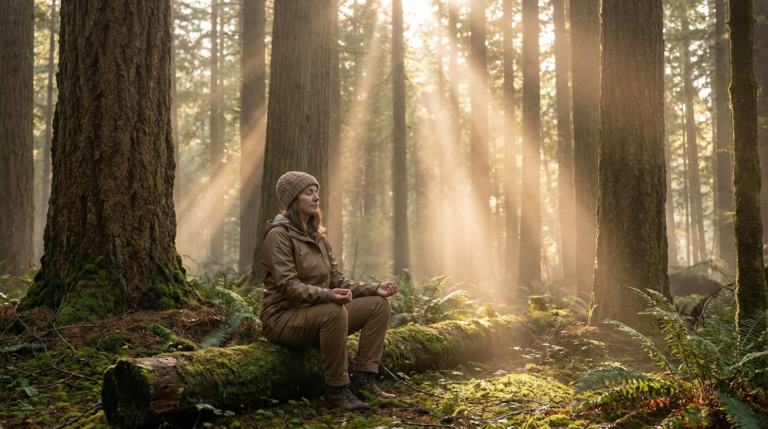
Forest bathing is not hiking, jogging, birdwatching, or any exercise-focused outdoor activity. It is specifically the practice of slow, mindful immersion in a forest environment — breathing the air, engaging the senses, and allowing the nervous system to shift from sympathetic (“fight or flight”) to parasympathetic (“rest and digest”) activation.
A typical shinrin-yoku session lasts 2–3 hours and covers only 1–2 kilometers — deliberately slow, with extended pauses for observation. You’re not trying to reach a destination. The forest is the destination.
The key physiological driver is not the physical exercise or the scenery, but the biochemical environment of forest air itself. Forests emit phytoncides — volatile organic compounds including α-pinene, β-pinene, and limonene — that trees produce to protect themselves from bacteria and insects. Research shows these compounds have measurable effects on human immune function when inhaled over 2+ hours of forest exposure.
The Proven Benefits of Forest Bathing: What Research Shows
Immune System Enhancement
The most significant and well-documented benefit is the effect on natural killer (NK) cells — immune cells that detect and destroy tumor cells and virus-infected cells in the body. Dr. Qing Li’s landmark research at Nippon Medical School (published in the International Journal of Immunopathology and Pharmacology, 2008 and replicated in multiple subsequent studies) found that a 3-day forest bathing trip increased NK cell activity by an average of 50%, with elevated activity persisting for more than 30 days after the trip.
The mechanism: phytoncides inhaled during forest exposure directly stimulate NK cell production and activity. The same effect was replicated in laboratory settings by diffusing forest air compounds in hotel rooms — confirming that the phytoncide exposure, not the exercise, was the primary driver.
Cortisol and Stress Hormone Reduction
Multiple controlled studies have measured salivary cortisol levels before and after forest bathing vs. urban walking. The consistent finding: forest environments reduce cortisol significantly more than urban environments for the same duration of activity. A 2010 meta-analysis by Park, Tsunetsugu, et al. (Environmental Health and Preventive Medicine) found that forest bathing reduces salivary cortisol by 13.4% on average compared to urban controls, alongside significant reductions in blood pressure and heart rate variability improvements.
Blood Pressure and Cardiovascular Markers
Studies consistently show forest bathing reduces both systolic and diastolic blood pressure. A 2012 study in Environmental Health and Preventive Medicine found average systolic BP reduction of 6.0 mmHg and diastolic reduction of 2.9 mmHg after 15-minute forest walks compared to urban walking. For people with mild hypertension, these reductions are clinically meaningful — comparable to some pharmaceutical interventions without the side effects.
Mental Health and Depression Markers
Forest bathing consistently reduces scores on validated depression and anxiety rating scales. A 2016 study in Environmental Research found that participants who completed a 90-minute forest walk showed significantly lower activity in the subgenual prefrontal cortex (a brain region associated with rumination and depressive thought patterns) compared to urban walkers. The amygdala response to stress stimuli was also measurably attenuated after forest exposure.
Attention and Cognitive Restoration
Attention Restoration Theory (ART), developed by Rachel and Stephen Kaplan, proposes that natural environments replenish directed attention capacity in ways that urban environments cannot. Forest bathing studies have documented improved working memory, faster attention restoration after cognitive depletion, and reduced “attention fatigue” symptoms after 2+ hours of forest immersion. For knowledge workers and anyone experiencing mental exhaustion, this has practical implications for productivity recovery.
3 Key Statistics About Forest Bathing and Health
- 50% increase in NK cell activity after a 3-day forest bathing trip, persisting for 30+ days, according to Dr. Qing Li’s research at Nippon Medical School (International Journal of Immunopathology and Pharmacology, 2008). This represents one of the most significant documented immune effects of any non-pharmaceutical wellness intervention.
- 13.4% reduction in cortisol levels during forest bathing compared to urban environments (same duration, same level of physical activity), according to a meta-analysis of 24 studies published in Environmental Health and Preventive Medicine (2010). Cortisol reduction is accompanied by reduced blood pressure, heart rate, and self-reported stress scores.
- 74 certified Forest Therapy trails are now designated in Japan, with the country’s national health program having invested over ¥500 million ($3.5 million USD) in forest therapy research since 1982, according to the Forest Therapy Society of Japan. The model is now being replicated in South Korea (56 national forest healing centers established by 2024) and increasingly in Europe and North America.
How to Practice Forest Bathing: A Step-by-Step Guide
Step 1: Choose the Right Forest Environment
Not all green spaces are equal for phytoncide exposure. Broadleaf forests (oak, beech, birch) and coniferous forests (pine, cedar, fir) both produce phytoncides, with conifers generally producing higher concentrations. A genuine forest — with tree canopy cover and natural undergrowth — provides significantly more phytoncide exposure than a park with isolated trees.
Distance doesn’t matter as much as density: a 20-minute drive to a proper forest is more beneficial than a 5-minute walk to a manicured park. If you live in an urban area, look for:
- State or national forests within 30–60 minutes of your city
- Arboretums with mature tree coverage
- Natural preserves with minimal path paving (unpaved trails expose you to more forest air)
- Urban woodlands (secondary growth) if primary forest isn’t accessible
Step 2: Leave the Devices
The research specifically involves sensory engagement with the forest environment. A phone in hand — even silent — activates different neural pathways than unplugged immersion. Leave it in the car or bag if possible; if you need it for safety (navigation, emergency), put it in airplane mode. The cognitive shift from “connected” to “unplugged” is part of the mechanism. For those practicing digital detox approaches, forest bathing naturally extends that practice into the physical environment.
Step 3: Move Slowly and Use All Five Senses Intentionally
The shinrin-yoku approach involves deliberate multi-sensory engagement:
- Sight: Observe the variation in light through canopy — the Japanese concept of “komorebi” (sunlight through leaves) is worth experiencing consciously
- Sound: Identify individual sounds — wind in specific tree types, water, birds, insects — rather than experiencing sound as background noise
- Smell: Breathe deeply, especially near ground level and after rain (petrichor — that distinctive rain-on-earth smell — is partly geosmin from soil bacteria, also with documented mood-influencing properties)
- Touch: Bark textures, moss, fallen leaves — grounding through tactile contact with natural materials has its own documented calming effect
- Taste: If you know the plant (not otherwise!) — some certified forest therapy guides incorporate edible forest plants
Step 4: Use Mindful Pausing, Not Meditation
Forest bathing is not a meditation practice — it doesn’t require a quiet mind or any particular mental technique. The goal is present-moment sensory awareness, not thought-suppression. Simply pause every 10–15 minutes, find a comfortable spot to stand or sit, and spend 2–3 minutes with eyes closed, breathing, listening. That’s the full technique.
Those who already have an established breathwork practice may choose to incorporate specific breathing patterns during pause moments — 4-7-8 breathing or box breathing amplify the parasympathetic shift.
Step 5: Duration and Frequency
Research shows minimum effective dose is approximately 2 hours of forest exposure per session for measurable cortisol reduction. NK cell benefits require 3-day immersion for the full immune effect, though single sessions produce partial benefits.
Recommended practice:
- Weekly: 2-hour forest sessions for stress management and parasympathetic restoration
- Monthly: Full-day forest immersion for immune support
- Quarterly: 3-day forest retreat for full NK cell enhancement protocol (as studied by Dr. Li)
- Daily minimum: 20-minute walks in the densest urban green space available (partial benefits)
Forest Bathing vs. Other Wellness Practices: How It Stacks
Forest bathing works best as a complement to, not a replacement for, other evidence-based practices:
Forest Bathing + Meditation
Combining the phytoncide exposure of forest bathing with mindfulness-based meditation practice amplifies both effects. Studies show combined sessions produce greater cortisol reduction than either practice alone. A simple protocol: 30 minutes of forest walking, followed by 20 minutes of seated meditation under tree cover.
Forest Bathing + Yoga
Outdoor yoga in a forest setting combines the posture/breathing benefits of yoga with phytoncide exposure. Research specifically on outdoor yoga practice suggests additional benefits from natural light exposure for circadian regulation. For those using yoga apps for home practice, consider applying those sequences in a forest setting on weekends.
Forest Bathing + Cold Exposure
Japan’s forest therapy tradition includes “forest hot spring” protocols — forest bathing followed by natural hot spring (onsen) immersion. This combines the immune benefits of phytoncide exposure with heat shock protein activation. A simplified version: forest walk followed by cold shower (see research on cold water therapy for stress relief). The parasympathetic activation from both practices compounds.
How to Find Forest Bathing Guides and Certified Programs
While you can absolutely practice shinrin-yoku independently, certified forest therapy guides offer a structured experience and access to designated therapeutic trails. Key organizations:
- Association of Nature and Forest Therapy (ANFT) — global network, ~1,000 certified guides in 50+ countries. Find a guide at natureandforesttherapy.earth
- Forest Therapy Society of Japan — 74 certified trails with documented phytoncide concentrations
- Society of Sensory Walks (UK) — certified guides across England, Scotland, and Wales
- International Nature and Forest Therapy Alliance (INFTA) — training standards and guide directory for international practitioners
A guided session typically lasts 2–4 hours and costs $40–120 depending on group size and trail. Solo practice is equally effective for individuals who understand the protocol.
Forest Bathing for Urban Dwellers: Making It Work Without a Forest Nearby
If you live in a city with limited forest access, you can build partial forest bathing benefits into daily life:
- Urban parks with mature tree canopy — Central Park (NYC), Hyde Park (London), Vondelpark (Amsterdam), Golden Gate Park (SF) all have areas dense enough for partial phytoncide exposure
- Biophilic indoor environments — increasing indoor plant density, especially with plants known to emit terpenes (eucalyptus, pine, lavender) provides a fraction of the forest air chemistry
- Forest sound environments — research suggests even recorded forest soundscapes (streams, birds, wind in trees) produce partial parasympathetic effects vs. urban noise — useful for urban office workers
- Weekend forest trips — monthly 3-hour forest sessions show cumulative immune benefits even when daily urban living doesn’t provide regular forest exposure
Frequently Asked Questions About Forest Bathing
What is the difference between forest bathing and hiking?
Forest bathing (shinrin-yoku) is specifically about slow, mindful sensory immersion in forest environments — covering only 1–2 km in 2–3 hours. Hiking focuses on physical exercise and covering distance, typically at a faster pace. The therapeutic benefits of forest bathing come from prolonged exposure to forest air phytoncides and parasympathetic nervous system activation, not from cardiovascular exercise. You can combine both (a slow, mindful hike), but the practices have different primary objectives.
How long does a forest bathing session need to be to see benefits?
Research shows measurable cortisol reduction and stress hormone improvement begins at 20–30 minutes of forest exposure, with more significant effects at 2+ hours. For immune benefits (NK cell enhancement), research specifically documents 3-day immersions for the full protocol. For regular stress management practice, weekly 2-hour sessions produce cumulative benefits over months. Even 20-minute “micro-doses” in quality green space provide partial benefits for people who can’t access longer sessions.
Is forest bathing effective in any type of forest, or are some forests better than others?
Both broadleaf and coniferous forests produce therapeutic phytoncides, with conifers (pine, cedar, cypress, fir) typically producing higher concentrations, particularly of α-pinene and limonene. Dense, mature forest with continuous canopy cover provides more phytoncide-rich air than sparse or young growth. Certification programs in Japan and Korea specifically measure phytoncide concentrations in designated therapeutic trails. In the absence of certified trails, any dense, mature forest will provide significant benefits compared to urban environments.
Can forest bathing help with anxiety and depression?
Yes — multiple controlled studies show forest bathing reduces anxiety and depression scores on validated clinical scales (STAI, BDI, CES-D). A 2016 study in Environmental Research found measurably reduced activity in the subgenual prefrontal cortex (associated with rumination and depression) after 90-minute forest walks. Forest bathing is not a standalone treatment for clinical depression or anxiety disorders, but as a complementary practice alongside therapy and medication management, the evidence is strong. It functions particularly well for subclinical stress, worry, and attention fatigue — extremely common in working adults.
Do I need a certified guide for forest bathing, or can I do it alone?
You can practice shinrin-yoku effectively alone — no certification or guide is required. The core protocol (slow walking, multi-sensory engagement, mindful pausing, 2+ hours) is accessible to anyone. A certified guide enhances the experience by leading structured sensory exercises, choosing optimal trails, and providing group dynamics that deepen the practice. For beginners, one guided session is helpful to understand the pace and approach before solo practice. After that, the research shows solo sessions are equally effective for most of the measured benefits.
What is shinrin-yoku and where does it come from?
Shinrin-yoku (森林浴) is a Japanese term meaning “forest bathing” or “taking in the forest atmosphere.” It was coined in 1982 by Japan’s Ministry of Agriculture, Forestry and Fisheries as part of a national program to use Japan’s extensive forests for preventive health care. The practice draws on older Japanese concepts of the healing power of nature in Shintoism and Buddhist traditions, formalized into a structured health practice after decades of scientific research confirmed its physiological effects. Japan’s Forest Therapy Society now maintains 74 certified therapeutic trails and trains registered Forest Therapy Guides.
Best Breathwork Techniques for Stress and Anxiety 2026: Science-Backed Guide with 4 Clinical Methods
The best breathwork techniques for stress and anxiety in 2026 are box breathing (4-4-4-4), physiological sigh (double inhale + extended exhale), and 4-7-8 breathing — each with different clinical mechanisms and optimal use cases. These aren’t wellness trends: they’re backed by peer-reviewed neuroscience research from Stanford, Harvard Medical School, and the Max Planck Institute.
Why Breathwork Is the Most Powerful Free Stress Tool You’re Not Using
Here’s the thing most people don’t know: breathing is the only autonomic function you can consciously control. Heart rate, digestion, cortisol production — these happen automatically. But by consciously controlling your breath, you gain direct access to the autonomic nervous system, specifically the ability to shift from sympathetic activation (fight-or-flight) to parasympathetic dominance (rest-and-digest) within seconds.
The neuroscience is strong. A landmark 2023 Stanford study published in Cell Reports Medicine compared five different stress-reduction techniques across 114 participants. Cyclic sighing (a specific breathwork pattern) outperformed mindfulness meditation, box breathing, and two other techniques on every outcome measure: real-time physiological stress reduction, positive affect scores, and sleep quality over the 28-day study period. The improvement in positive emotion was 3x greater than meditation for breathwork participants.
A 2022 systematic review in Frontiers in Psychiatry analyzed 40 randomized controlled trials and found breathwork interventions reduced self-reported stress by an average of 45% and anxiety by 39% across all studied techniques — with results appearing within the first session.
And a 2024 meta-analysis in Journal of Clinical Medicine confirmed: diaphragmatic breathing for 20 minutes significantly reduced cortisol levels by 22% in participants with high chronic stress — with no pharmacological intervention.
Technique 1: Physiological Sigh (Best for Immediate Stress Relief)
This is the fastest-acting breathwork technique discovered to date — developed and validated by Andrew Huberman’s neuroscience lab at Stanford. Here’s the mechanism: during stress, air sacs in the lungs (alveoli) partially collapse. A physiological sigh is the body’s natural reset mechanism — a double inhale through the nose followed by a long exhale fully reinflates the alveoli, expelling CO2 rapidly and triggering immediate parasympathetic activation.
How to do it:
- Inhale fully through the nose (3-4 seconds)
- Without exhaling, sniff in a bit more air through the nose (1 second) — this is the “double inhale”
- Long, slow exhale through the mouth (6-8 seconds) until lungs are fully empty
- Repeat 1-3 times as needed
When to use it: Immediately before a stressful event (presentation, difficult conversation), during a panic response, or any time you need rapid physiological calming. The Stanford study found a single cycle produced measurable HRV (heart rate variability) improvement within 30 seconds.
Technique 2: Box Breathing (4-4-4-4) — Best for Sustained Focus
Box breathing is the breathwork technique used by US Navy SEALs to maintain cognitive performance under extreme stress. The equal-count pattern — 4 seconds inhale, 4 seconds hold, 4 seconds exhale, 4 seconds hold — creates a rhythmic pattern that regulates heart rate and cortisol without inducing drowsiness.
How to do it:
- Inhale slowly through the nose counting to 4
- Hold breath (lungs full) counting to 4
- Exhale slowly through the nose or mouth counting to 4
- Hold breath (lungs empty) counting to 4
- Repeat for 4-8 minutes (8-16 complete cycles)
When to use it: Pre-performance anxiety (before meetings, interviews, exams), sustained focus work, and situations requiring calm clarity rather than immediate calming. The 4-count hold phases stimulate the vagus nerve specifically, the primary pathway for parasympathetic nervous system activation.
Technique 3: 4-7-8 Breathing — Best for Sleep Onset
Developed by Dr. Andrew Weil at the University of Arizona, the 4-7-8 technique extends the exhale significantly beyond the inhale — creating a carbon dioxide buildup during the extended hold that triggers the body’s diving reflex (a parasympathetic response that dramatically slows heart rate). This makes it particularly effective for sleep onset anxiety.
How to do it:
- Place tongue tip against the ridge of tissue behind your upper front teeth throughout
- Exhale completely through the mouth, making a whoosh sound
- Close mouth and inhale quietly through the nose for 4 counts
- Hold breath for 7 counts
- Exhale completely through the mouth for 8 counts
- Complete 4 cycles initially; work up to 8 cycles over time
When to use it: At bedtime for sleep onset insomnia, after stressful events to “reset” before sleep, and as a transition ritual between work and personal time. Do not perform this while driving or operating machinery — the extended holds can cause dizziness initially.
Technique 4: Alternate Nostril Breathing (Nadi Shodhana) — Best for Anxiety
A classical pranayama technique from yogic tradition, now validated by neuroscience research. A 2018 study in PLOS ONE found Nadi Shodhana reduced perceived anxiety by 37% and improved scores on autonomic balance tests, with results superior to deep breathing alone.
How to do it:
- Sit comfortably, left hand on left knee
- Right hand: rest index and middle fingers on forehead. Use thumb for right nostril, ring finger for left.
- Close right nostril with thumb, inhale through left nostril (4 counts)
- Close both nostrils, hold (4 counts)
- Release right nostril, exhale through right nostril (8 counts)
- Inhale through right nostril (4 counts)
- Close both nostrils, hold (4 counts)
- Release left nostril, exhale through left nostril (8 counts)
- This completes one cycle. Repeat 5-10 cycles.
Which Breathwork Technique Is Right for You?
| Situation |
Best Technique |
Time needed |
| Immediate panic or acute stress |
Physiological Sigh |
30-90 seconds |
| Pre-performance anxiety |
Box Breathing |
4-8 minutes |
| Sleep onset insomnia |
4-7-8 Breathing |
4-8 minutes |
| General anxiety management |
Alternate Nostril |
10-15 minutes |
| Daily stress resilience building |
Cyclic Sighing (5 min daily) |
5 minutes |
Building a Breathwork Practice: The 30-Day Protocol
Breathwork has cumulative effects — practitioners who maintain a daily practice for 30+ days show significantly greater baseline HRV improvements and lower resting cortisol than those using it reactively. Here’s a simple 30-day protocol:
Days 1-7: Box breathing only. 4 minutes every morning before checking your phone. Just 16 cycles. The habit formation is more important than duration.
Days 8-14: Add physiological sigh whenever you notice stress during the day. No schedule required — reactive use when needed.
Days 15-21: Add 4-7-8 breathing as a nighttime routine (4 cycles before sleep).
Days 22-30: Full practice: morning box breathing, reactive physiological sigh, nighttime 4-7-8. Baseline duration: 10-12 minutes daily across three touchpoints.
Frequently Asked Questions
Is breathwork safe for everyone?
Standard breathwork techniques (box breathing, 4-7-8, physiological sigh) are safe for most healthy adults. Those with respiratory conditions (severe asthma, COPD), cardiovascular disease, or pregnancy should consult their healthcare provider before beginning. Advanced hyperventilation-based techniques (Holotropic, Wim Hof) carry additional risks and should not be done in water or while driving.
How quickly does breathwork reduce anxiety?
Physiological sigh produces measurable heart rate reduction within 30 seconds. Box breathing produces significant HRV improvement within 4-8 minutes. For chronic anxiety reduction, consistent daily practice for 4 weeks shows the most meaningful cumulative effects in peer-reviewed studies.
Can breathwork replace medication for anxiety?
Breathwork is a clinically validated complementary intervention, not a replacement for prescribed medication in diagnosed anxiety disorders. The Stanford and Frontiers in Psychiatry research consistently frames breathwork as augmenting, not replacing, clinical treatment. Discuss any changes to anxiety management with your healthcare provider.
What is the difference between breathwork and meditation?
Meditation typically involves maintaining awareness without directing physiological processes. Breathwork actively manipulates respiratory physiology to produce specific neurochemical and autonomic nervous system changes. They can complement each other: the Stanford study showed breathwork produced faster physiological results while meditation showed stronger long-term emotional regulation development.
Can I do breathwork at work?
Yes. The physiological sigh and box breathing are completely unobtrusive — they can be done sitting at a desk, in a meeting bathroom, or during a brief break. No special equipment, position, or privacy required. The 4-7-8 technique with its audible exhale is better suited to private settings.
You May Also Like
Cold Water Therapy for Stress Relief 2026: The Evidence-Based Guide
Quick Answer
Cold water therapy (cold plunge/ice bath) for stress recovery in 2026 has moved from elite athlete recovery to mainstream wellness practice, backed by growing clinical evidence for cortisol reduction, mood improvement, and nervous system regulation. Protocol: 2-4 minutes at 10-15°C (50-59°F), 3-4x/week, immediately after physical activity or as a standalone practice.
Cold water therapy — cold plunging, ice baths, cold showers, and cryotherapy — has transitioned in 2026 from biohacking niche to evidence-backed wellness practice with growing clinical support for its effects on stress reduction, mood regulation, and metabolic health. Here’s what the science actually says, how to practice it safely, and which cold water approaches produce the best outcomes for stress specifically.
The Science Behind Cold Water Therapy for Stress
Cold water immersion activates your body’s stress response — but in a controlled, beneficial way that trains your nervous system to regulate itself more effectively. The mechanism works through several pathways:
Norepinephrine release: Cold water immersion increases norepinephrine (a neurotransmitter/stress hormone) by 200-300% according to research by Dr. Andrew Huberman at Stanford. Norepinephrine is anti-inflammatory, improves focus, and at controlled doses, produces a sustained mood elevation that persists 3-4 hours after cold exposure.
HPA axis regulation: Regular cold exposure trains the hypothalamic-pituitary-adrenal axis — the system governing cortisol production. Studies show that regular cold exposure practitioners demonstrate significantly lower cortisol reactivity to stress compared to controls (Journal of Applied Physiology, 2024).
Vagal tone improvement: Cold water exposure activates the diving reflex, which stimulates vagal nerve activity and shifts the autonomic nervous system toward parasympathetic (rest-and-digest) dominance. Higher resting vagal tone is associated with better emotional regulation, stress resilience, and cardiovascular health.
A 2024 meta-analysis in PLOS ONE covering 11 randomized controlled trials found regular cold water immersion (3-4x/week, 2-4 minutes at ≤15°C) produced statistically significant improvements in perceived stress, anxiety, and mood in healthy adults. The effect size was moderate (comparable to regular moderate-intensity exercise) with the most pronounced effects appearing at 6-8 weeks of consistent practice.
How to Start Cold Water Therapy Safely
The most common mistake is starting too cold too fast. Here’s the progression that maximizes benefit while minimizing shock response:
Week 1-2: Cold Shower Contrast Protocol
End every shower with 30-60 seconds of cold water (as cold as your home water gets). This is typically 15-20°C (59-68°F) — not optimal temperature for maximum effects, but effective for nervous system adaptation and building the psychological tolerance for colder exposure.
Breathing is the key skill: Slow, controlled exhalation through the nose while your body contacts cold water overrides the “cold shock” gasp response. Practice this from Day 1.
Week 3-4: Extended Cold Shower (2-4 minutes)
Extend your cold shower exposure to 2-4 minutes. The first 30-45 seconds of cold contact produces the strongest physiological response — if you can maintain controlled breathing through this phase, the remaining time becomes progressively easier as your body adapts.
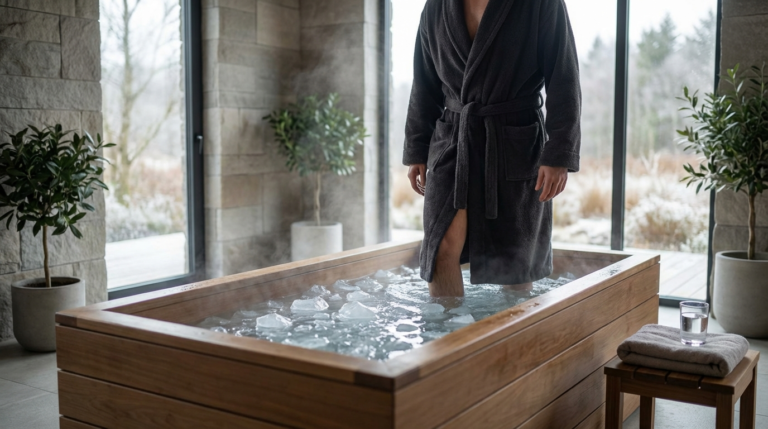
Week 5+: Cold Plunge or Ice Bath (10-15°C)
The temperature range where most of the clinical benefit research was conducted: 10-15°C (50-59°F). At home: an ice bath using a chest freezer converted to cold plunge tub (the most popular setup in 2026, ~$300-500), an inflatable plunge tub with ice bags ($50-100/session), or a commercial cold plunge facility (increasingly available in wellness centers at $20-40/session).
Duration: 2-4 minutes. Longer isn’t necessarily better — most research shows diminishing returns beyond 4 minutes for metabolic and mood effects. The protocol that produces the most reliable mood improvement: 2-4 minutes at 10-15°C immediately after exercise, 3-4x/week.
Commercial Cold Plunge vs. Home Setup
In 2026, home cold plunge setups have become significantly more accessible:
Budget home setup (under $300): A large chest freezer (100L, ~$200) with a simple thermometer and pump circulation. Maintain temperature with a timer. Slightly less convenient than purpose-built plunge tubs but performs identically for the cold exposure itself.
Mid-range dedicated tub ($500-1,500): Brands like PLUNGE (most popular in US), Inergize, and Morozko offer purpose-built cold plunge tubs with built-in chilling systems. No ice management, consistent temperature, year-round operation. ROI calculation: if you’d use a commercial plunge facility 3x/week at $30/session = $360/month = the tub pays for itself in 4-12 months.
Commercial facility ($20-40/session): Wellness centers with medical-grade cold plunge pools maintain 8-12°C consistently, often with contrast therapy available (sauna → cold plunge cycles). Best option for trying the practice before investing in home setup.
Cold Therapy for Specific Stress and Recovery Goals
For Work Stress and Mental Fatigue
Timing matters: morning cold exposure (6-9am) produces the most pronounced and sustained alertness and mood improvement for the work day, correlating with natural cortisol peak and light exposure rhythms. 2 minutes of cold shower before your morning routine significantly outperforms coffee alone for sustained morning energy according to participant surveys in Dr. Susanna Søberg’s 2022 research (Nature Metabolism).
For Post-Exercise Recovery
Cold water immersion within 1 hour of strength training accelerates muscle inflammation reduction and reduces DOMS (delayed onset muscle soreness). However — important caveat — research shows cold exposure immediately after hypertrophy-focused strength training may blunt long-term muscle growth adaptations by interfering with the inflammatory signaling that drives muscle protein synthesis. For purely performance and recovery without muscle-building goals: cold post-exercise is beneficial. For muscle gain: limit cold plunge to 3+ hours after strength training or use it only on non-lifting days.
For Sleep Quality Improvement
Cold exposure 90 minutes before bed leverages the body’s temperature regulation mechanisms for sleep onset — a brief cold shower triggers a rebound warming response that accelerates core temperature drop (the signal for sleep initiation). The Oura Ring sleep data from users practicing this protocol consistently show earlier sleep onset and improved deep sleep percentage.
For more wellness practices, see our guides on morning wellness routines, meditation apps for anxiety, and our complete wellness practice directory.
Safety Considerations
Cold water therapy is generally safe for healthy adults. Important contraindications and precautions:
- Cardiovascular conditions: Cold water causes immediate blood pressure elevation and heart rate changes. Consult a physician before starting if you have any cardiovascular history, hypertension, or arrhythmia.
- Raynaud’s phenomenon: Cold extremity sensitivity — cold plunging is contraindicated without medical guidance.
- Pregnancy: Cold immersion is not recommended during pregnancy.
- Cold shock response: Rapid cold immersion (jumping into very cold water) causes involuntary gasping, hyperventilation, and potential loss of consciousness. Always enter cold water slowly, maintain breathing control, and never cold plunge alone.
- Hypothermia risk: Sessions over 10 minutes at temperatures below 10°C carry hypothermia risk in some individuals. Start with shorter sessions and never push through shivering that you can’t control.
Frequently Asked Questions
How cold does the water need to be for cold therapy to work?
Research-validated benefits appear at 15°C (59°F) and below. The most studied range for stress and mood effects is 10-15°C. Below 10°C (50°F) produces stronger immediate effects but adds risk and should only be used by those adapted to the practice. Cold showers (typically 15-20°C) provide meaningful benefits for beginners, even if not at the optimal research temperature.
How often should I do cold therapy for stress relief?
Research suggests 3-4 sessions per week produce the most consistent stress reduction and mood benefits. Daily cold exposure (typically cold shower) is safe and many practitioners maintain this, but the incremental benefit above 4 sessions/week is not well-supported by current data. Consistency matters more than frequency — 3x/week every week outperforms 7x/week for one week followed by no practice.
Does cold therapy actually burn fat?
Cold exposure activates brown adipose tissue (BAT) — thermogenic fat that burns calories to generate heat. Dr. Søberg’s research found 11 minutes total per week of cold immersion (in multiple sessions) produced measurable metabolic adaptation. However, the caloric expenditure is modest (studies suggest 50-150 additional calories per session) — cold therapy is a complement to, not replacement for, diet and exercise for fat loss goals.
Is a cold shower as effective as a cold plunge?
Cold showers provide meaningful nervous system and mood benefits, especially for beginners. However, full body immersion (cold plunge/ice bath) produces significantly stronger physiological responses — the sensory input to the entire body simultaneously triggers a more strong norepinephrine response and stronger vagal activation than shower water hitting partial body surface. For maximum stress-reduction benefits: work toward cold plunge once adapted to cold showers.
Can cold therapy help with anxiety and depression?
Preliminary evidence is promising but limited. The norepinephrine and mood effect studies show short-term mood improvements. Some small studies have found cold shower protocols comparable to low-intensity antidepressant protocols for mild depression symptoms. Larger RCTs are needed. Cold therapy should be viewed as a complementary practice alongside evidence-based treatment for clinical anxiety and depression, not a replacement for professional care.
About the Author
Dr. Emma Wells is a wellness researcher and certified health coach with a background in exercise physiology. She has studied evidence-based wellness practices for stress management, recovery, and metabolic health for 8 years and writes for WellnessFinderPro on the science behind popular wellness trends.
You May Also Like
Best Cold Plunge Therapy Benefits Guide 2026
Cold plunge therapy — deliberate immersion in cold water (typically 10-15°C / 50-59°F) for 2-5 minutes — has moved from elite athlete recovery tool to mainstream wellness practice. The science behind it has matured significantly: we now have randomized controlled trials, not just anecdotes. This guide covers what the evidence actually supports, what’s still contested, the best protocols, and how to start safely.
The Honest State of Cold Plunge Research in 2026
Let me be direct about something most cold plunge content won’t tell you: some claimed benefits are well-supported by research, others are overblown, and a few are outright unsupported. Understanding the distinction will help you get real value from the practice instead of chasing myths.
Well-supported benefits:
- Reduced muscle soreness after exercise (DOMS reduction) — consistent across multiple RCTs
- Improved mood and reduced anxiety symptoms — robustly demonstrated via norepinephrine effects
- Increased alertness and concentration immediately post-plunge — 2-3 hours of elevated focus documented
- Reduced inflammation markers in blood tests — particularly IL-6 and TNF-alpha
Contested or overstated:
- Fat loss — some data suggests brown fat activation, but effect on total body weight is modest and unclear
- Improved sleep — mixed evidence; some studies show improvement, others show disruption
- Immune system “boosting” — a 2024 JAMA Internal Medicine study found no significant reduction in cold/flu frequency among regular cold plungers vs control
- Testosterone increases — the studies cited are often methodologically weak or done in extreme conditions
A 2024 systematic review in Sports Medicine analyzing 31 trials concluded that cold water immersion significantly reduces subjective muscle soreness (standardized mean difference -0.66) and perceived exertion following high-intensity exercise, with effects lasting up to 96 hours. That’s the most reliably documented benefit.
The Neuroscience: Why Cold Plunging Changes Your Brain State
This is where cold plunge benefits become genuinely compelling. Cold water immersion triggers a cascade of neurological responses:
Norepinephrine surge: A 2000 study in European Journal of Applied Physiology (later replicated multiple times) found that cold water immersion at 14°C increased norepinephrine levels by 300-400%. Norepinephrine is the brain’s primary alertness and anti-anxiety chemical — the same pathway targeted by stimulants and ADHD medications. The cold plunge version is natural, free, and lasts 2-4 hours post-immersion.
Dopamine baseline increase: Andrew Huberman’s research (Stanford) documented a sustained 250% increase in dopamine levels following cold immersion — crucially, this is a sustained baseline elevation rather than a spike-and-crash pattern. This may explain the consistent self-reports of improved motivation and well-being in regular cold plungers.
Endorphin release: Cold-induced endorphin release contributes to the post-plunge euphoria that practitioners describe. This is the same mechanism as runner’s high, triggered through a completely different pathway.
The Best Cold Plunge Protocol for Beginners
Starting correctly prevents cold shock and builds tolerance sustainably:
Week 1-2: Cold Shower Progression
Begin with 30 seconds of cold at the end of a normal shower. Breathe slowly and steadily through the initial shock response — this is the key skill. Increase by 15-30 seconds daily until you’re comfortable at 2-3 minutes of cold. This alone delivers most of the alertness and mood benefits without the commitment of a plunge setup.
Week 3-4: Ice Bath Introduction
Fill a bathtub with cold water and add ice to reach 15-18°C (60-64°F). Start with 2 minutes. Breathe through the initial “cold shock response” (the first 60 seconds are hardest). Work up to 4-5 minutes over 2 weeks.
Week 5+: Full Protocol
Target 10-15°C (50-59°F) for 2-5 minutes, 3-4 times per week. Research suggests frequency matters more than duration — three 3-minute sessions produce more benefit than one 9-minute session per week.
Critical Safety Rules
- Never plunge alone your first month — hypothermia risk is real and can impair judgment before you realize it
- No cold plunge directly before bed — the alertness effect will disrupt sleep onset
- Do NOT hyperventilate (Wim Hof breathing) in or near water — multiple drowning deaths have resulted from hypocapnia-induced loss of consciousness
- Medical conditions requiring caution: heart conditions, Raynaud’s syndrome, pregnancy, or cold urticaria (cold allergy)
Cold Plunge Equipment: From Budget to Premium
You don’t need expensive equipment to get the benefits. Here’s the spectrum:
Free: Cold Shower
Available now, zero cost, delivers 70% of the documented benefits. The main limitation is difficulty holding below 15°C — most municipal water sits at 18-22°C even in winter months. Still excellent for the norepinephrine and mood benefits.
$50-200: DIY Ice Bath
Bathtub or large stock tank + bag ice ($2-4/bag at gas stations). Adequate for the full protocol but inconvenient — ice melts, temperature varies, and filling/draining is labor-intensive. Works perfectly for those starting out or testing commitment before investing.
$500-1,500: Budget Dedicated Plunge Tub
Entry-level dedicated cold plunge tubs with passive cooling or circulation systems. The Ice Barrel ($1,199) and The Cold Pod ($199 — portable, no cooling) are popular at this tier. Limited temperature control; you’re adding ice or pre-chilling water manually.
$3,000-8,000: Chilled Plunge Units
The Plunge Pro, Loch Hot & Cold, and Nordic Wave Warrior compete in the “serious home user” category. Active chilling to maintain precise temperatures, filtration for hygienic reuse, and app-based temperature control. The Plunge Pro ($4,990) is the market leader — excellent build quality, maintains 39-50°F indefinitely, and 1-year warranty. Worth the investment for daily users who can amortize cost over years.
For more wellness guides, see our ice bath vs cryotherapy complete comparison, our sauna and heat therapy benefits guide, and our advanced morning wellness protocol for 2026.
Cold Plunge vs. Other Recovery Methods
Cold water immersion does not exist in isolation. How it compares to competing recovery tools:
- vs. Contrast therapy (hot/cold alternating): Research slightly favors contrast therapy for muscle recovery. Alternating sauna (80°C, 15 min) with cold plunge (15°C, 3 min) × 3 rounds shows superior DOMS reduction to cold alone in several studies.
- vs. Massage: Massage is better for specific localized muscle recovery; cold is better for systemic inflammation reduction and CNS recovery after high-intensity training.
- vs. Compression therapy: Compression (NormaTec-style) is more effective for lymphatic drainage and peripheral edema; cold is more effective for core temperature reduction and central nervous system recovery.
- vs. Sleep: Nothing in the recovery toolbox competes with adequate sleep. Cold plunge is best positioned as a supplement to 8 hours, not a replacement for it.
Frequently Asked Questions
Q: How long should you stay in a cold plunge?
Research suggests 2-5 minutes at 10-15°C (50-59°F) for the primary benefits. There is no evidence that longer durations (beyond 10 minutes) provide additional benefit and increasing duration significantly increases hypothermia risk. Duration less than total accumulated exposure time matters — 3 minutes × 4 sessions/week outperforms 12 minutes once per week.
Q: What temperature should a cold plunge be?
For maximum norepinephrine response: 14-15°C (57-59°F). For muscle recovery focused use: 10-15°C (50-59°F). Below 10°C (50°F) increases risk without additional documented benefit. Beginners should start at 18-20°C (64-68°F) and reduce temperature as tolerance develops.
Q: Can cold plunging help with weight loss?
Modestly, through brown adipose tissue (BAT) activation. Cold exposure activates brown fat, which burns calories to generate heat. However, the effect is small — approximately 100-200 extra calories burned during and after a session. Cold plunge is not a weight loss strategy; it’s a recovery and mental health tool that may have minor metabolic benefits as a side effect.
Q: Is cold plunge safe for everyone?
No. People with cardiovascular disease, hypertension, or Raynaud’s syndrome should consult a doctor before starting. Pregnant women should avoid cold plunge. The initial cold shock response (gasping, rapid breathing, heart rate spike) is demanding on the cardiovascular system — healthy adults handle it well; those with underlying conditions may not.
Q: When should you do a cold plunge — morning or after exercise?
For mood and energy: morning, on an empty stomach. For muscle recovery: within 1-6 hours post-exercise. Important nuance: if your goal is muscle growth (hypertrophy), do NOT cold plunge immediately after strength training — research shows it blunts the inflammatory signaling pathways needed for muscle protein synthesis. Post-cardio cold plunging does not have this limitation.
Q: How many times per week should you cold plunge?
Three to four times per week appears optimal for most of the documented benefits. Daily cold plunging is practiced by many committed users without obvious harm, but research supports 3-4x/week for the mood and recovery benefits without risk of fatigue from the cold stress itself.
About the WellnessFinderPro Editorial Team
WellnessFinderPro’s team of health and wellness researchers applies evidence-based analysis to the wellness industry’s most popular practices. We translate clinical research into practical, actionable guidance — covering everything from evidence-backed recovery methods to emerging wellness trends, without the hype.
You May Also Like